My Yard is Infested with Ticks: How to Kill Ticks and Keep Them Away

You will never look out the window and see a tick infestation. Ticks are a few millimeters long, they stay out of the open, and they wait in the specific parts of your yard you walk through without thinking. Here is where they actually are and what reduces them.
Can you see a tick problem?
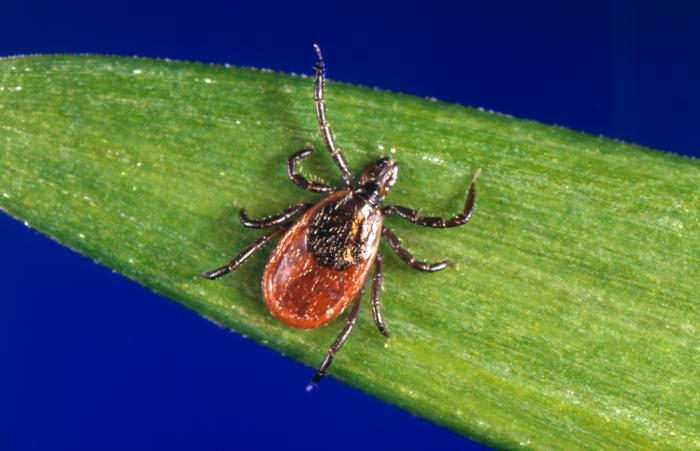
Not usually. Ticks are tiny, and a nymph blacklegged tick is roughly the size of a poppy seed. They are also excellent at staying hidden.

What you can see is the habitat. Ticks concentrate where your lawn borders wooded areas and in shady spots where damp leaves and yard debris accumulate. The places to look:
- Leaf litter along the wood line
- Tall grass and brush at the yard edge
- Underneath plant leaves and in dense low groundcover
- Shady, humid areas that never fully dry
- Under decks
- Wood piles and stacked debris
One correction worth making, because it drives a lot of unnecessary worry: ticks do not drop out of trees. They cannot jump or fly. A tick climbs to the tip of a grass blade or a low plant stem, typically within a couple of feet of the ground, extends its front legs, and waits for a host to brush past. That behavior is called questing. When something walks by, the tick grabs on and crawls. If you find one on your scalp, it got there by climbing, not by falling.
This is good news operationally, because it means the risk is concentrated in a band you can manage: the ground, the leaf litter, and the low vegetation at the edges.
Should you worry about ticks in your yard?
Yes, within reason. A tick cuts into the skin, inserts a feeding tube, and feeds slowly over a period of days. Small amounts of tick saliva enter the host during that process, and that is the route by which disease is transmitted.
In Minnesota and Wisconsin, Lyme disease is the most commonly reported tickborne illness. It is carried by the blacklegged tick, also called the deer tick, which is the small dark species most often found in wooded and brushy habitat. Early symptoms can include fever, chills, fatigue, body aches, headache, neck stiffness, and swollen lymph nodes, often along with an expanding rash. Untreated, Lyme disease can produce neurological problems weeks, months, or longer after infection. Other illnesses carried by the same tick occur here as well, including anaplasmosis and babesiosis.
Worth knowing: not every tick you find is a disease risk of the same kind. The American dog tick, which is larger and has light markings on its back, is common in this region and does not transmit Lyme disease. Identification matters, and so does how long a tick was attached, which is why daily tick checks after yard work are the single most effective personal habit.
Protect your kids and pets
A backyard should be where the sprinkler gets dragged out, the dog rolls in the grass, and nobody thinks about anything. The point of tick management is not fear, it is getting that back. Children and dogs are the most exposed members of the household because they spend time low to the ground and at the yard edges, which is exactly where ticks are.
Practical habits that matter as much as treatment: check kids and pets after outdoor time, with attention to the hairline, behind the ears, armpits, waistband, and between the toes on dogs; talk to your veterinarian about a tick preventive for pets; and keep play equipment away from the wood line.
How to make your yard less inviting to ticks
Ticks need humidity. Almost everything on this list works by drying out their habitat or removing the animals that carry them in.
- Remove leaf litter, especially along the wood line
- Clear tall grass and brush around the house and at the lawn edge
- Keep the lawn mowed on a regular schedule
- Stack firewood neatly in a dry location, off the ground
- Keep playground equipment, decks, and patios away from yard edges and trees
- Eliminate standing water in old tires, clogged gutters, buckets, wheelbarrows, and empty flower pots
- Discourage deer, raccoons, rodents, and stray animals from entering the yard
- Remove old furniture, mattresses, and trash that give ticks and rodents cover
A three-foot band of wood chips or gravel between the lawn and the wood line is a useful addition. Ticks are reluctant to cross dry, open ground, and it also marks a visual boundary for kids.
How to kill ticks in your yard
Targeting ticks where they live and breed is the most effective approach. Our barrier spray reduces ticks on the property across the season, applied on regular visits every three weeks for six visits total, spring through fall.
Specialists treat the perimeter of the yard and the harborage areas rather than fogging the open lawn:
- Underneath plant leaves
- Shady areas
- Wet areas and low spots
- Under decks
- Low vegetation and the brushy yard edge
- Wood piles
Results are immediate, in the sense that you see a large reduction in ticks after treatment begins. There is a bonus: the same application reduces mosquitoes, so you get both pests handled for one price.
Be realistic about the ceiling. No tick control program delivers 100 percent control, because ticks are carried in continuously by deer, rodents, and birds. What a barrier program does is substantially reduce the population in the area where your family actually spends time. Combine it with the habitat work above and with tick checks, and you have covered the three things that matter. See pest control for how the program is structured.
Bottom line
- Ticks do not drop from trees. They climb low vegetation within a couple of feet of the ground and grab a host that brushes past.
- The habitat is leaf litter, tall grass and brush at the yard edge, shady humid areas, under decks, and wood piles.
- Lyme disease is the most commonly reported tickborne illness in Minnesota and Wisconsin, carried by the blacklegged tick.
- Removing leaf litter, cutting back brush, mowing, stacking wood off the ground, and discouraging deer and rodents all reduce the population.
- Barrier treatment every three weeks, six visits spring through fall, substantially reduces ticks and mosquitoes, though no program is 100 percent.
Frequently asked questions
Do ticks fall from trees onto people?
No. Ticks cannot jump or fly, and they do not climb into tree canopies to wait. They quest from the tips of grass and low plants, usually under two feet off the ground, and then crawl upward once attached to a host.
How long does tick treatment last?
Our barrier applications are spaced three weeks apart, six visits from spring through fall, which keeps the treated harborage areas active through the whole tick season rather than for a few days at a time.
Is tick spray safe around kids and pets?
Keep children and pets indoors during the application and until treated areas have dried. The product goes on foliage and shaded harborage areas rather than the open lawn, and once it is dry there is no wet residue to pick up.
Can I eliminate ticks from my yard completely?
No program achieves total elimination, because deer, rodents, and birds carry ticks in continuously. A barrier program plus habitat management reduces the population substantially in the areas where your family spends time.
University of Minnesota Extension, Ticks.
Wisconsin Department of Natural Resources, Outdoor health and safety resources.