The 6 Worst Lawn Weeds in Minnesota & Control Tips for Minneapolis Area Homeowners

Weeds do not appear overnight, even though it looks that way. What you see in June started germinating weeks or months earlier, which is why identification and timing matter more than how aggressively you spray. These are the six we deal with most around the Minneapolis area.
1. Crabgrass
Crabgrass is the most common lawn weed in Minnesota. It is a summer annual grass, which means it germinates from seed each spring, grows through the heat, sets a large amount of seed, and dies at the first hard frost. Research-based estimates put seed production as high as 150,000 seeds per plant, and seed that does not germinate this year can germinate in future seasons.
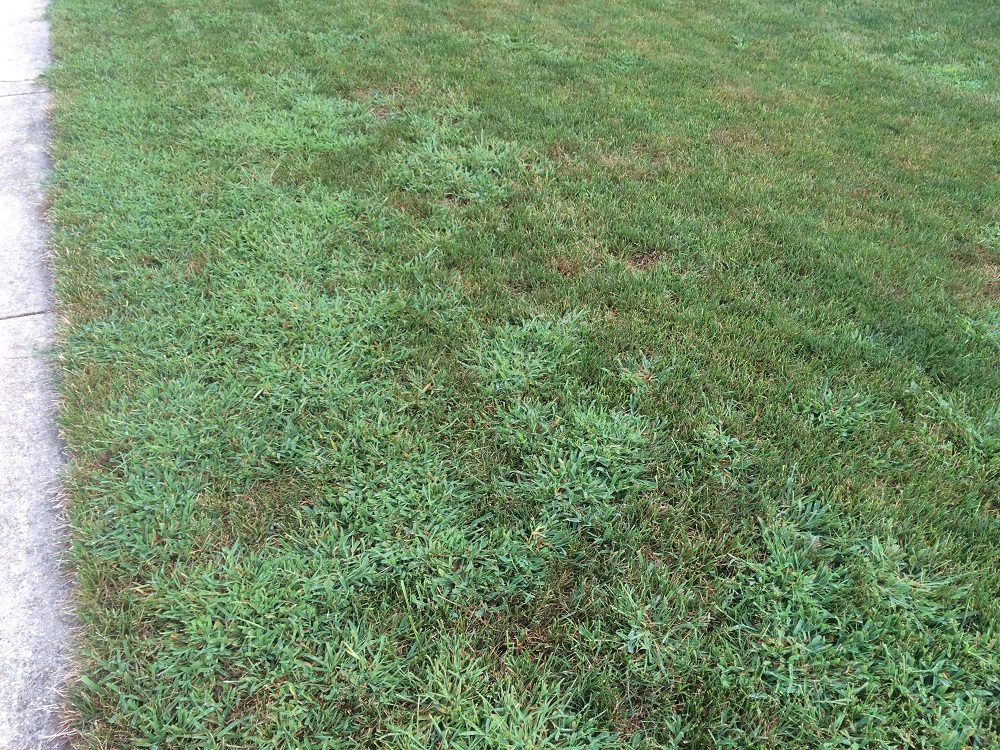
What it looks like: wider leaf blades than your turf, growing in low clumps with stems that run outward rather than upright, which is where the crab comparison comes from.
How to control it: prevention. A pre-emergent has to be down before soil temperatures hold around 55 degrees so the product is in place as seed germinates. Crabgrass still slips through in thin areas and along pavement edges, where soil warms first, and those escapes can be spot-treated with a post-emergent. Most companies make one spring application. We make two, early spring and late spring, which extends protection across the full germination window rather than just the front half of it.
2. Clover
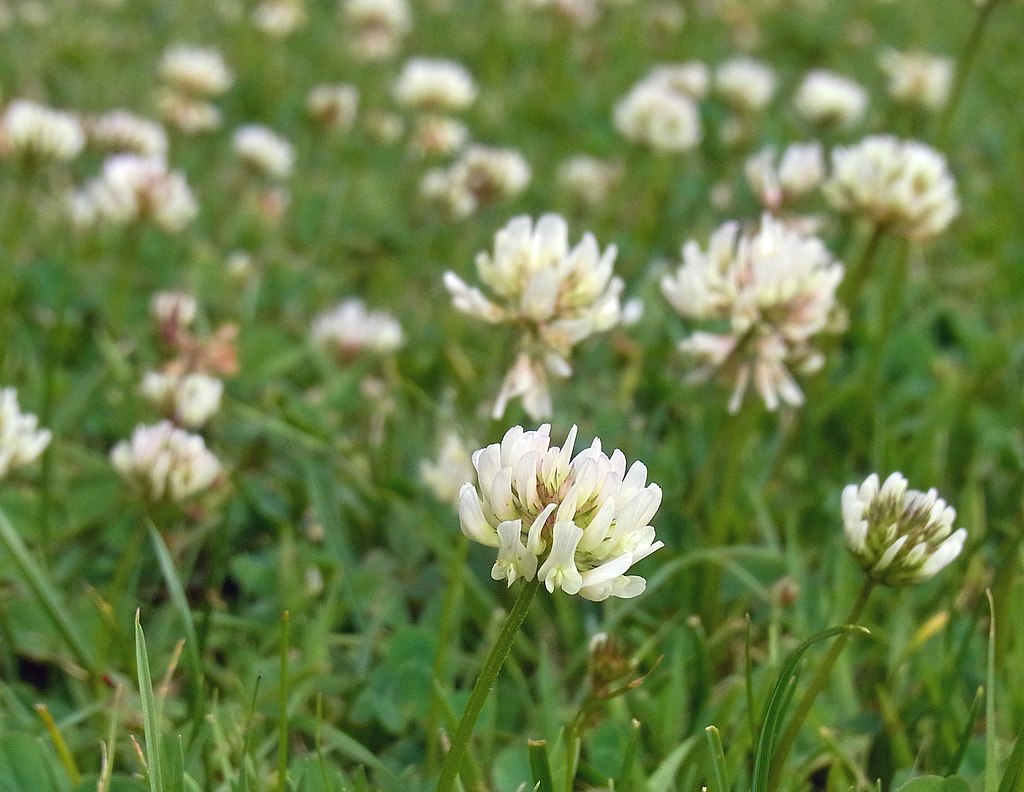
White clover fixes its own nitrogen through root nodules, which is exactly why it thrives in underfed lawns. It has a competitive advantage precisely where your grass has a nutritional disadvantage.
What it looks like: three leaflets at the end of a stem and small round white or pink flower heads.
How to control it: feed the lawn and mow high. A dense, well-fertilized stand of grass removes clover's advantage and crowds it out. Where it is established, broadleaf herbicides work, but if the fertility problem is not corrected it comes back.
3. Canada thistle
A perennial that spreads two ways, by seed and by a creeping root system that can extend many feet from the parent plant. That second method is what makes it difficult, because pulling the top off leaves the roots to send up new shoots.
What it looks like: soft green, deeply lobed, spear-shaped leaves with sharp spines along the margins, and purple pom-pom flower clusters at the top if it is allowed to bloom.
How to control it: treat before it flowers and sets seed, with spring and fall applications. Fall treatment is particularly effective, because the plant is moving resources down into the root system and carries the herbicide with it. In beds, a thick mulch layer suppresses germination of new plants. In turf, a dense healthy stand is the baseline defense.
4. Dandelion
A perennial with a deep taproot that spreads by wind-borne seed. Every seed head you blow as a kid is a few hundred new plants in the neighborhood, and the seed germinates readily.
What it looks like: smooth, sharply toothed leaves in a flat rosette, bright yellow flowers, and round white seed heads.
How to control it: most people associate dandelions with spring, but a major germination flush happens in late summer and early fall. That makes fall the strongest control window, since the plant is pulling resources into the taproot and the herbicide goes with it. We use a specialty weed shield product designed to reduce the number of dandelions that emerge, and anything that escapes can be treated with a broadleaf herbicide.
5. Creeping Charlie, also called ground ivy
A tenacious perennial that spreads by creeping stems that root at the nodes as they run, as well as by seed. It thrives in shade and in moist areas, and like most weeds it moves into lawns that are already thin.
What it looks like: a low vine with round, scallop-edged leaves and small purple flowers, forming a dense mat.
How to control it: it resists many common broadleaf herbicides, which is the core difficulty. A plant or two can be pulled by hand, but on a large patch hand pulling backfires: every stem fragment left behind or dropped elsewhere can root and start a new colony. We treat it with a specialty liquid product across multiple applications through the year, with fall being the most effective timing. Standard store products generally will not finish the job.
6. Broadleaf plantain
A stubborn perennial that favors compacted soil, thin turf, moist shade, and areas with uneven watering. It has a shallow fibrous root system with a short central taproot, and it persists through winter as a basal rosette.
What it looks like: medium green oval leaves with prominent parallel veins forming a flat rosette, with narrow flower spikes carrying dozens of tiny buds emerging in late spring.
How to control it: remove the conditions it likes. Core aerate in fall to relieve compaction, mow at three to four inches, seed thin areas, and even out irrigation coverage. Established plants respond to broadleaf herbicide.
The best defense against all six
The pattern should be obvious by now. Every one of these weeds is easier to prevent than to remove, and a thick, healthy stand of turf is the prevention.
Mow high
The instinct is to cut the weeds down. It does not work that way. Taller grass grows thicker, shades the soil so weed seed does not germinate as readily, and supports a deeper root system. Mowing short heats the soil surface, which is precisely what crabgrass seed wants.
Water correctly
Both extremes favor weeds. Deep, infrequent watering of about an inch per week including rainfall builds the root system that lets grass outcompete them. A properly designed irrigation system makes that consistent, though hoses and timers on a schedule beat ignoring the lawn's needs entirely.
Treat on the right calendar
Spring preventive timing follows soil temperature, which in Minnesota puts the start anywhere from March to May depending on the year. Curative treatments run from April through early October. Many of the worst spring weeds germinate the previous fall, which is why a program that stops in August gives up its best window.
Spot treat where spot treating is enough
Crabgrass requires whole-lawn pre-emergent coverage because the seed is everywhere. Most broadleaf weeds do not. Treating only the plants that are there uses far less product, which is better for your yard and the surrounding environment.
Expect some weeds anyway
No program eliminates 100 percent of weeds, and anyone promising that is not being honest. Some have not germinated yet when a technician visits. Others blow in from next door. Weed control takes ten days or more to show results, and the goal is knocking a weed out rather than knocking it down. We will come back for persistent escapes at no charge or catch them at the next visit.
Bottom line
- Crabgrass is controlled by pre-emergent timed to soil temperature near 55 degrees, with a split application covering the full germination window.
- Clover signals low fertility. Feeding the lawn and mowing high removes its advantage.
- Fall is the strongest treatment window for dandelion, Canada thistle, and creeping Charlie, because the plants move resources into their roots.
- Broadleaf plantain points to compaction and thin turf. Aerate, mow at three to four inches, and seed thin areas.
- Hand pulling creeping Charlie on a large patch spreads it, since stem fragments root.
Frequently asked questions
Why do I still have weeds after a treatment?
Herbicides commonly take ten days or more to show visible results, and weeds that had not germinated at the time of the visit will come up afterward. Weeds also migrate in from neighboring properties, which no treatment on your lawn can prevent.
Does mowing shorter kill weeds?
No, it helps them. Short mowing heats the soil surface and weakens the root system, which favors weed germination. Taller grass shades the soil and competes better.
When should I treat dandelions?
Fall, primarily. The plant is pulling carbohydrates down into its taproot at that point and carries systemic herbicide with it. Spring treatment knocks the top off without always killing the root.
Can I pull creeping Charlie out by hand?
Only for one or two plants. On a patch, hand pulling tends to make it worse, because stems that root at the nodes will re-establish from any fragment left behind or dropped elsewhere in the lawn.
University of Wisconsin Division of Extension, Crabgrass management in lawns.
University of Wisconsin Division of Extension, Dandelion, Taraxacum officinale.