


Will Irrigation System Installation Damage My Lawn?
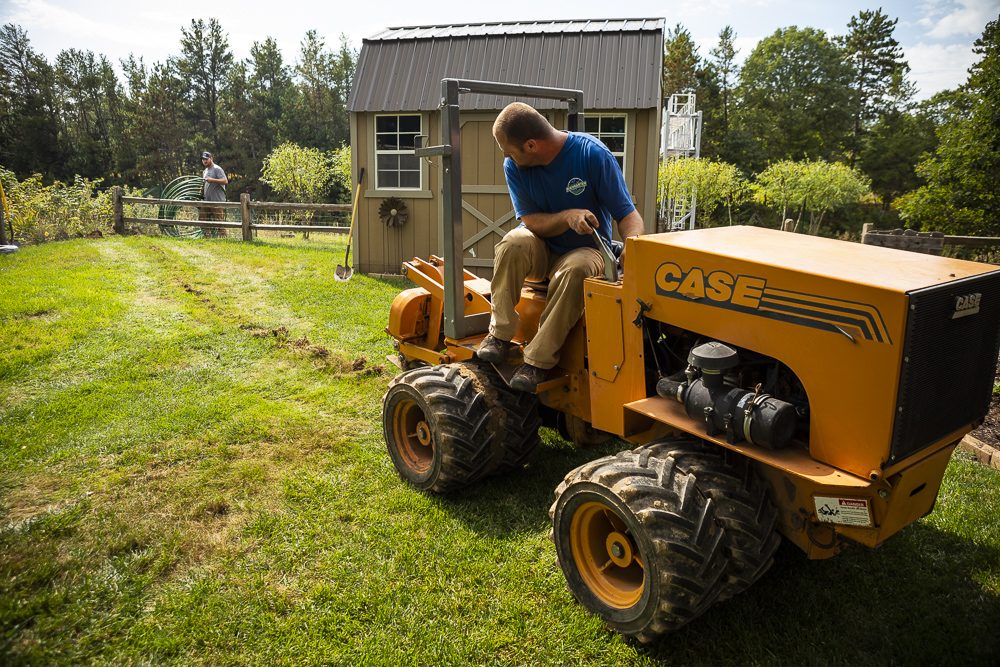
A properly done sprinkler installation does not leave your lawn torn up. Instead of digging open trenches, crews cut a narrow slit and pull the pipe through underneath the sod, and those slits knit back together within a few weeks of normal watering and mowing. The areas that do get disturbed, around valve boxes and tie-in points, are raked out and reseeded before the truck leaves.
Pulled pipe, not open trenches
Some irrigation installation companies in Eau Claire and Minneapolis still trench for residential systems, which throws soil across the lawn and leaves a scar you will be looking at all season. RainMaster pulls pipe instead. A machine cuts a slit a couple of inches wide and drags the poly pipe through the ground behind it, so the sod on either side of the slit stays intact and in place.
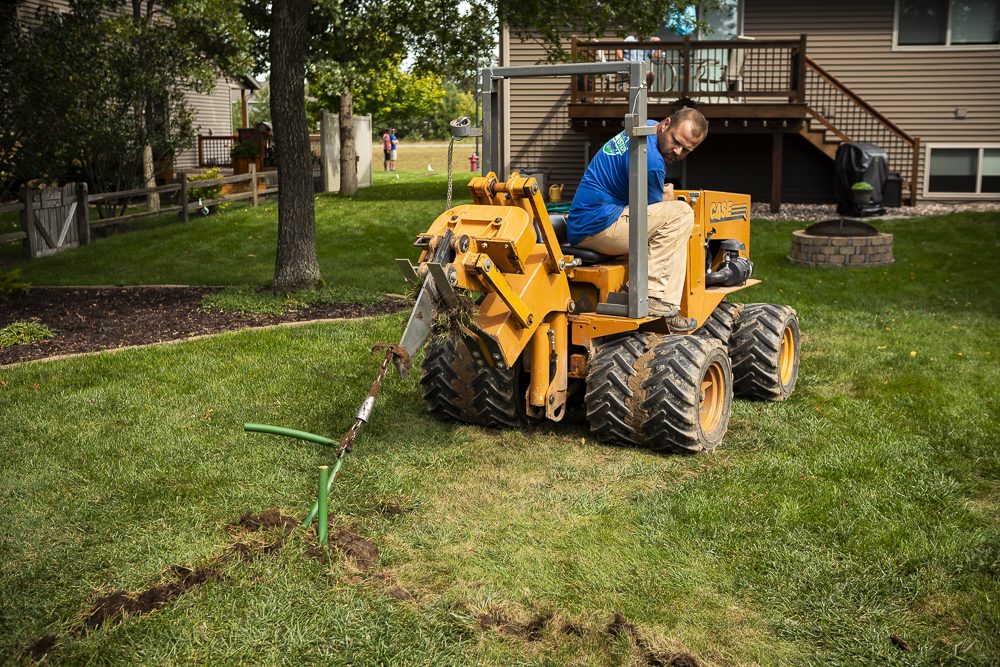
The practical difference is what the lawn looks like the next morning. Pulled lines leave a seam. Trenches leave a pile of subsoil on top of your turf that has to be shoveled back in, tamped, and reseeded, and which settles into a visible depression over the following year.
Where some digging is unavoidable
Nobody installs a system with zero excavation, and a company that promises that is overselling. Expect hand or spot digging at a few specific points:
- The water connection and backflow preventer. The system ties into the home's supply, and code in both states requires backflow protection to keep irrigation water out of the drinking supply. That work is usually inside, in a basement or mechanical room.
- Valve manifolds. Each zone's valve sits in a buried box, so there is a small excavation at each manifold location.
- Crossings under hardscape. Driveways, sidewalks, and patios get sleeved, either bored or cut at the joint, depending on the surface.
- Around tree roots and established beds. Those sections get hand dug so roots are worked around rather than cut.
Those are small, defined areas, not the whole yard.
Utility locates come first
Before a machine touches your lawn, we call the dig hotline: Diggers Hotline in Wisconsin and Gopher State One Call in Minnesota. Locators mark public utilities, which covers gas, electric, water, and communication lines, and the marks have to be in place before work starts.
What locates do not cover is anything private on your property, and that is where homeowners can save themselves a repair. Tell us about:
- An invisible dog fence
- A gas line run out to a grill, fire pit, or garage
- Septic tank, lines, and drain field
- Low-voltage landscape lighting
- Private well lines, downspout drains, and sump discharge lines
- Anything you buried yourself
Working around your landscaping
If you have a landscaper, or a project in progress, we coordinate the sequence with them so the irrigation goes in at the right point rather than after new plantings are set. We schedule the plumbing, handle the locate call, and work the layout around beds, trees, and planned hardscape.
Clean-up and reseeding
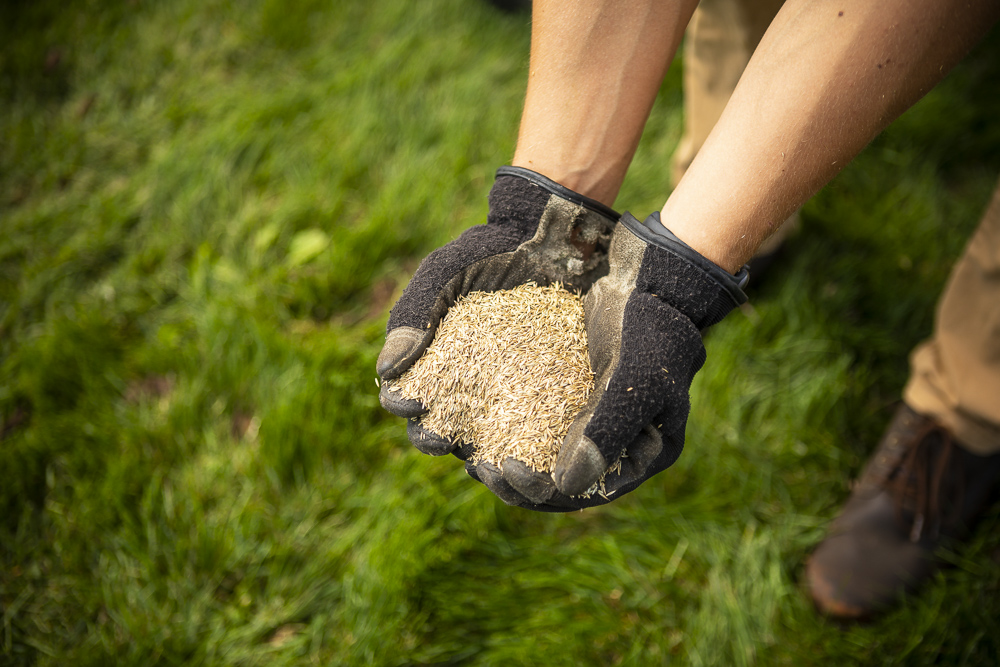
Specialists clean up when the install is done and reseed the areas that were disturbed. A lot of companies skip that step because it costs them money. Slits get closed and rolled, excavated spots get raked level and seeded, and soil and sod are returned where they came from.
Season matters for how fast that recovery looks finished. An install in spring or from mid-August through mid-September lands in the best seeding windows for cool-season grass in this region, so seeded areas fill in quickly. A midsummer install needs more frequent light watering on the seeded spots, which your new system can handle. A late-fall install may carry a visible seam through winter and green over the following spring.
Extras that matter two years from now
Most of what separates a good install from a cheap one is invisible the day it goes in:
- Flexible tubing at each head. A short flexible connection lets a head be moved six inches for a new patio, driveway, or fire pit without cutting into the lateral line. It also absorbs impact from a plow or a mower.
- Spare wire runs. Extra wire in the trench costs very little now and saves a dig later if you add a zone or a wire gets damaged.
- A controller with room to grow. We install a controller sized for at least one more zone than the system needs today.
- Head placement with the future in mind. Heads set back from hardscape edges and out of mower turning paths survive longer.
Follow-up and the first season
You get a follow-up inspection after installation, where specialists check for leaks, verify pressure at the heads, confirm coverage and overlap, and adjust arcs and nozzles once the system has run a few cycles. You will also get the details on irrigation maintenance, which in this climate means three visits a year: spring startup, a midsummer check when the system is working hardest, and the fall blowout that gets water out of the lines before freezing.
Through the first season, keep the seeded strips damp until they fill in, mow at three inches or higher, and watch the first few cycles with the controller in manual so you can flag any head that is spraying the house, the driveway, or the neighbor's car.
How long until the lawn looks normal again
During the growing season, pulled slits are generally hard to find after three to four weeks of mowing and watering. Spot-seeded areas around valve boxes take a few weeks to germinate and a full season to blend in color and density with the surrounding turf. If the lawn was thin before the install, that is the thing you will notice, not the install.
Ready to talk about a system for your property? Request a quote or call 888-839-8484 and we will walk the yard with you.
Bottom line
- Pipe is pulled through narrow slits rather than laid in open trenches, so the sod stays in place and the seams close in a few weeks.
- Expect limited digging at valve boxes, the indoor water connection and backflow device, and under driveways and walks.
- Dig hotline locates mark public utilities only, so point out dog fence, gas runs to a grill, septic, lighting, and drain lines.
- Disturbed areas are raked and reseeded; spring and late summer installs recover fastest.
- Flexible head connections, spare wire, and a controller with an extra zone make future changes cheap.
Frequently asked questions
Will installing a sprinkler system ruin my existing lawn?
No. With pulled pipe the disturbance is a narrow slit per line plus small excavations at valve boxes and crossings. In the growing season the lawn closes over those within a few weeks.
How long does sprinkler system installation take?
Most residential systems are installed in a day or two once utility locates are complete. The locate request has to be placed in advance, which is usually the part that sets the schedule.
Do you reseed the areas you dig up?
Yes. Disturbed areas are raked level and seeded as part of the installation. Many companies charge extra for that or skip it.
What is the best time of year to install an irrigation system in Wisconsin or Minnesota?
Spring through early fall. Spring and the mid-August to mid-September window are best for how quickly seeded areas recover. Late-season installs are fine mechanically, but the seams may not fill in until the following spring.
Irrigation Association, Irrigation industry standards and certification.
EPA WaterSense, Sprinkler Spruce-Up.


