


Will Your Grass Spread to Cover Bare Spots on Its Own?
Whether your lawn fills in a bare patch by itself depends entirely on which grasses are in it. Kentucky bluegrass does spread, slowly; perennial ryegrass and tall fescue do not spread at all. In practice, most bare spots in this region need seed, and weeds will take the opening long before grass does.
Does grass spread on its own?
It depends on growth habit. Kentucky bluegrass spreads by rhizomes, underground stems that send up new shoots away from the parent plant. That is why bluegrass creeps into rock beds and starts covering an irrigation valve box. Fine fescues are mixed: creeping red fescue also spreads slowly by rhizomes, while the others are bunch types.
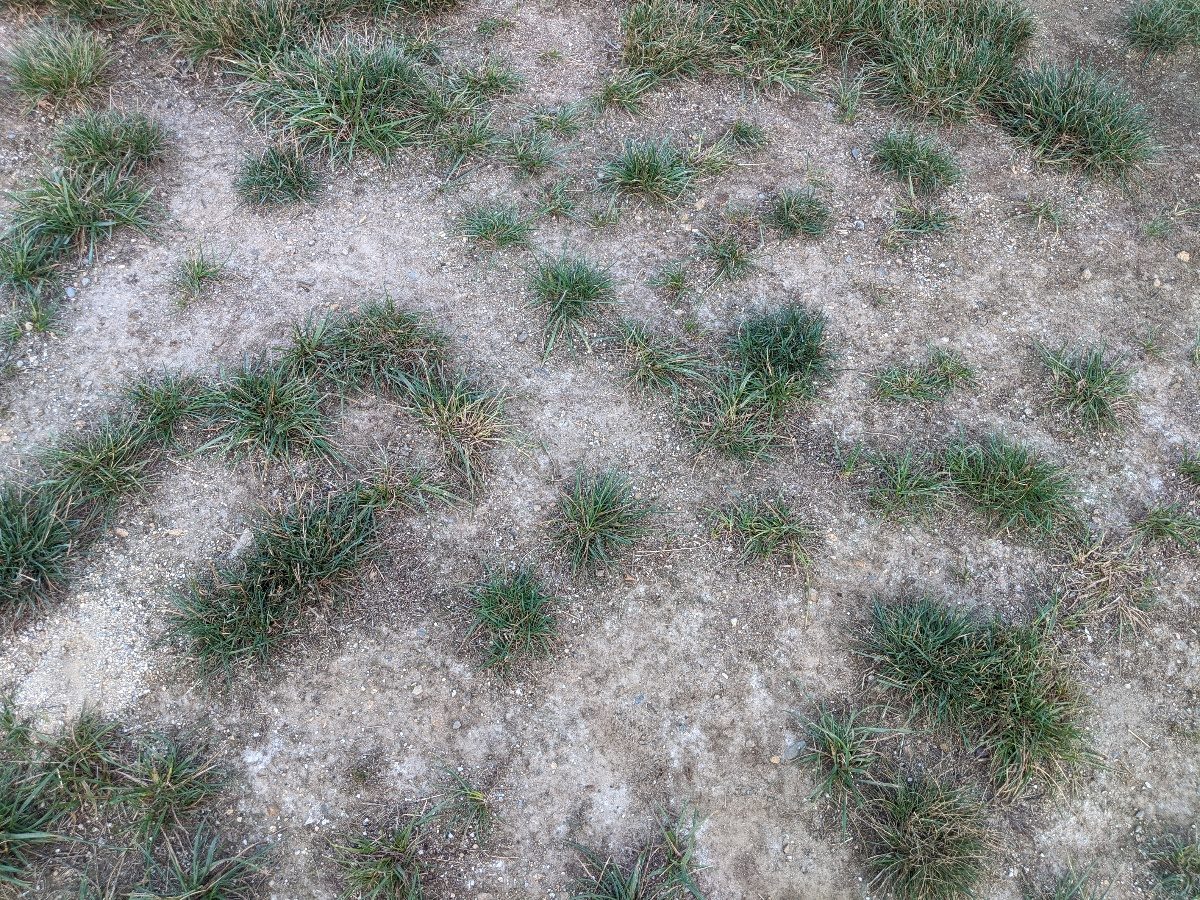
Perennial ryegrass and tall fescue are bunch-type grasses. They grow by producing new shoots, called tillers, at the base of the existing plant. A bunch-type plant gets wider by a small amount and stops there. It cannot cross a bare patch, so an area with no plants in it stays empty.
Most seed sold for Wisconsin and Minnesota lawns is a blend of Kentucky bluegrass, perennial ryegrass, and fescue, so a typical lawn here has some spreading capacity and a lot that does not spread. Even the bluegrass is in no rush. Meanwhile dandelion, crabgrass, and other weeds colonize open soil quickly, which is the real argument against waiting.
Bare spots also tend to have a cause: lawn disease, dog urine, a fuel or oil spill from the mower, grub feeding, shade, or compaction from traffic. Fix the cause or the spot comes back.
1. Make sure the site can grow grass at all
If a bare spot is in deep shade, you can seed it every year and get nothing. Most turf grasses need roughly four hours of direct sun a day to persist, and even shade-tolerant fine fescues have a floor. Thinning tree limbs to let light through, or raising the canopy, usually has to happen before seeding is worth the effort. Where that is not possible, mulch or a shade-tolerant ground cover is the honest answer.
2. Seed at the right time of year
Late summer into early fall is the best seeding window in the Chippewa Valley and the Twin Cities. Soil is still warm enough for fast germination, air temperatures have come down, rainfall is more dependable, and there is time for roots to establish before winter. There is also far less weed seed in the air competing for the same open ground.
Workable range is mid-May through late September. Seed too late and the seedlings go into freezing weather without a root system. Seed in June or July and you are asking new grass to establish through the hottest, driest stretch of the year. Aim for mid-August through mid-September if you have a choice.
3. Do not seed where pre-emergent has been applied
Crabgrass pre-emergent prevents seeds from establishing. It does not distinguish between crabgrass seed and the grass seed you just spread. That means you cannot apply pre-emergent and seed the same area in the same window, and it is the single most common reason a repair fails for no apparent reason.
Professional products exist that control weeds without harming new seedings, which is how a lawn care program can seed and treat for weeds in the same visit. With consumer products, pick one or the other.
4. Use quality seed, and match what you already have
Two things go wrong with cheap seed. First, low-grade bags contain a higher percentage of inert matter, undesirable grass species, and in some cases weed seed, all of which is printed on the label if you read the tag. Second, it may not match. If your lawn is a dark fine-bladed bluegrass and you patch with a coarse bright-green ryegrass, the repair stays visible for years.
Read the seed tag, buy the same species mix as the surrounding lawn, and check the test date so you are not buying seed with reduced germination.
5. Get the seed in contact with soil
Seed broadcast on top of thatch or matted dead grass will not germinate reliably. It needs to sit against soil, stay moist, and be shallow enough to reach light as it emerges. Rake the spot to expose soil, scratch the seed in, and tamp it lightly so it is held in place.
6. Keep traffic off while it sprouts
Seedlings have almost no root system for the first few weeks and a single pass of foot traffic can wipe out a patch. Reroute the path through the yard, keep games off the area, and keep the dog off it if you can.
7. Aerate if bare spots keep coming back
If thin areas return in the same places every year, compaction is usually the reason. Compacted soil has little pore space, so roots cannot take in water or nutrients, the turf weakens, and weeds and disease move in. Seed alone does not solve it.
Core aeration pulls plugs of soil out of the ground, creating channels for air, water, and nutrients to reach the root zone. It also leaves hundreds of small openings that are ideal seedbeds, which is why aeration and overseeding are done together.
Step by step, if you have not done this before
- Rake out dead, matted turf until you can see soil.
- Loosen the top inch of soil so roots can penetrate and seed can settle in.
- Spread seed at the rate on the bag, scratch it in, and tamp it down for contact.
- Apply a starter fertilizer for the phosphorus and quick-release nitrogen seedlings use.
- Water lightly and often. Two or three cycles a day of 15 to 20 minutes keeps the surface moist. Shift to longer, less frequent watering after four to six weeks.
- Hold off on weed control for at least four mowings unless a professional product labeled for new seedings is being used.
Bottom line
- Kentucky bluegrass and creeping red fescue spread by rhizomes. Perennial ryegrass and tall fescue are bunch types and cannot cross a bare patch, so most repairs need seed.
- Mid-August through mid-September is the best seeding window here; the usable range is mid-May through late September.
- Crabgrass pre-emergent blocks grass seed from establishing, so do not seed and apply pre-emergent in the same window.
- Match the seed to the species already in the lawn, and get it in direct contact with soil, not thatch.
- If bare spots recur in the same spots, it is usually compaction or shade. Aerate, or fix the light, before seeding again.
Frequently asked questions
Will bare spots in my lawn fill in by themselves?
Only if the surrounding grass spreads. Kentucky bluegrass will creep in over time, slowly. Perennial ryegrass and tall fescue will not, so patches in those lawns stay open until you seed them. Weeds will usually get there first either way.
When is the best time to seed bare spots in Wisconsin or Minnesota?
Late summer into early fall, ideally mid-August through mid-September. Soil is still warm, air has cooled, rain is more reliable, and there is much less weed seed competing for the open ground.
Can I put down crabgrass preventer and grass seed at the same time?
No, not with consumer products. Pre-emergent stops grass seed from establishing along with crabgrass. Choose one for that window, or have a professional apply a product labeled for use on new seedings.
How often should I water newly seeded bare spots?
Lightly, two or three times a day for 15 to 20 minutes, keeping the top half inch of soil moist until the seedlings are established. After four to six weeks, move to longer and less frequent watering to drive roots deeper.
University of Minnesota Extension, Seeding and Sodding Home Lawns.
University of Wisconsin Extension, Lawn Establishment and Renovation.


