


Why Your Sprinkler System is Leaking When It’s Off & How to Fix It
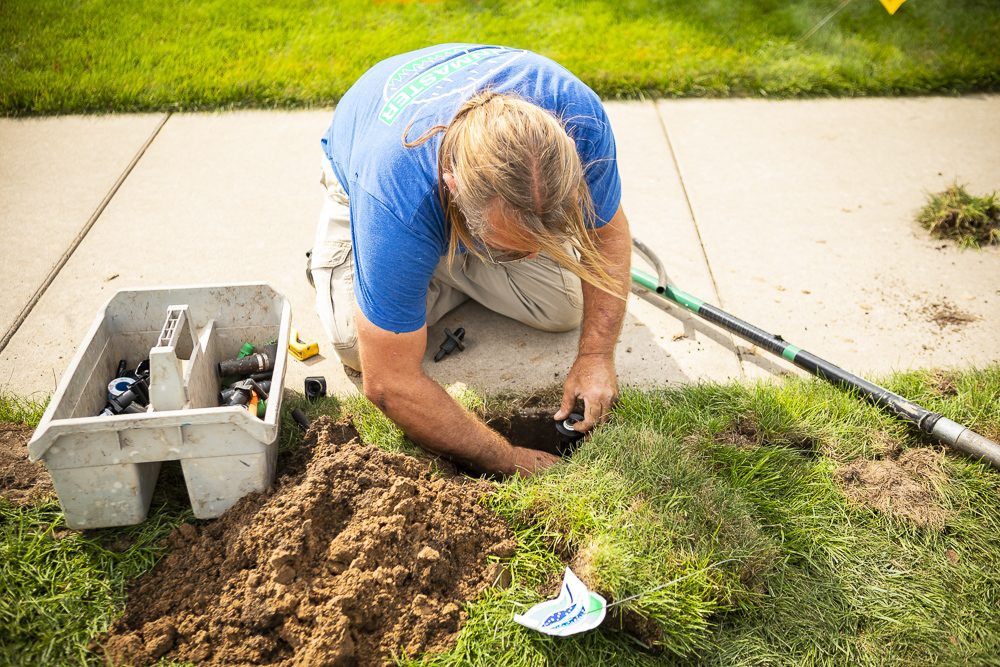
Yes, a sprinkler system can leak when it is turned off, and there are only a few reasons why. The two common ones are a valve that is no longer sealing and low-head drainage, which is water in the lateral lines running downhill and out the lowest head after a cycle ends. A water meter reading with the controller off tells you which one you have in about fifteen minutes.
How you know it is happening
The symptom is wet ground when nothing is running. Watch for:
- An area of lawn that is continuously soggy, or excessively wet between watering cycles
- Water trickling or bubbling from one sprinkler head long after the zone shut off
- Algae, moss, or mushrooms in one spot
- A water bill that climbed without a change in your schedule
- Ice on a walkway or driveway in late fall and early spring
Start with the water meter test
This is the fastest way to separate a pressurized leak from simple drainage, and you can do it yourself.
Turn the controller to off. Make sure nobody is using water inside, including ice makers and humidifiers. Read your water meter, note the position of the low-flow indicator, wait fifteen to thirty minutes, and read it again.
- The meter moved. Water is escaping under constant pressure. That points to a valve that is not sealing, a leak on the mainline between the tap and the valves, or a weeping backflow device. Those run continuously and waste real water.
- The meter did not move, but a low area is still wet. That is almost certainly low-head drainage, which is gravity emptying the lateral lines after each cycle. It is not a malfunction and it is not costing you water beyond what the zone already used.
Cause 1: leaking valves
The valves in your system are faucets that open and close on a signal from the controller. Like any faucet, they wear out. The usual culprits are a bit of grit or debris sitting on the diaphragm seat, a diaphragm that has hardened and no longer seals, or a worn solenoid. Grit shows up most often after a water main repair in the neighborhood or after a line has been opened for service.
The giveaway is that one zone weeps continuously and the water always comes out at the lowest head in that zone, because that is the path of least resistance. An irrigation specialist can open the valve, clean the seat, rebuild it with a new diaphragm or solenoid, or replace the valve when the body is too worn to seal. Valves work hard in the ground and do not last forever.
The master valve and backflow assembly
If the master valve or the backflow preventer is weeping, you get a leak with the entire system off, often showing up near the manifold or inside the mechanical room. Backflow protection is required by code in both Wisconsin and Minnesota because it keeps irrigation water out of the drinking supply, so this is not a part to improvise on. It gets repaired or replaced with the correct device.
Cause 2: low-head drainage
Low-head drainage sounds like a defect and is not. When a zone shuts off, the water left standing in that zone's lateral pipes has to go somewhere, and gravity sends it downhill to the lowest point. It then runs out of the lowest sprinkler head until the pipe is empty. If your yard has any real grade, you will see it on every cycle.
It becomes a problem when the water always puddles in the same low area, streams across a sidewalk or driveway, washes mulch out of a bed, or freezes into ice during freeze and thaw weather. The fixes are straightforward:
- Check valves. Either heads with built-in check valves or inline check valves installed in the lateral, which hold water in the pipe instead of letting it drain out.
- Relocating the low head or raising it out of the low spot.
- Splitting a zone by elevation so one zone does not span a long slope.
Cause 3: a cracked line or fitting
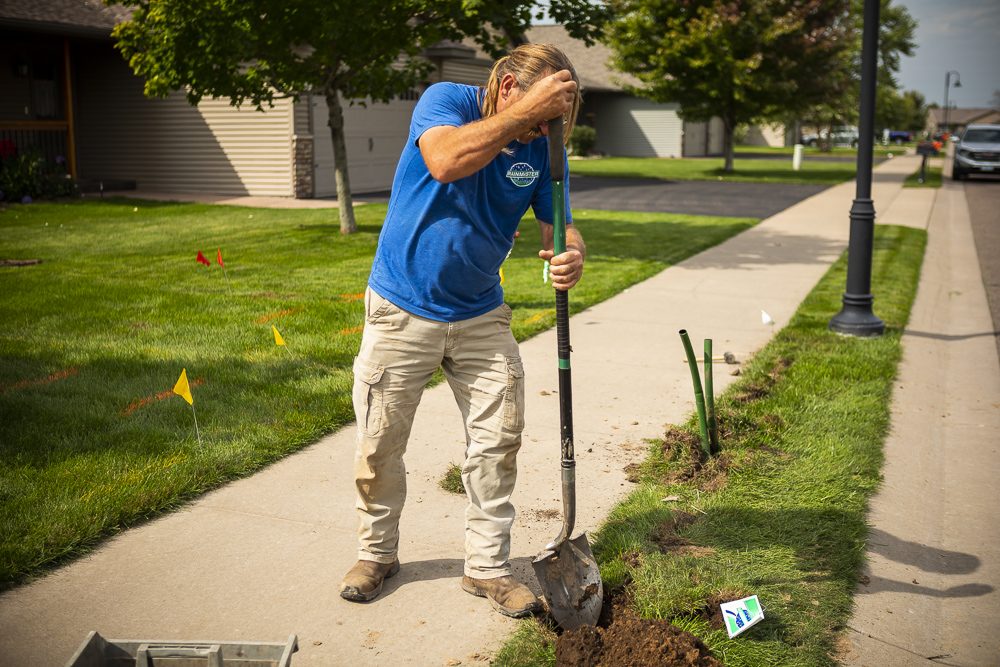
A leak on the mainline, the section that stays pressurized whether the system is running or not, produces a constantly wet area, a soft spot underfoot, and a meter that keeps turning. Common causes in this region are freeze damage from an incomplete fall blowout, a shovel or post hole, snow plow or mower impact on a head and riser, aerator tines, and soil settling that puts stress on a fitting.
Freeze damage is worth calling out separately. Water left in a line over a Wisconsin or Minnesota winter expands and splits pipe, fittings, and valve bodies, and the damage usually announces itself at spring startup rather than in the fall. That is the real reason a thorough fall blowout matters.
Cause 4: worn head seals
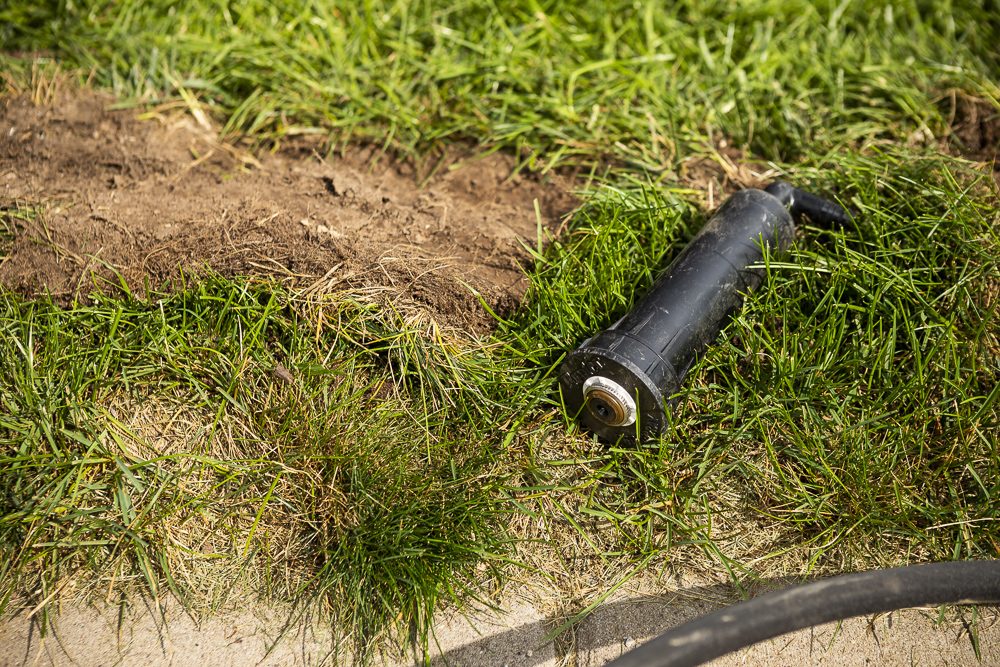
A rotor or spray head that will not retract, or that weeps around the riser after the zone closes, generally has a worn wiper seal or grit holding it up. The repair is a seal or nozzle replacement, sometimes a new head. This one is easy to spot because the water comes out at the head itself rather than pooling in the lawn.
Maintenance is what prevents all of this
Regular tune-ups catch the small failures before they soak your lawn or your water bill. On a service visit, specialists check and correct:
- Broken, leaking, or clogged heads and nozzles
- Broken or weeping lateral and mainline sections
- Damage from snow plows, mowers, and aerators
- Valves that no longer seal and a zone that will not shut off
- Loose fittings and pressure that is too high or too low
- A controller still running last season's schedule
The right schedule in this climate is three visits a year: spring startup, a midsummer check when the system is under its heaviest demand and most likely to fail, and the fall shutdown and blowout before the first hard freeze. Skipping the summer visit is how a small leak runs for two months unnoticed.
If your system is leaking when it is off, request a quote or call 888-839-8484, and we will find it rather than guess at it.
Bottom line
- Run the meter test with the controller off: movement means a pressurized leak, no movement with a wet low spot means drainage.
- A single zone weeping from its lowest head usually means a valve with debris on the seat or a worn diaphragm or solenoid.
- Low-head drainage is gravity emptying the lateral lines, normal unless it puddles, crosses hardscape, or ices over; check valves solve it.
- A constantly wet area with the meter turning points to a mainline crack, often freeze damage from an incomplete blowout.
- Three service visits a year, spring startup, a midsummer check, and the fall blowout, prevent most of these failures.
Frequently asked questions
Can a sprinkler system leak when it is turned off?
Yes. The mainline stays under pressure at all times, so a failing valve, a cracked mainline, or a weeping backflow device leaks with the controller off. Lateral lines can also drain out the lowest head after each cycle.
How do I know if my sprinkler valve is leaking?
Shut the controller off and watch your water meter with no water running inside. If it keeps moving, something under pressure is leaking, and a single zone weeping from its lowest head points at that zone's valve.
Is low-head drainage a problem I need to fix?
Not usually. It is gravity doing what gravity does. Fix it when the water puddles in the same low spot every cycle, runs across a walk or driveway, washes out mulch, or freezes into ice.
How much water does a leaking irrigation valve waste?
Enough to show up on a bill, because it runs around the clock rather than during a cycle. The amount depends on how far the valve is from sealing, which is why a leak that is only a trickle still deserves a service call.
EPA WaterSense, Sprinkler Spruce-Up.
Irrigation Association, Irrigation industry standards and certification.


