


Why Grass Won’t Grow Along Your Driveway or Sidewalk
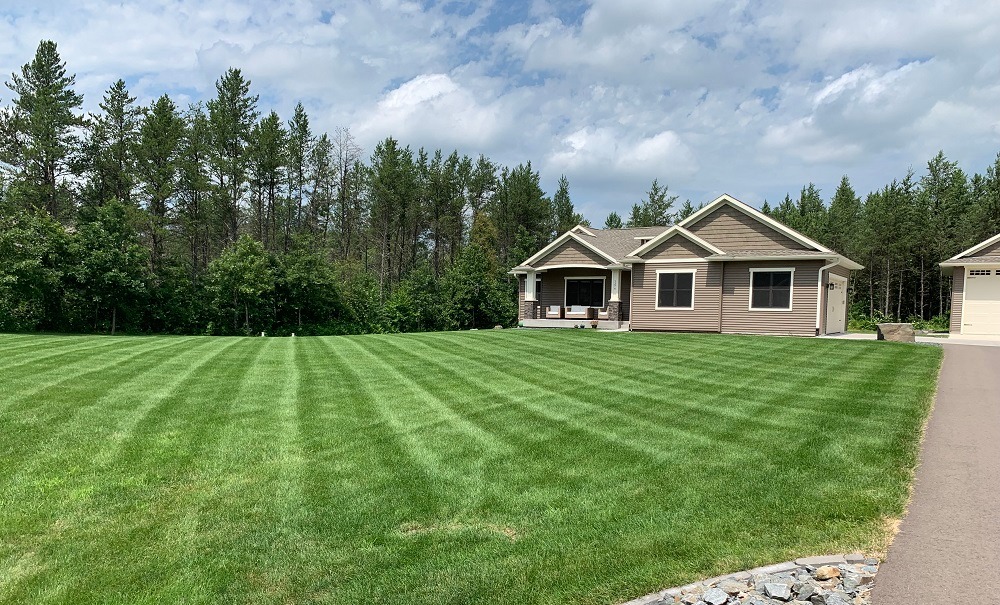
Your lawn can look great everywhere except the two-foot strip along the driveway, which goes yellow, then brown, then bare. That strip is the hardest growing environment on the property, and four different things are usually working against it at once. Each one has a fix.
Why the edges are the hardest place to grow grass
The grass next to pavement is dealing with more heat, less soil volume, more traffic, more salt, and often less water than the rest of the lawn. A lawn care program that keeps the middle of the yard thick will not automatically carry the edges. They need to be addressed specifically.
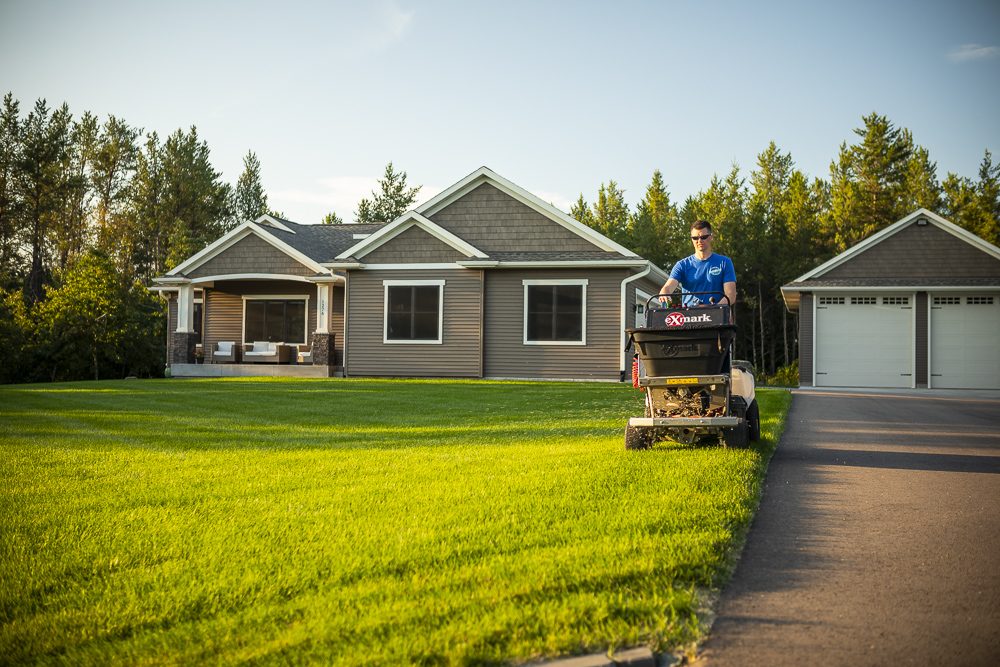
Reason 1: it is genuinely hotter out there
Asphalt and concrete absorb solar energy all day and radiate it back into the adjacent soil and air. On a hot sunny afternoon an asphalt surface can run well over 140 degrees, and it keeps giving off heat long after sunset. The old line about frying an egg on the pavement is mostly a myth, since egg white needs closer to 158 degrees to set, but the point stands: the grass along that edge is cooking.
Heat also dries that strip faster, and the soil next to pavement is often shallower and sandier from construction backfill, so it holds less water to begin with.
What to do:
- Give the edges more water than the rest of the lawn. That strip genuinely needs more, and running the whole lawn longer to compensate is wasteful and bad for the rest of the turf.
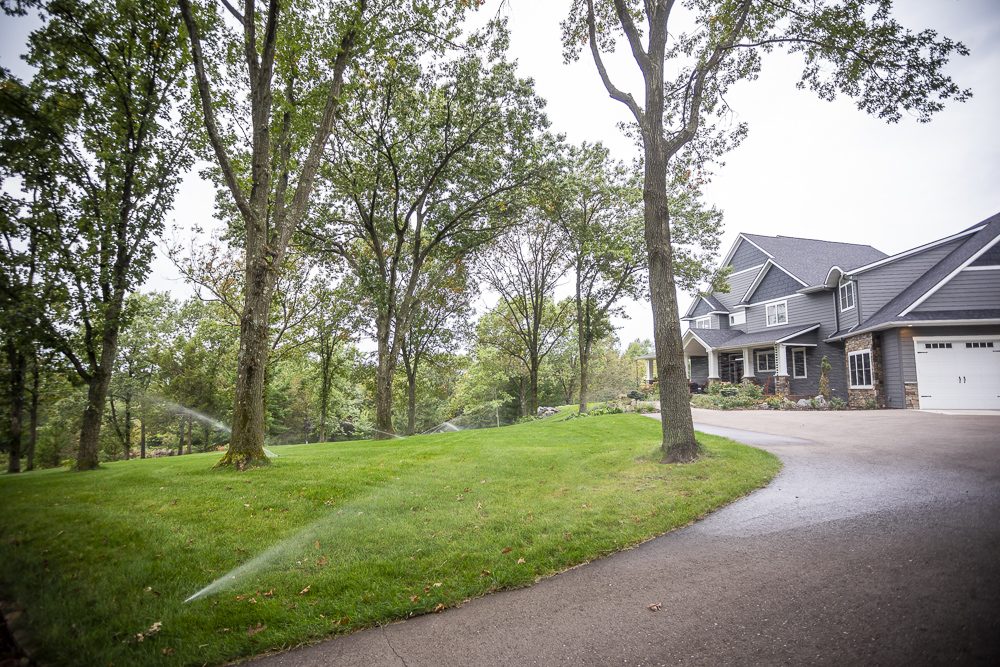
- Verify the sprinklers actually reach it. This is the most common cause we find, and it is not really a heat problem at all. Heads along pavement get clipped by mower decks and snowplows, clogged with debris, or knocked out of adjustment, and the strip simply stops getting water. A sprinkler system check that tests coverage head by head is usually the quickest win available on an edge problem.
- Consider not growing grass there. Pavers, a gravel border, or a heat-tolerant ground cover makes a durable buffer, and the extra width keeps people from stepping onto the lawn when they get out of the car.
Reason 2: compacted soil
Think about the traffic that strip takes. Foot traffic to and from the car, kids cutting the corner, trash cans rolled over it weekly, and tires that do not always stay perfectly on the concrete. Compacted soil means the pore space roots need for air and water is gone. Water runs off instead of soaking in, and roots cannot grow into dense soil.
What to do: core aeration. Aeration pulls plugs of soil out of the ground and creates channels so air, water, and nutrients get down to the root zone. Edges and traffic lanes benefit from it more than anywhere else in the yard, and pairing aeration with overseeding in late summer is how you rebuild a thin edge rather than just feeding what is left.
Reason 3: de-icing salt
This one is specific to Wisconsin and Minnesota and it gets overlooked constantly. Salt from the road, the driveway, and the sidewalk ends up in that strip of soil, either applied directly or carried there in plowed and shoveled snow. Salt damages turf two ways: it pulls water away from roots, and sodium degrades soil structure, which makes an already compacted edge worse.
Salt damage shows up as a dead band a foot or two wide that greens up late or not at all in spring, worst along the street side and wherever snow gets piled.
What to do:
- Pile shoveled and plowed snow somewhere different each storm instead of on the same strip, or onto beds and pavement where you can.
- Use de-icer sparingly and sweep up the excess rather than leaving it to wash into the soil.
- Water the strip heavily in spring to leach salt down past the root zone before seeding.
- Aerate, then overseed with a mix that includes perennial ryegrass and fine fescues, which handle edge conditions better than straight Kentucky bluegrass.
Reason 4: mowing too short
Short mowing hurts everywhere, and it hurts most along pavement. Cutting low removes leaf surface the plant needs for photosynthesis, so it has less capacity to recover from stress. It also exposes more soil to direct sun, which raises soil temperature in a spot that is already overheated and already dry.
What to do: keep the lawn at three to four inches after mowing, and never remove more than a third of the current height in one pass. Taller grass grows thicker, shades its own soil, roots deeper, and handles that edge heat far better. If you scalp the lawn in July, the driveway strip is the first place that shows it.
Putting the fixes in order
If the edge of your lawn is struggling, work through it in this order. Check sprinkler coverage first, because a broken or misaimed head explains a surprising share of dead edges and costs the least to fix. Then raise the mowing height. Then aerate and overseed the strip in late August or early September. Then address salt handling before winter. Pavers or ground cover are the right answer for an edge that keeps failing after all of that, usually a narrow strip between two hard surfaces where there is simply not enough soil to support turf.
Bottom line
- Pavement radiates heat into the adjacent strip all day and into the night, and the soil there is often shallow and fast draining.
- Check sprinkler coverage first. Heads along pavement get damaged, clogged, or misaimed, and the strip stops getting water.
- Edges take the most foot and tire traffic, so compaction is worst there. Core aerate and overseed.
- De-icing salt carried in plowed snow kills a band of turf along pavement. Vary where you pile snow and leach the soil in spring.
- Mow at three to four inches. Short mowing heats the soil and strips away the leaf area the plant needs to recover.
Frequently asked questions
Why is only the grass near my driveway brown?
That strip gets more radiated heat, less soil volume, more traffic, and often less water than the rest of the lawn, plus de-icing salt in winter. Start by confirming the sprinklers are actually covering it, since a damaged or misaimed head is the most common single cause.
How much extra water does the edge of my lawn need?
More than the interior, but delivered the same way: deep and infrequent rather than short daily cycles. The usual fix is adjusting head coverage and run times for that zone instead of watering the whole lawn longer.
Can I just reseed the strip every spring?
You can, but spring seeding along pavement fights heat and crabgrass pressure right away. Late August through mid September is a much better window, and aerating first so seed reaches soil instead of sitting on compacted ground matters more than the seed itself.
Does driveway salt really kill grass?
Yes. Salt pulls moisture away from roots and breaks down soil structure. The typical sign is a dead band one to two feet wide along the street or driveway that greens up late or never. Watering heavily in spring helps move salt below the root zone.
University of Wisconsin Extension, Lawn aeration and topdressing.
EPA WaterSense, Sprinkler spruce-up.


