


Why Fall is the Best Time to Hire Lawn Care Services
Most homeowners start shopping for lawn care in April, which is the busiest and least effective time to begin. Fall is when the agronomy actually lines up in Wisconsin and Minnesota, and starting now changes what next spring looks like.
Weeds, first and most important
Fall is the best weed control window of the year, and the reason is biology. Broadleaf weeds like dandelion germinate during the cool, moist stretches of September and October. They overwinter as small plants, then explode in spring growth that is much harder to control, especially once they flower and set seed.

Treating those plants in fall catches them while they are small and actively moving sugars down to the root, which is where the herbicide needs to go. The same dandelion costs more effort and more product in May than it does in October.
In this region October is the last practical window to spray before cold shuts the season down. Weeds treated now are not in your lawn next spring.
Fall fills in thin and bare spots
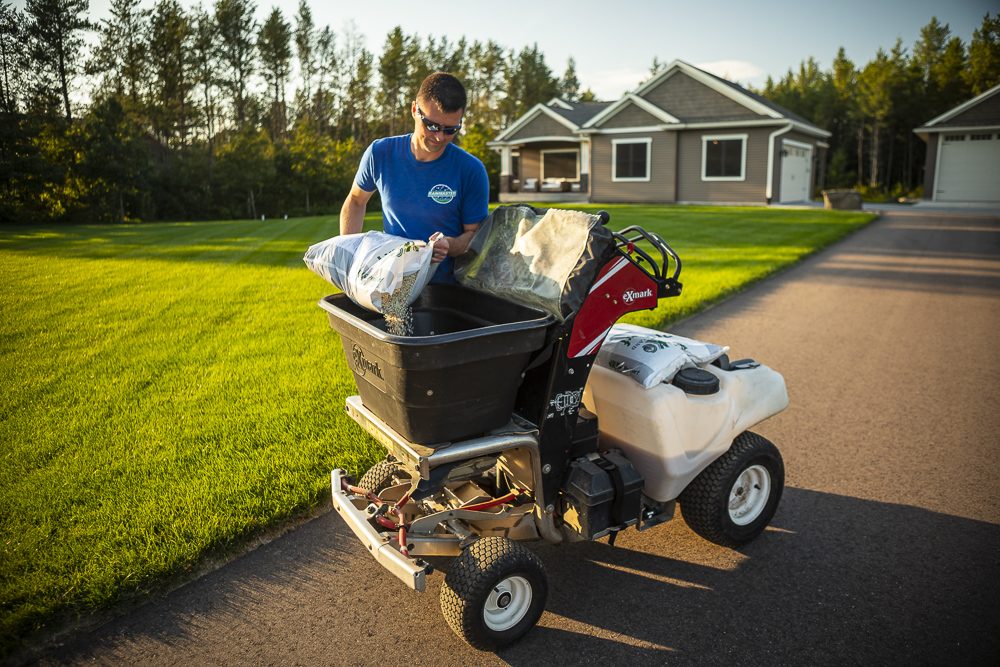
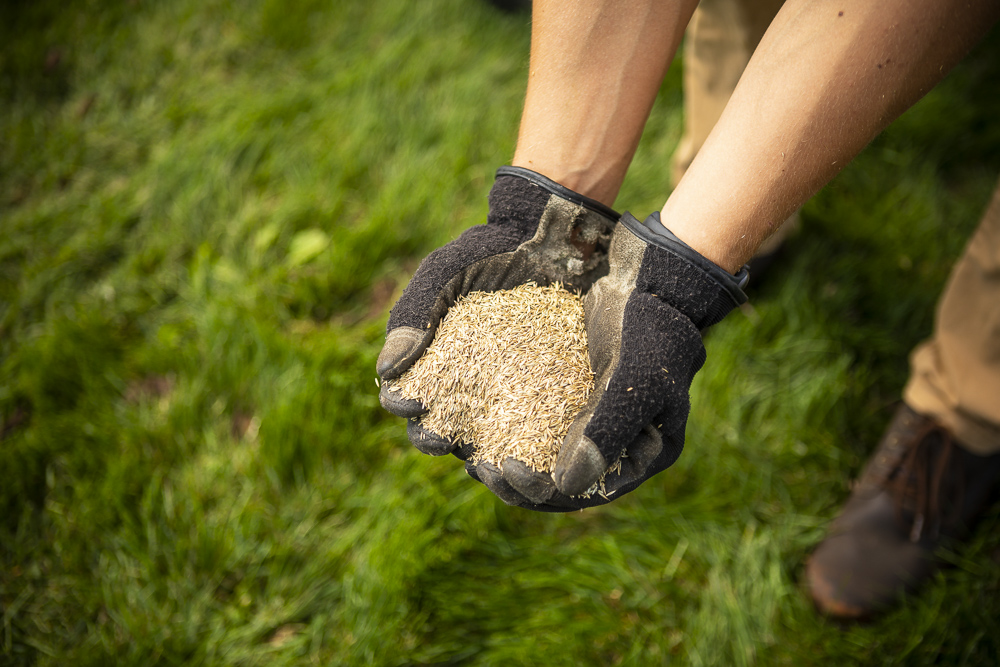
Cooler air, warmer soil, and more reliable rainfall make fall the best germination environment of the year. It is the window to fix the thin areas that bothered you all summer.
Seed by the end of September. Later than that and seedlings may not establish enough root to survive a killing frost, which puts you back to waiting until May.
Fall feeding builds roots
Cool-season grasses shift their energy into root growth in fall while top growth slows. Feeding during that window puts nutrients where the plant is actually working, which produces deeper roots now and stored reserves for a faster, healthier green-up next spring.
This is the most valuable fertilizer application of the year, and it is the one most frequently skipped by homeowners who stop paying attention to the lawn after Labor Day.
Fall is the right time to aerate
Core aeration pulls plugs of soil out of the lawn so water and oxygen reach the root zone, and fall is the ideal timing because the lawn has cool weather to recover in.
Overseeding right after aeration puts seed into the open holes, which are the best seedbeds available on an established lawn. Two fall-specific advantages come with it: there is far less weed seed moving around in fall than in spring, so those fresh holes are less likely to grow weeds, and fall seeding avoids next spring's crabgrass pre-emergent entirely.
That last point is worth being clear about. Crabgrass pre-emergent stops germinating seedlings from establishing, and it does not distinguish between crabgrass and the grass seed you paid for. Spring seeding and spring crabgrass control conflict. Fall seeding does not.
The lawn is under less stress
Fall in Wisconsin and Minnesota brings cooler temperatures and more rain, so the lawn is not fighting heat and drought while it tries to recover from whatever you are fixing. Everything you do works better.
There is a practical benefit too: most lawns here do not need supplemental watering once you reach the first few weeks of October, so new work does not come with a daily watering obligation.
Your summer problems are still fresh
If you sign up in fall, you can actually describe what happened this year. Which corner went brown in July, where the mushrooms came up, which side of the house grows nothing, where the dog destroyed the turf. By April that detail is gone, and the lawn gets a generic program instead of one aimed at your actual problems.
You are already on the spring schedule
Lawn care companies fill their spring calendars, and crews have a finite capacity. Signing up in fall means your spring visits are scheduled before the April rush, when everyone in town calls at once because they just noticed the crabgrass.
That matters more than convenience. Spring pre-emergent timing is driven by soil temperature, and a lawn added to the schedule in late May may have already missed the window for the year.
It is the right time to leave a service that is not working
If you are a year into a program and the lawn is not greener and the weeds are still there, fall is the time to make the change. Waiting until spring usually means getting caught by an automatic renewal, then spending another full season on the same results.
Check your current agreement for its renewal date. Most of them renew quietly over the winter.
Fall is when soil pH gets fixed
If you have been putting off a soil test, fall is the time, because amendments need time to work. Nutrients are only available to grass within a certain pH range, and outside it, fertilizer does not help no matter how much goes down. The lawn can be fed all season and still look hungry.
Lime and sulfur both act slowly in the soil. Applied in fall, an amendment has the winter and early spring to shift pH before the growing season, which is why a fall test and correction pays off the following year rather than two years out.
There is still time this season
The useful frame is simple: the problems in your lawn do not pause while you decide. Thin turf thins further, weeds set seed, compaction gets worse, and the repair gets bigger.
RainMaster offers three program levels based on the results you want, how fast you want them, and your budget. Starting in fall means the first thing that happens is the work with the highest return, rather than whatever the calendar allows. See the lawn care program details, or request a quote to get on the schedule.
Bottom line
- Broadleaf weeds germinate in September and October, and October is the last practical spray window before winter.
- Seed by the end of September so seedlings root before a killing frost.
- Fall fertilizer feeds root growth and stores reserves for spring green-up. It is the year's most valuable application.
- Fall seeding avoids the spring conflict with crabgrass pre-emergent entirely.
- Fall soil amendments have the winter to shift pH before the growing season starts.
Frequently asked questions
Is it too late in fall to start lawn care?
Seeding has a cutoff around the end of September here, but weed control runs into October, and fertilizer, aeration, and soil amendment all still have value late in the season.
Why is fall better than spring for weed control?
Fall-germinating broadleaf weeds are small and actively moving sugars to their roots, which carries the herbicide where it needs to go. The same plants in spring are larger, flowering, and much harder to kill.
Can I seed in fall and still get crabgrass control next spring?
Yes, and that is one of the main advantages of fall seeding. The new grass is established before spring pre-emergent goes down, so there is no conflict.
When do most lawn care agreements renew?
Many renew automatically over the winter. If you are planning to switch services, check your renewal date in fall rather than in spring.
University of Wisconsin Extension, Dandelion.
University of Minnesota Extension, Fertilizing lawns.


