


Which Ice-Melting Products Won't Kill Grass & Plants?
Nearly every ice melt on the shelf has chloride in the name, and chloride means salt, which plants do not tolerate in quantity. The products are not equivalent, though, and the amount you spread usually matters more than which bag you bought.
The common commercial ice melt products
Sodium chloride, or rock salt
Straight rock salt is the cheapest and most widely available option, and the hardest on everything around it. It burns turf and landscape plants, pits concrete, tracks indoors and damages floors and door frames, and runs off into lakes and streams where chloride accumulates and harms aquatic life. Chloride does not break down or settle out, so what ends up in surface water and groundwater stays there.
Magnesium chloride
Less harmful to plants than sodium chloride, but it can be hard on concrete, reacting with cement and contributing to corrosion. Most ice melts marketed as pet friendly use magnesium chloride as the active ingredient, since it is less irritating to paws than some alternatives.
Potassium chloride
Gentler on plants and concrete than rock salt when applied at label rates, but it stops working at a higher temperature than the other chlorides, so it is a poor choice during a real cold snap.
Calcium chloride
Effective at the lowest temperatures of the common products, and reasonably safe around lawns and landscape beds when applied correctly. Like every other ice melt, too much of it will kill turf and plants.
What is actually safest for plants
Anything with chloride in the name carries salt, and enough salt damages plants. Chloride-free de-icers do exist, but they cost dramatically more per square foot of pavement, which is why they rarely make sense outside small, high-value areas.
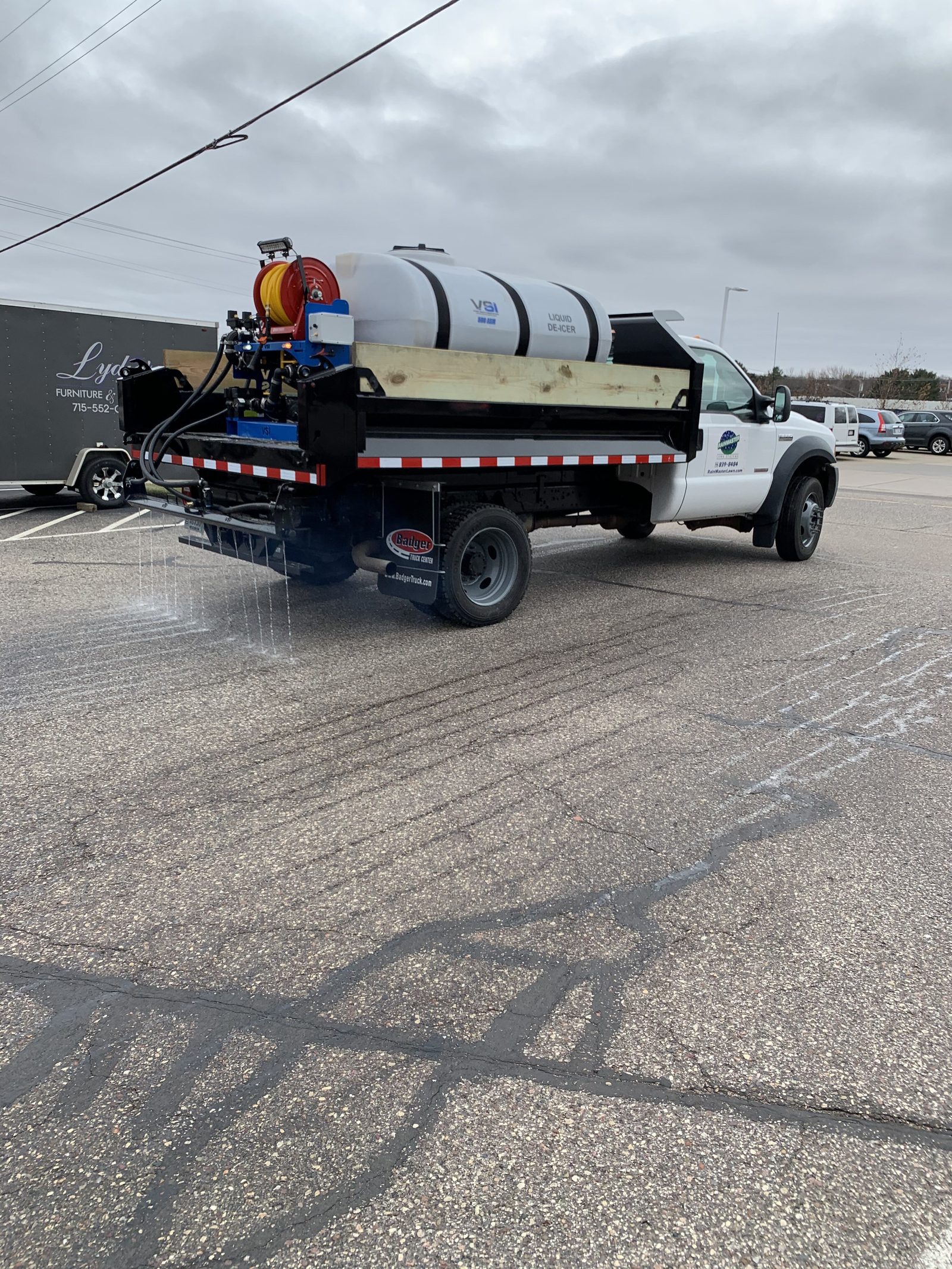
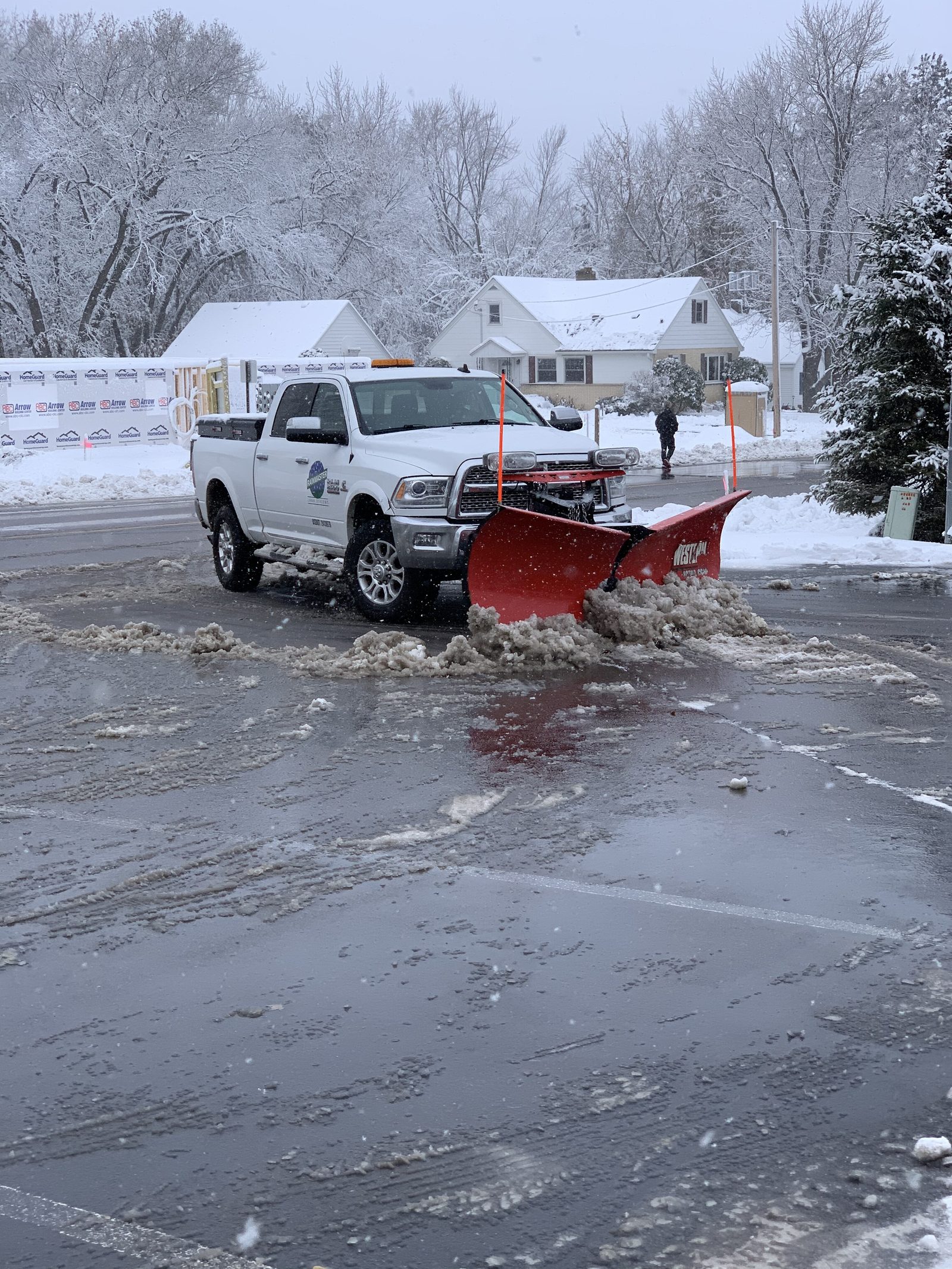
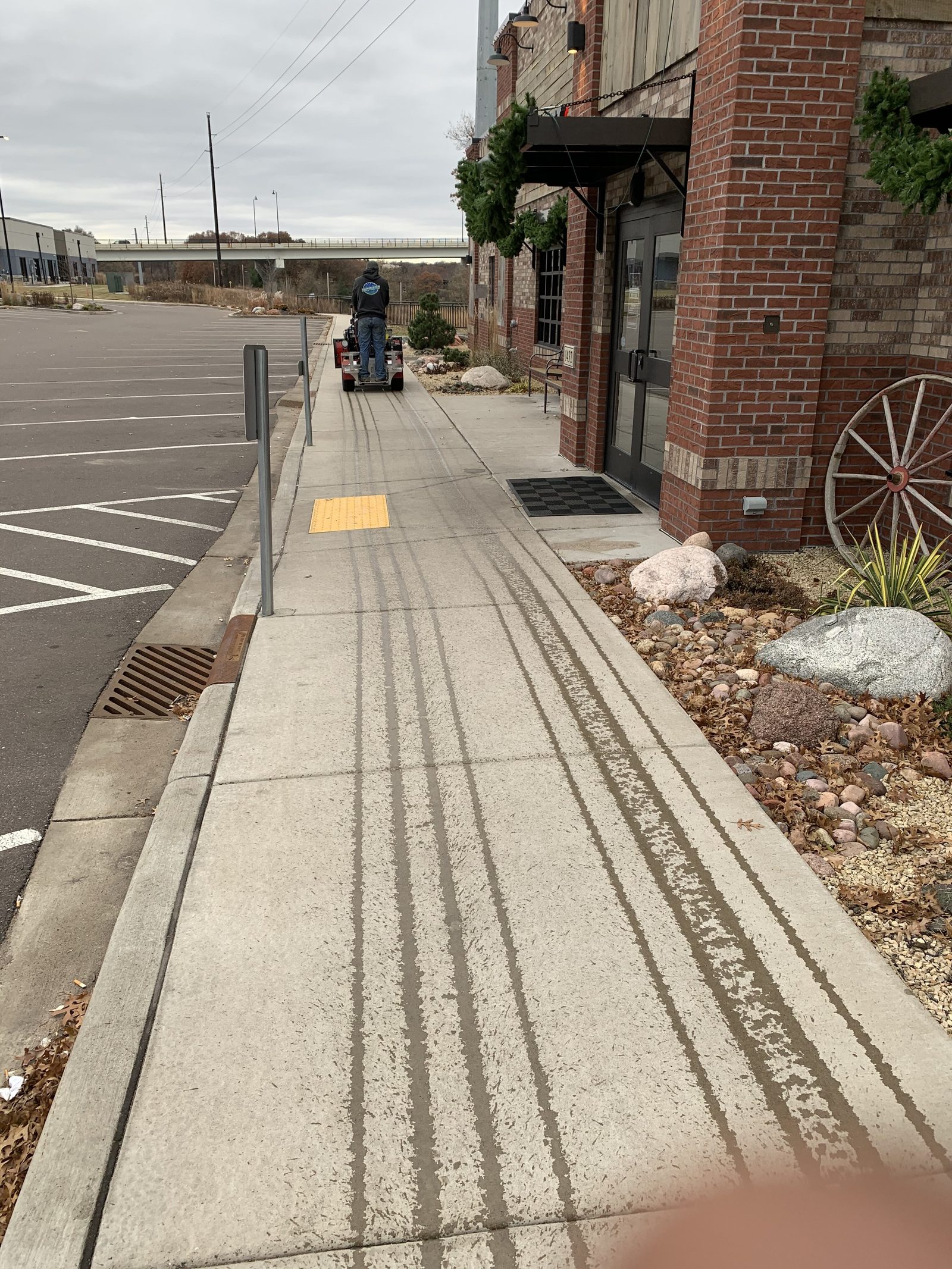
The practical answer for a commercial property is treated salt and brine, which we use on the parking lots, sidewalks, and steps we maintain. We do not use untreated rock salt. Both options put far less chloride down per square foot than standard rock salt, and less chloride down is the only reliable way to protect turf, plants, concrete, and water.
How treated salt works
Treated salt, also called enhanced rock salt, is rock salt with additives that improve performance and reduce how much product is needed. The additive is typically magnesium chloride or calcium chloride, sometimes combined with an organic component.
One point worth correcting, because it is stated backward almost everywhere: ice melt does not raise the melting point. It lowers the freezing point of water, which is why ice turns to liquid at a temperature where it would otherwise stay solid. Treating rock salt extends the temperature range where that still happens. Untreated rock salt becomes ineffective well before zero. The treated product we use continues working down to about 20 degrees below zero.
Treated salt is also less corrosive, and it stays where it lands instead of bouncing and scattering into turf and planting beds. Because it is more effective and stays put, less of it does the same job, which is the whole point.
Why brine is easier on the environment
Brine is a liquid mixture of water and salt sprayed on pavement, usually before a storm, so snow and ice do not bond to the surface in the first place. It can also be applied after an event depending on accumulation.
Brine still contains salt, but at a much lower percentage than solid products, and because it is a liquid it stays on the pavement rather than scattering into grass and plant beds. Treating a property with meaningfully less salt per square foot is better for the landscape and better for local water.
How much is as important as which
Most people apply far more ice melt than the job requires. The single most effective thing you can do to prevent salt damage is to use the labeled rate.
Wisconsin Salt Wise guidance is roughly one coffee mug of product for a 20-foot driveway or about ten sidewalk squares. Plenty of homeowners throw down handfuls, on the theory that if a little melts ice, more melts it faster. That is not how the chemistry works. Ice melt lowers the freezing point of water, and once the solution reaches saturation, additional product does nothing except sit there waiting to run into the soil and the storm drain.
Scatter it evenly, do not pile it, and shovel first so the product is working on ice rather than snow. If you apply the labeled rate and do not sweep or plow the excess off the pavement and into the lawn, you may get through the winter with no plant damage at all.
Certification and crew training
Our team is certified through Wisconsin Salt Wise, a statewide coalition working to reduce salt pollution in lakes, streams, and drinking water. The group trains winter maintenance professionals, publishes locally tailored application rates for getting the job done with the least salt, and offers voluntary certification, which we have completed.
The training matters because the instinct is wrong. When we onboard new crew members, we ask them to spread what they think is the correct amount. Most put down about two cups in an area where a half cup is the right rate. Calibrating that instinct is a bigger win than any product change.
You already have salt damage. Now what
Salt-damaged turf is yellow to brown and often looks scorched, and the blades feel dry and brittle because the salt has pulled moisture out of the plant. Damage shows up in uneven patches that follow wherever salt accumulated, usually along walks and drives and wherever plows pushed slush.
Unless the damage is very light, that grass does not recover. Water the area thoroughly to help leach chloride down through the soil, then rake out the dead turf and reseed or sod. Reseeding into bare soil with good seed-to-soil contact is what actually fixes it. Consider also where the salt came from, because the same corner will burn again next winter unless the application rate or the snow piling plan changes. Our snow and ice management planning covers exactly that.
Bottom line
- Every product with chloride in the name carries salt, and enough salt kills turf and plants.
- Treated salt and brine put far less chloride down per square foot than untreated rock salt.
- Ice melt lowers the freezing point of water. It does not raise the melting point, and more product past saturation does nothing.
- About one coffee mug covers a 20-foot driveway or ten sidewalk squares, per Wisconsin Salt Wise guidance.
- Salt-burned grass rarely recovers. Leach the area, rake out the dead turf, and reseed.
Frequently asked questions
Is pet-friendly ice melt safe for my lawn?
Not automatically. Most pet-friendly products use magnesium chloride, which is easier on paws and somewhat easier on plants than rock salt, but it is still a chloride salt and still damages turf at high rates. Application rate matters more than the label.
Will gypsum fix salt-damaged soil?
Gypsum can help displace sodium from soil over time by supplying calcium, but it is slow and it is not a repair for grass that is already dead. Flushing the area with water and reseeding is the faster, more reliable fix.
What temperature does treated salt work to?
The treated product we use continues to work at about 20 degrees below zero. Untreated rock salt loses effectiveness well above that, which is why it gets spread in larger and larger quantities during cold snaps without melting much.
Can I use ice melt on new concrete?
Avoid it on concrete poured within the past year. New concrete is more vulnerable to surface damage from freeze-thaw cycling and from the chemical action of chlorides. Use sand for traction instead during the first winter.
Wisconsin Department of Natural Resources, Chloride and water quality in Wisconsin.
U.S. EPA WaterSense, Protecting landscapes and local water.


