


When is Too Late for Crabgrass Preventer? Lawn Care for Eau Claire, WI

Crabgrass control has one short window, and it closes based on soil temperature rather than the date on the calendar. In Eau Claire that generally means getting pre-emergent down between mid-April and early May, and by Memorial Day you are usually past it.
Know what you are dealing with
Crabgrass is a grass, specifically a summer annual in the genus Digitaria, which is part of why selective control is tricky: a product that kills grassy weeds can injure your grassy lawn. It germinates from seed each spring, grows aggressively through heat, and dies at the first hard frost, leaving behind an enormous seed bank. Published estimates run as high as 150,000 seeds per plant, and seed that does not germinate this year can germinate in future years.
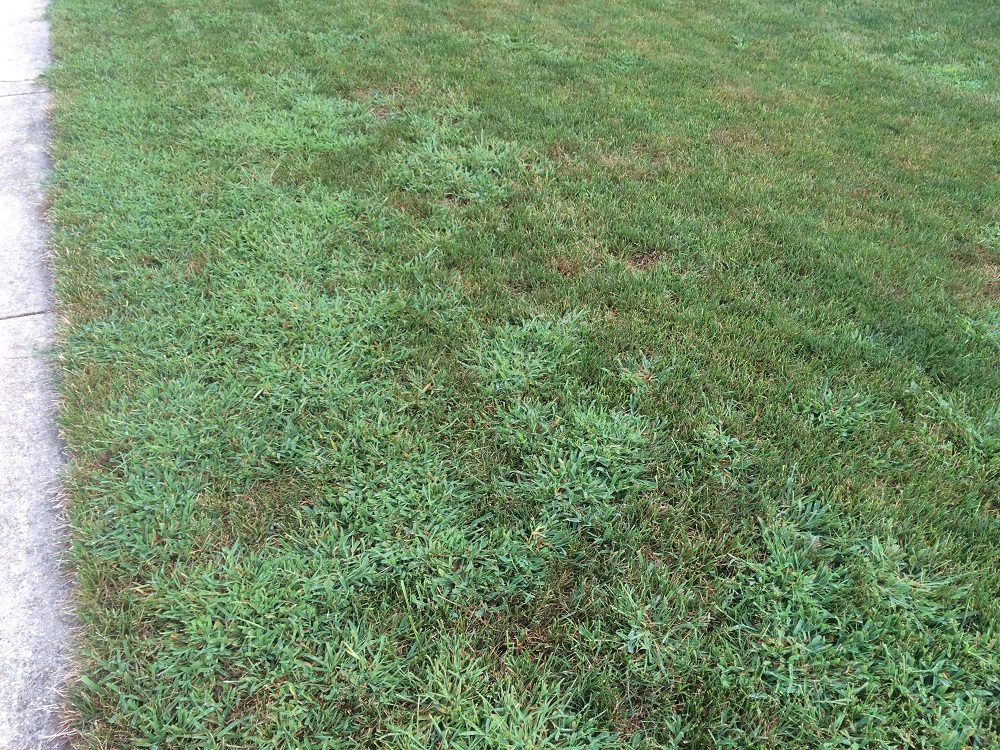

It does not kill your turf outright. What it does is outcompete it, claiming water, light, and nitrogen in thin areas and along edges where it establishes first.
What it looks like: leaf blades wider than your turf, clumping growth close to the ground, and stems that run outward rather than upright.
When to apply crabgrass preventer
"It all depends on soil temperature," says Jake Jacobson, lawn care operations manager at RainMaster Lawn Systems. "Crabgrass starts to germinate when the soil temperature is at 55 degrees and above. So we need to have pre-emergent down before then."
In Eau Claire that window typically runs from mid-March into late spring depending on the year, with the critical application usually landing mid-April to early May. Jacobson tracks soil temperature rather than working from a fixed date. An early spring moves the application earlier, and a cold, late spring pushes it back.
There is a complication worth understanding. Pre-emergent has a finite active life, generally in the range of six to ten weeks depending on product and rate. Apply very early and protection runs out before germination is finished, leaving the back half of the season open.
That is why we split the application. "We do something a little different to get better results," Jacobson says. RainMaster technicians make a split application "to really hammer the crabgrass control and prevent it from emerging," with one round in early spring and a second in late spring. Most companies here make a single spring application.
When is it too late
Once soil has warmed past the mid 50s and held there, germination is underway and a pre-emergent is working against seed that has already sprouted, which it cannot control. By Memorial Day in this area you are generally past the useful window for prevention and into post-emergent territory.
What to do if you missed it
Post-emergent control works on crabgrass that is already up, and it works best on young plants. Small, newly emerged crabgrass responds much better than a mature clump that has been growing for six weeks, so acting as soon as you see it matters.
This is the argument for a program that covers both halves of the season. Preventive treatment in spring, curative treatment from late spring through early fall, because some escapes are inevitable even with correct timing, particularly in thin areas and along pavement where soil warms days earlier than the middle of the lawn.
Should you do it yourself
DIY pre-emergent can work, with one condition: follow the label exactly. The common failure points are specific.
- Skipping the second application when the label calls for one, then wondering why crabgrass showed up in July.
- Expecting a pre-emergent to kill emerged plants. It will not. Check which type you bought.
- Applying before heavy rain, which can move product off target. A light watering after application is what you want, enough to move it into the top layer of soil.
- Using leftover product from last year. Liquid concentrates that froze in an unheated garage over winter are generally no longer reliable.
- Uncalibrated spreaders, which deliver an unknown rate. Under-apply and it fails. Over-apply and you risk injuring the turf.
Store products come pre-diluted and ready to apply. We mix our own, which means we know the concentration precisely and can apply a known amount per 1,000 square feet.
Wet grass or dry
Apply to dry grass, then water lightly afterward to activate the product and move it into the soil where seed is germinating. Applying onto saturated turf risks runoff rather than infiltration, which wastes the product and sends it somewhere it should not go.
Fertilizer or pre-emergent first
Pre-emergent first. The logic is sequencing: get the barrier in place before germination, then feed once the lawn is actively growing. If you are planning to seed, note the direct conflict, since pre-emergent prevents grass seed from establishing as effectively as it prevents crabgrass seed. Seeding and pre-emergent do not belong in the same spring.
The real long-term control is a dense lawn
Crabgrass germinates where it gets light and warm soil, which means thin turf and bare edges. A dense stand is the control measure that works without a calendar.
Mow tall
Cutting low to take the weeds down is counterproductive. Short mowing heats the soil surface, which is what crabgrass seed is waiting for, and it weakens the root system. Keep the finished height at three to three and a half inches, raising toward four inches in July and August.
Water deeply, not often
About an inch per week including rainfall, in one or two long cycles, finishing in the early morning. That drives roots down. Frequent shallow watering keeps the surface moist, which is exactly the condition crabgrass seed needs to germinate.
Aerate
Core aeration relieves compaction so air and water reach the root zone, which produces deeper roots and a thicker lawn that tolerates summer heat and resists weeds, insects, and disease. That is part of what our lawn care programs handle on a schedule.
If the lawn looks good, can you skip it
No, and this is the part that trips people up. A clean-looking lawn still has a seed bank in the soil from previous years. Skipping a season of prevention does not mean no crabgrass. It means a crop of crabgrass that sets another round of seed, which you pay for over the following several years.
Bottom line
- Crabgrass germinates once soil holds around 55 degrees, which in Eau Claire usually means mid-April to early May.
- By Memorial Day prevention is generally too late, and control shifts to post-emergent on young plants.
- Pre-emergent lasts roughly six to ten weeks, so a split application covers the full germination window.
- Apply to dry grass and water lightly after to move the product into the soil.
- Pre-emergent also stops grass seed, so do not seed and apply pre-emergent in the same spring.
Frequently asked questions
What soil temperature triggers crabgrass germination?
Around 55 degrees at a shallow depth, held consistently for several days. Soil along driveways and south-facing edges warms first, which is why crabgrass often appears there before the rest of the lawn.
How long does crabgrass preventer last?
Generally six to ten weeks depending on the product and application rate. That is why a single very early application can leave the lawn unprotected during the later part of the germination window.
Can I put down crabgrass preventer and grass seed together?
No. Pre-emergent prevents grass seed from establishing just as it prevents crabgrass seed. Either skip the pre-emergent in areas you are seeding, or move the seeding to late summer.
Does crabgrass come back every year from the same plants?
No. Crabgrass is an annual and dies at first frost. What comes back is the seed it produced, which can remain viable in the soil for several years, so one uncontrolled season creates pressure for several after it.
University of Wisconsin Division of Extension, Crabgrass management in lawns.
University of Minnesota Extension, Fertilizing lawns.


