


When is the Best Time to Install a Sprinkler System in Wisconsin & Minnesota
Most people assume spring is the right time to put in a sprinkler system, and most people are competing for the same handful of spring dates. In Wisconsin and Minnesota, summer and fall are frequently the better choice, and if you are building, the answer is now.
Should you install irrigation in spring?
It sounds like the obvious plan: get the system in as soon as the ground thaws so it is ready for the heat of summer.
The problem is capacity. Good irrigation companies are at their busiest in spring, activating systems for thousands of existing customers, testing backflow assemblies, and catching winter damage. All of that is time-sensitive and has to happen in a few weeks. Getting on the calendar for a new installation before Memorial Day is a genuine challenge, and that is true of any established company in this market.
Spring installation also fights the weather. Saturated soil from snowmelt and spring rain makes trenching messier and the restoration worse.
Summer or fall installation
Depending on your situation, either one can be the best time.
Summer works well because the spring rush is over, which means far fewer scheduling conflicts and more flexibility on dates. Conditions are good for the installation itself, and the system goes to work immediately, supporting the lawn through the hottest and driest stretch of the year. If your lawn is already struggling in July, the system starts paying off the week it is installed.
Fall is also a strong window. Installation can continue right through fall until the ground freezes, which in most years means late October here. Cooler temperatures make the work easier and remove the risk of heat stress on turf that gets disturbed during the process. Fall also pairs naturally with seeding, since late August through mid September is the right window for establishing grass in this region and a new system can water it correctly from day one.
The other fall advantage is being first in line. Finish the installation before the ground freezes and the system is ready the moment spring arrives, which gives the lawn the early-season water it needs without waiting behind a full spring schedule.
Building a new home? Plan the sprinkler system now
If you are building, that is the best time to install, and it is also the cheapest.
Installing a system in dirt takes less time and less labor than installing one in an established lawn. There is no need to work around existing turf, no lawn to cut into and restore, and no landscaping to protect. The crew runs lines across open ground and is done.
Coordinate it with the rest of the site work. The ideal sequence is irrigation after rough grading and before final grade and seed or sod, so the lines go in before the lawn exists.
Your new lawn will thank you
If you are building a house, you are also going to be establishing a lawn, and growing grass from scratch is harder than most people expect. New seed needs the top half inch of soil kept consistently moist, which means short, frequent watering, often several times a day for the first few weeks.
Dragging hoses and oscillating sprinklers around the yard three times a day gets old within the first week, and missing a day in July can cost you the whole seeding. An installed system does that job on a schedule and does it evenly, which is the difference between a lawn that fills in and one you reseed next fall.
Not in the budget yet? Prepare for it
New homes are exciting and they are budget busters. If irrigation does not fit the build budget but you know a system is in your future, work with your builder to make it easy later.
- Increase the well pump size. Irrigation demands more flow than household use. Sizing the pump up during the build costs a fraction of replacing it later.
- Stub out the plumbing. Have the supply line run and capped where the system will eventually tie in, before the foundation is backfilled and the driveway is poured.
- Run a sleeve under the driveway and walkways. Boring under finished concrete later is possible but it is work you can avoid for very little money now.
- Keep the as-built site plan. Knowing where utilities, septic components, and the water service actually run saves time on install day.
Existing yard? Not a problem
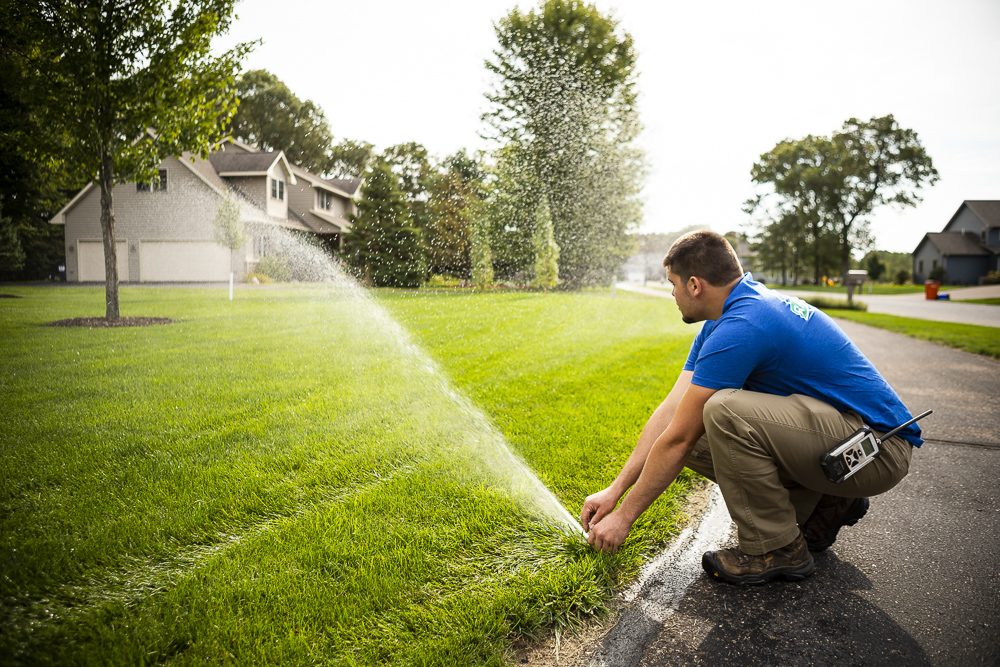
Most of the systems we install go into existing landscaping, and it is routine work. Heads tuck into the ground and sit flush, out of sight.
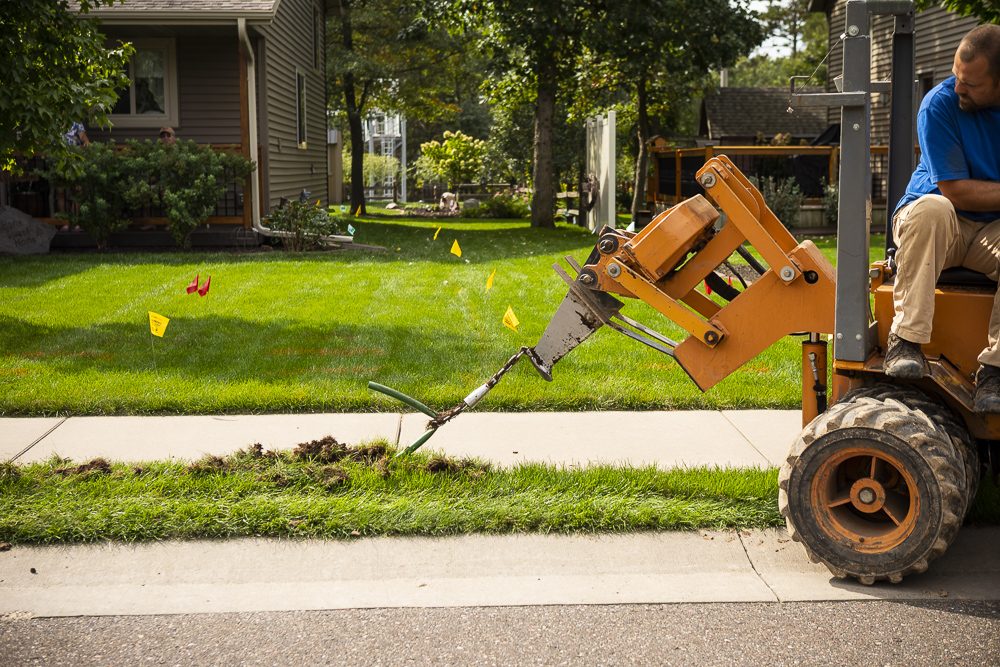
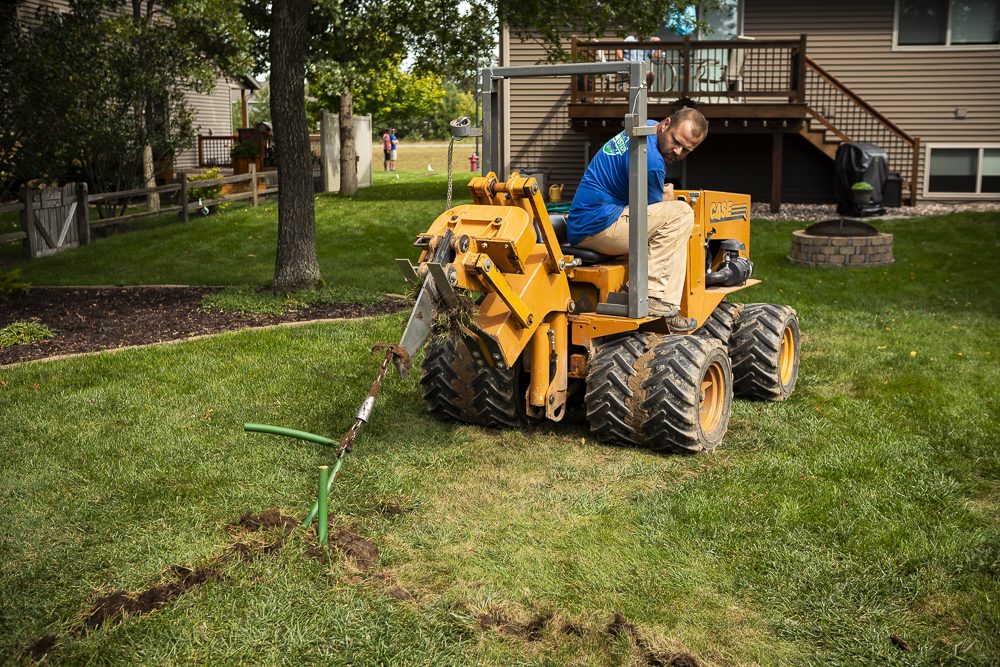
We install using a trenchless process, which pulls pipe through the soil rather than opening a trench across the lawn. The result is a clean yard when we are done with minimal disruption, and we seed the areas we do disturb in existing lawns. If it were not for the sound of the sprinklers running, you would have a hard time telling where we worked.
What to line up before install day
Whatever season you pick, a few things determine how smooth the day goes: knowing your available water pressure and flow rate, having the backflow assembly location decided, locating utilities, and confirming the permit and backflow registration requirements with your municipality. A good installer handles all of that, and in Wisconsin and Minnesota the backflow device gets registered with the municipality at installation, with inspection paperwork filed annually from then on.
Once you decide you want a system, the waiting is the hard part. Working with one company for installation and ongoing maintenance means the plumbing scheduling, the seasonal visits, and the sequencing with any landscaping work are not yours to coordinate.
Bottom line
- Spring is the hardest season to get a new installation scheduled, because irrigation companies are activating existing systems; expect to wait until after Memorial Day.
- Summer offers open scheduling and immediate benefit during the hottest, driest stretch of the year.
- Fall works right up until the ground freezes, usually late October here, and leaves the system ready the moment spring arrives.
- New construction is the cheapest time to install, because running lines through dirt takes less labor than cutting into an established lawn.
- If it does not fit the build budget, size the well pump up, stub out the plumbing, and sleeve under the driveway now.
Frequently asked questions
Can a sprinkler system be installed in fall in Wisconsin or Minnesota?
Yes, right up until the ground freezes, which is typically late October. A fall installation is winterized immediately and is ready to activate as soon as spring arrives.
Is it cheaper to install irrigation during construction?
Yes. Running lines through bare dirt takes less time and labor than working around established turf and landscaping, and there is no lawn restoration to pay for afterward.
Will installing a system tear up my existing lawn?
Not significantly. A trenchless process pulls pipe through the soil instead of opening trenches, heads sit flush with the ground, and we seed the areas that do get disturbed.
How long does a residential sprinkler installation take?
Most residential installations are a one or two day job depending on the size of the property and the number of zones, including head placement, valve boxes, controller, and the backflow assembly.
Irrigation Association, Irrigation design and installation resources.
University of Minnesota Extension, Seeding and Sodding Home Lawns.


