


When is the Best Time to Water Lawns? Irrigation Tips for WI & MN Homeowners
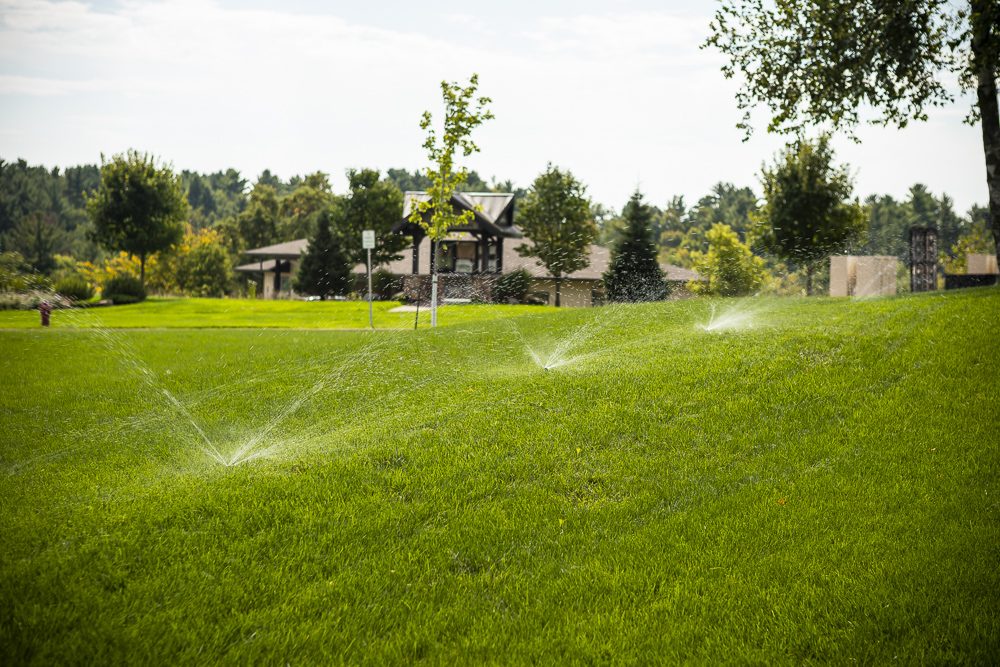
There are two watering rules that hold true for almost every lawn in Wisconsin and Minnesota: finish close to sunrise, and water deeply rather than daily. Everything after that depends on your soil, your sprinkler heads, and the weather that week, which is exactly why so many controllers end up set wrong all season.
The best time to water is early morning
Set the schedule so the last zone finishes right around sunrise. If the sun comes up at 5:45, the system should be done at 5:45.
Three reasons. Wind is usually lightest overnight and picks up through the day, and wind pushes spray off target and onto driveways. Evaporation losses are lowest before the sun is up, so more of the water you pay for reaches the soil. And the canopy dries quickly once the sun hits it, which keeps the leaf from staying wet for hours.
One thing you can stop worrying about: droplets on grass blades do not act as magnifying glasses and burn the leaf. That is a persistent myth. The real cost of midday watering is evaporation and drift, not scorching.
Evening is the schedule to avoid. Water applied at 8 p.m. sits on the leaf through the warm overnight hours, and extended leaf wetness is the condition most summer lawn diseases need.
Update the controller as the season changes
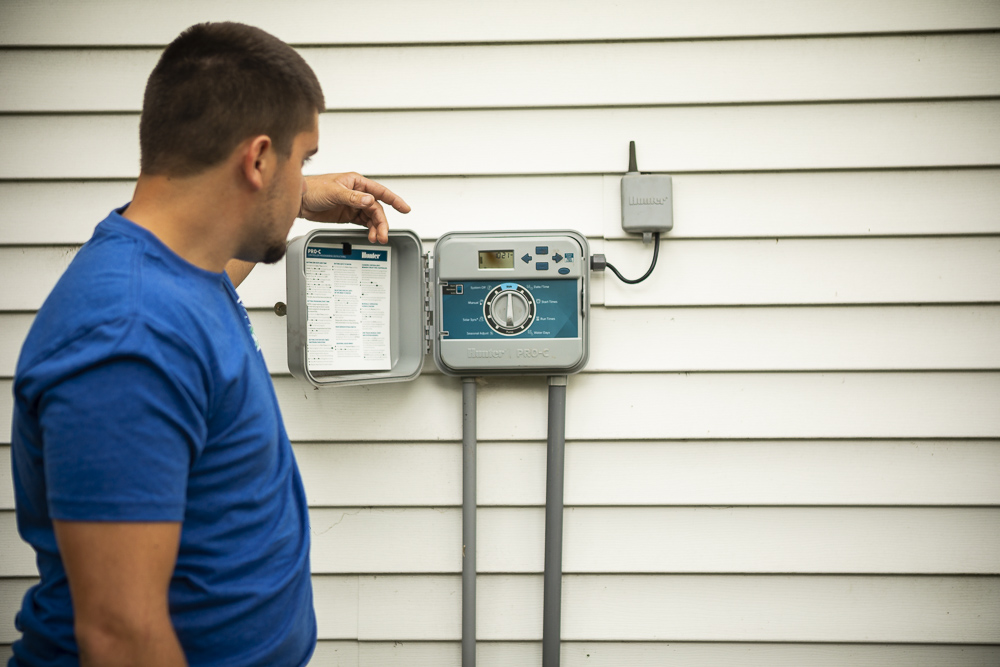
Sunrise moves by more than two hours between April and late June in this part of the country, and water demand moves with the weather. A controller set in May for cool, rainy spring conditions is wrong by the second week of July, when it has not rained in two weeks and the temperature is in the 90s.
Almost nobody adjusts it. People set the timer at startup and leave it, then wonder in August why the lawn is dry. If you are running a system manually, put a reminder on the calendar to revisit the schedule monthly through the season. Sunrise time, run time, and days per week all need to move.
Stop watering every day
An established lawn should not be watered daily. Let the soil dry down between cycles, which means longer run times and fewer days.
The reason is root depth. If water is always sitting in the top inch of soil, roots have no reason to grow past it. Make the grass reach for moisture and the root system goes deeper, and a deeply rooted lawn tolerates a sudden hot dry stretch, and the diseases that follow one, far better than a shallow rooted lawn.
New seed is the opposite. Seed and seedlings need the surface to stay consistently moist, which takes several short cycles a day until the grass is established. If you are seeding, the schedule changes completely, and then changes back once the lawn is up.
How long to water is the hard part
There is no universal run time, and anyone who gives you one without seeing the property is guessing. Aim for about one inch of water per week on an established lawn, counting rain, then work out how long your system takes to deliver it.
What changes the answer:
- Soil type. Sandy soil takes water fast and holds little, so it needs more frequent, longer cycles, sometimes 40 minutes to an hour per zone. Clay soil takes water slowly and holds it, and the same run time would pond and run off. A clay lawn might need 15 minutes, split into two shorter cycles with a soak period between.
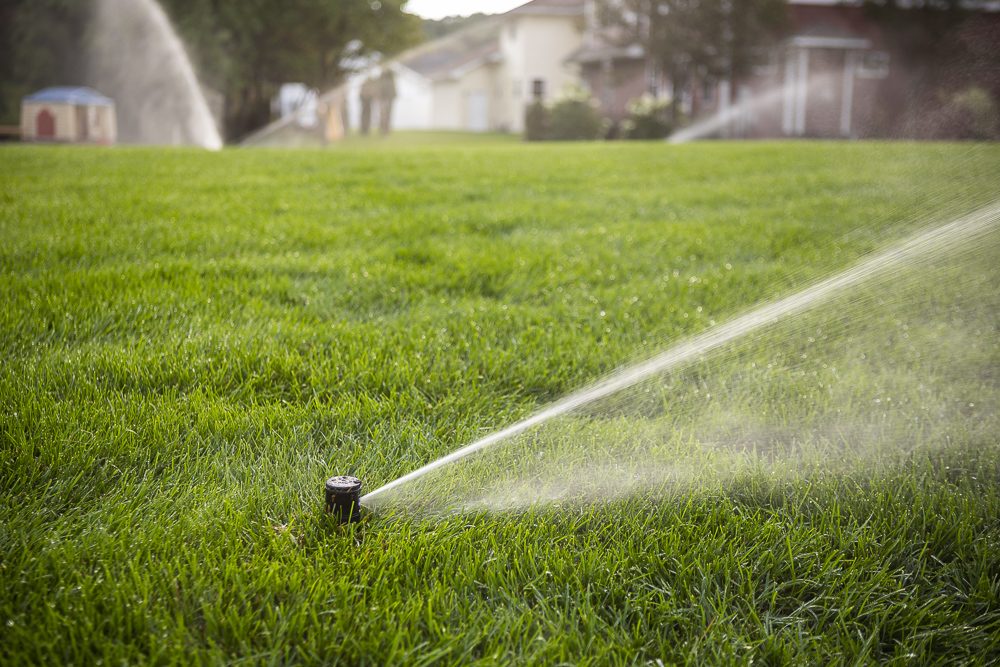
- Head type. Rotors turning back and forth across a large area apply water slowly and may need 30 minutes. Fixed spray heads put out water much faster and might need 10 minutes for the same depth. Running both on one schedule overwaters one and underwaters the other.
- Slope and exposure. Slopes shed water and need shorter cycles with breaks. Shaded areas dry slowly and need less than the sunny side of the house.
- Grass type and root depth. A mature, deeply rooted bluegrass lawn pulls from a larger reservoir than freshly sodded turf.
The practical way to find your number is a catch can test. Put straight sided containers around a zone, run it for 15 minutes, and measure. That tells you the zone precipitation rate, and the rest is arithmetic.
Smart controllers do the adjusting for you
A basic rain sensor shuts the system off when it is actually raining. A smart controller does considerably more. It will skip a cycle when rain is in the forecast, not just when it has started, so you are not watering at 5 a.m. ahead of a storm at 9. It will skip when wind would blow the water off target or when temperatures are too cold for the lawn to use it. And it factors in plant type, soil, slope, and how much water has already evaporated to decide how long to run.
Those are real savings on a water bill and real protection against overwatering. What a controller cannot do is see your property. It does not know that a head is sunken, a nozzle is clogged, or a zone is spraying the siding.
Or let someone else handle it
Most of our irrigation customers hire us because they do not want to think about any of this. We offer three levels of irrigation program designed to keep a system running correctly from spring through fall: Efficient Essentials, Optimum Operation, and Peak Performance. Each visit is planned to improve how the system performs, cut water use, and support a healthier landscape.
We get the settings right at spring startup. As spring turns to summer, sunrise moves earlier and demand climbs, and those settings need to change. On the Peak Performance plan a technician comes out monthly through the irrigation season and does it, which also means a trained set of eyes on the system every month during the period it is working hardest. Spray coverage gets checked, the controller gets reprogrammed for current conditions, and components get inspected before a small problem becomes a brown area.
Bottom line
- Finish watering right around sunrise. Wind and evaporation are lowest, and the lawn dries fast once the sun is up.
- Avoid evening watering. Overnight leaf wetness is what summer lawn diseases need.
- Water established lawns deeply and infrequently, targeting about one inch a week including rain. New seed needs several short cycles a day instead.
- Run times depend on soil, head type, and slope. Sandy soil may need 40 to 60 minutes per zone while clay may need 15, and rotors need roughly three times as long as fixed spray heads.
- Update the controller monthly through the season. Sunrise time and water demand both change substantially from April to August.
Frequently asked questions
What is the best time of day to water a lawn?
Early morning, with the cycle finishing near sunrise. Wind and evaporation are at their lowest, and the grass dries quickly once the sun comes up, which limits disease pressure.
How often should I water my lawn in Wisconsin or Minnesota?
For an established lawn, one or two deep soakings a week totaling about an inch including rainfall, not a short cycle every day. Let the soil dry down between cycles so roots grow deeper.
How long should each sprinkler zone run?
It depends on your soil and heads. Rotor zones commonly need around 30 minutes while fixed spray zones may need 10. Sandy soil needs longer cycles than clay, which ponds and runs off. A catch can test gives you the real number for each zone.
Is a smart irrigation controller worth it?
Usually, yes, because it skips cycles when rain is forecast, when it is windy, and when temperatures are too low for the lawn to use the water. It still cannot see a clogged nozzle or a head spraying the driveway, so it does not replace seasonal inspection.
U.S. Environmental Protection Agency WaterSense, Watering Tips.
Irrigation Association, Irrigation industry standards and resources.


