


What to Do About Ugly, Thin, or Bare Spots in Your Lawn
A bare patch in an otherwise decent lawn is a symptom, not a diagnosis, and the fix depends entirely on which symptom it is. Reseeding a spot without figuring out why the grass left is how people end up reseeding the same spot every year.
Bare spots: what is actually going on
There is no single cause. Any of these could be at work, and more than one often is:

- Compacted soil. The most common and the most overlooked.
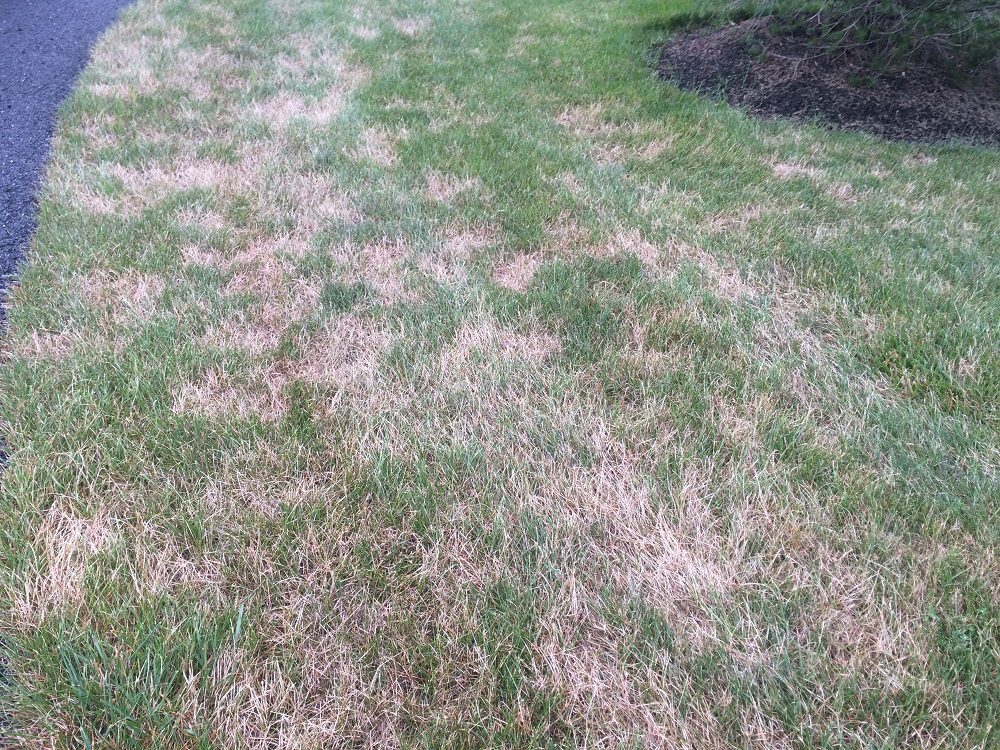
- Fungal disease. Patches with defined edges, rings, or discolored leaf lesions.
- Pet urine. Concentrated nitrogen and salts burning the crown, often with a darker green ring around the dead center.
- Heavy foot traffic. A worn path from the driveway to the back door, or a goal mouth in a yard with kids.
- Grubs or other insects. Turf that pulls up like loose carpet because the roots have been eaten.
- Irrigation coverage gaps. A dry area that a head is no longer reaching.
The quickest diagnostic is to grab the edge of the dead area and pull. If it lifts with no root resistance, suspect grubs. If it is firmly rooted but the blades are discolored, look at disease. If a screwdriver is hard to push into the soil, you have compaction. If the pattern follows a walking route or a sprinkler arc, you already have your answer.
Dead spots: do not panic
Most of these are fixable, and aeration with seeding is the workhorse. Compacted soil means the lawn effectively cannot breathe. Roots cannot take in water or nutrients, the turf weakens, and that opens the door to disease and weeds.
Core aeration pulls plugs of soil out of the lawn, creating channels so air and water can penetrate down to the root zone, which produces healthier and deeper roots. It also helps break down thatch, the layer of dead grass and stems sitting between the grass blades and the soil. Aeration is typically followed by overseeding, because the holes the machine leaves behind are excellent seedbeds, far better than seed sitting on an undisturbed surface.
In the Chippewa Valley and the Twin Cities, the right window for both is late August through mid September. Soil is still warm enough for fast germination, air temperatures have dropped, and fall moisture is more reliable than spring.
Yellow spots could be fungus
Yellow or brown patches often mean a fungal disease rather than a nutrient problem. The reassuring part is that lawn fungus frequently clears up on its own once the weather changes, and grass typically fills back in after the fungus is no longer active.
The more useful part is that prevention is mostly good basic practice, because a healthy lawn handles stress like drought, insects, and summer disease much better than a weak one.
- Fertilize in fall and spring so the lawn has reserves going into and coming out of summer.
- Aerate annually to reduce compaction and improve drainage.
- Do not water too often. A constantly damp lawn is an invitation. Deep and infrequent is the rule, roughly an inch a week including rainfall.
- Keep the grass at 3 to 4 inches and avoid mowing while it is wet, which spreads fungal material around the yard.
- Water early in the morning so the canopy dries fully before evening.
Feed the lawn properly
A hungry lawn does not fill in. A real fertilizer program is often what brings a thin stand back, and the form of fertilizer matters.
We use granular fertilizer rather than liquid. Granular costs more than the liquid products that are more common in the market, but it breaks down slowly and feeds consistently over weeks rather than giving a quick flush of green followed by nothing. Ideally it also carries organic nutrients that improve the soil itself, not just the plant. Our applications are professional-grade organic-based granular formulations, which is the version of this that homeowners generally cannot buy off a shelf.
How to fix a bare spot
For an isolated bare spot, a careful seeding usually does the job. The steps matter more than the product.
- Rake out dead, matted turf. Seed germinates and roots best against bare soil, and a mat of dead grass holds it off the surface.
- Loosen the soil. Scratch and dig the top inch or so to break the crust and give roots somewhere to go. This is also the moment to relieve compaction in that specific spot.
- Use quality seed. Skip the cheap bags. Inexpensive seed can contain weed seed and often contains species that will not match your lawn. Read the label for the species mix and the weed seed percentage.
- Scatter and make contact. Spread the seed, scratch it in lightly, and tamp it down so you know it is touching soil. Seed lying on top of a crust will not germinate.
- Use a starter fertilizer. A formulation designed for new grass gets seedlings rooted faster.
- Keep it watered. This is where most seedings fail. New seed needs the top half inch kept consistently moist, which in warm weather means light watering more than once a day until germination, then tapering to deeper and less frequent as the seedlings root.
Then fix the cause. If the spot is a dog's preferred area, a traffic path, or inside a sprinkler coverage gap, the new seed will meet the same end as the old grass. Address the condition first and the repair holds.
Preventing bare spots
The lawns that do not develop bare patches are the ones on a schedule: timed nutrition, annual core aeration, weed and grub control applied preventively, correct mowing height, and watering that is deep, infrequent, and early. A complete lawn care program is how those stay on schedule instead of happening in reaction to a problem you already have.
Bottom line
- Bare spots come from compaction, disease, pet urine, traffic, grubs, or an irrigation coverage gap; diagnose before you seed.
- If dead turf lifts with no root resistance, suspect grubs. If a screwdriver will not push into the soil, suspect compaction.
- Core aeration plus overseeding in late August through mid September is the most reliable repair for thin turf.
- Slow-release granular fertilizer feeds consistently; liquid gives a flush and fades.
- When seeding a spot, make real soil contact, use quality seed, add starter fertilizer, and keep the top half inch moist until germination.
Frequently asked questions
When is the best time to seed bare spots in Wisconsin or Minnesota?
Late August through mid September. Soil is still warm enough for quick germination, air temperatures have come down, and fall moisture is more dependable. Spring seeding puts young plants into summer stress with no root system.
Why does the same spot go bare every year?
Because the cause was never addressed. Compaction, a worn traffic path, a dog's preferred area, or a sprinkler that does not reach will defeat any amount of new seed. Fix the condition, then repair the turf.
How do I know if grubs caused a dead patch?
Grab the edge of the dead turf and pull. Grub-damaged turf lifts easily like loose carpet because the roots have been chewed off. You can usually find the larvae in the top couple inches of soil underneath.
How often should I water new grass seed?
Keep the top half inch of soil consistently moist until germination, which in warm weather often means light watering more than once a day. After the seedlings are up, shift gradually to deeper, less frequent watering so roots grow down.
University of Minnesota Extension, Seeding and Sodding Home Lawns.
University of Wisconsin Division of Extension, Lawn Aeration.


