


What a Lime Treatment Does For Your Lawn: 4 Benefits of Lime Application
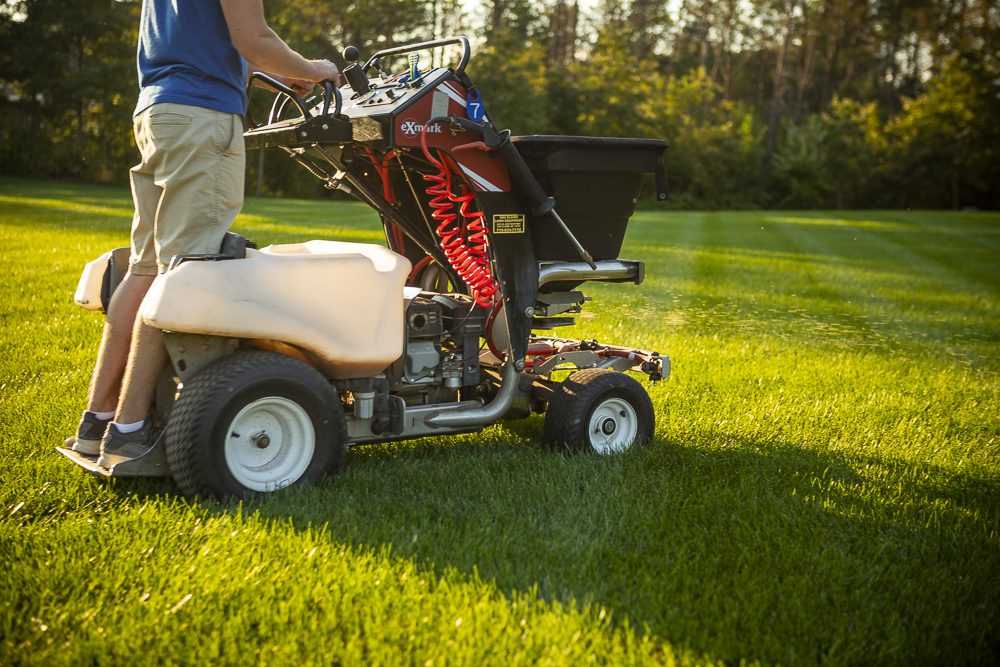
Lime is a soil amendment that raises the pH of acidic soil. It does not feed the lawn directly; it corrects the soil chemistry so the nutrients already there, including everything in your fertilizer, become available to the roots. If your lawn in the Eau Claire area or the Twin Cities looks pale and thin despite regular feeding, pH is one of the first things to rule out.
Why a lawn needs lime in the first place
Soil pH measures acidity and alkalinity on a scale from 0 to 14. The low end is acidic, the high end is alkaline, and 7 in the middle is neutral. Most cool-season grasses grown in Wisconsin and Minnesota do best between 6.0 and 7.0, slightly acidic to neutral.
When soil drifts below that range, nutrients bind to soil particles instead of staying available to roots. The nitrogen, phosphorus, and potassium are in the ground, but the plant cannot get at them. That is why a lawn can be fertilized on schedule and still look disappointing: the problem is not supply, it is access.
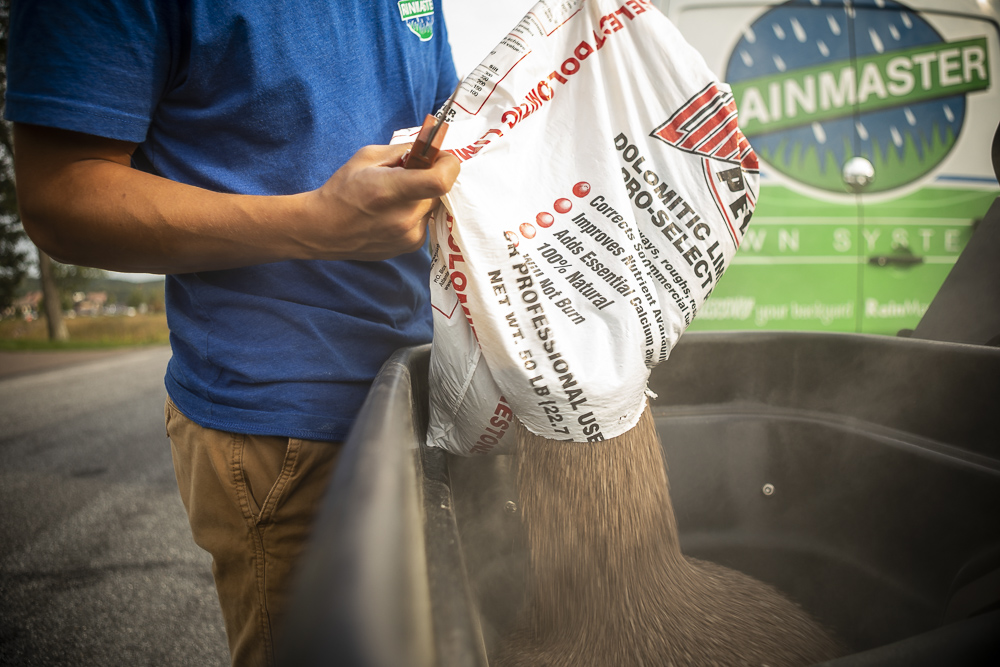
Lime is ground limestone rock. Calcitic lime supplies calcium carbonate; dolomitic lime supplies calcium carbonate plus magnesium carbonate. Either way, those compounds react with soil moisture and raise pH over time, making acidic soil less acidic.
1. A thicker, greener lawn
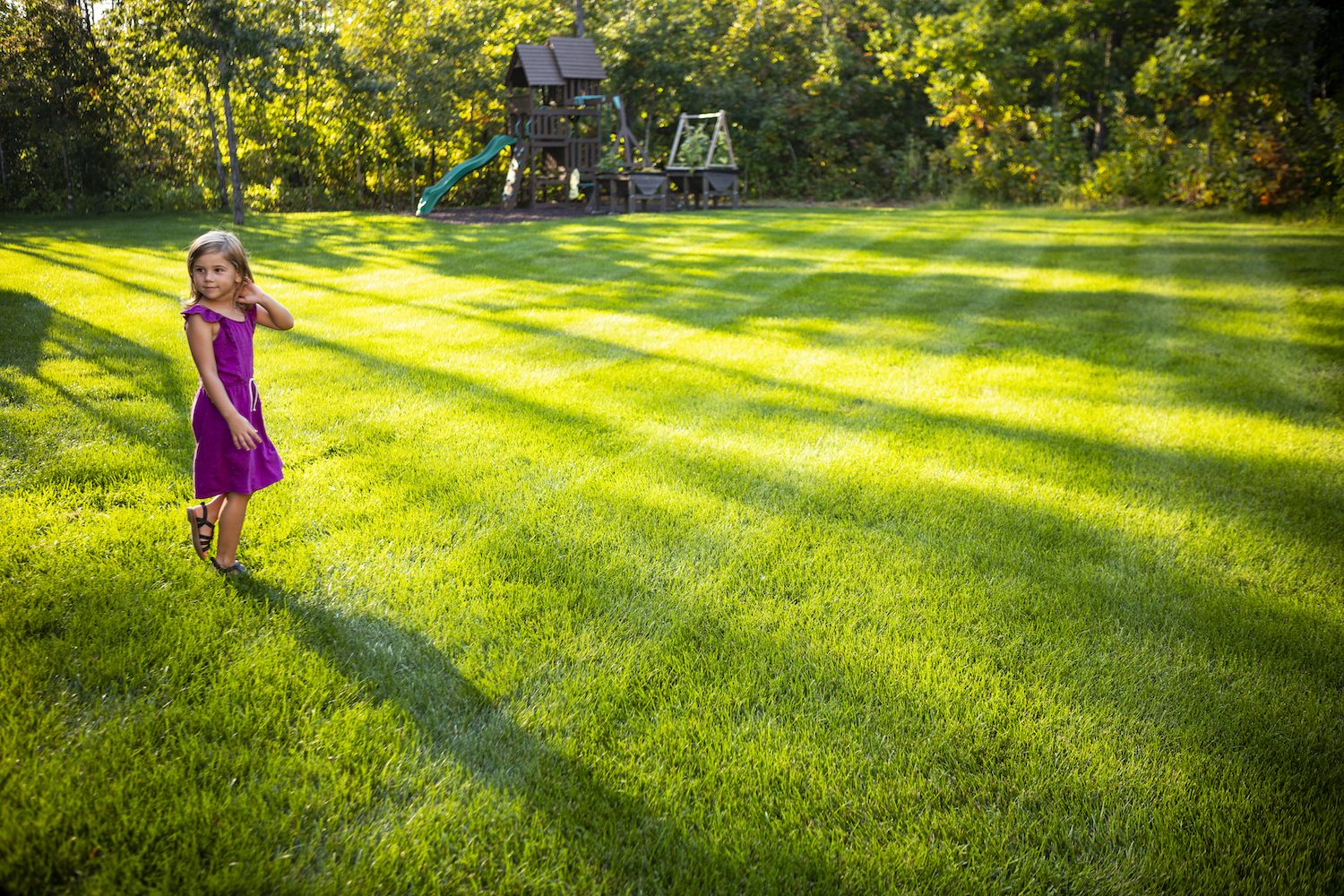
Correcting pH is what lets fertilizer do its job. Once nutrients are available, the lawn puts on the density and the deep green color you were paying for all along. Homeowners often read the change as the fertilizer finally working, which is exactly what is happening.
2. Fewer weeds, because the turf competes
Lime does not kill weeds. What it does is remove the handicap on your grass. Many of the weeds we deal with here tolerate poor, acidic soil better than turf does, so when pH is off, the weeds have the advantage and move into the gaps. Correct the pH, the stand thickens, and dense turf crowds out weed seedlings before they establish. Weed control still takes treatment on a schedule; balanced soil just means there is less for it to fight.
3. Better resistance to pests and disease
Stressed grass is what fungal pathogens and insect damage take advantage of. A lawn with available nutrients and a deeper root system recovers from a disease outbreak or a patch of grub feeding instead of thinning out and staying thin. Nutrient deficiency is one of the stresses that keeps turf from mounting that recovery.
4. A tougher lawn under stress
Deep roots are what carry a lawn through a dry August, heavy foot traffic, and a hard winter. Root development depends on nutrient uptake, and nutrient uptake depends on pH. This is the benefit that is hardest to see in the first month and the most valuable over several seasons.
Testing: the only way to know if your lawn needs lime
You cannot read pH off the top of a lawn, and you should never apply lime on a guess. Liming soil that is already neutral or alkaline makes the problem worse, and overliming is harder to reverse than the acidity you started with. Our lawn care technicians insert a meter into the soil to check the level during a visit. A lab soil test through a university extension service goes further and returns a recommended application rate.
Lawn soil pH varies from city to city and from lawn to lawn in the same neighborhood. Soil in the Eau Claire area tends to run acidic, while soil around Minneapolis often leans alkaline. Those are tendencies, not guarantees. Fill brought in during construction, a limestone foundation, runoff off a concrete driveway, and the original parent material under the subdivision all push an individual yard off the local pattern.
What to do if pH is too high
This is where a lot of lawn advice gets it wrong. Gypsum is often named as the fix for alkaline soil, but gypsum is calcium sulfate and is essentially pH neutral: it supplies calcium and sulfur and can improve the structure of tight, high-calcium soils, but it does not lower pH. The amendment that actually lowers pH is elemental sulfur, and on soils with free limestone in them, pH is very difficult to move at all.
On high-pH lawns the practical approach is to work with the soil rather than fight it: use ammonium-based nitrogen sources, which acidify slightly at the root zone, and apply chelated iron for color, since iron is one of the first nutrients to become unavailable as pH climbs. At RainMaster we refer to both lime and gypsum applications as a balancer, because both are used to bring soil conditions back toward what turf needs.
When to apply lime
Fall is the practical window in the Upper Midwest. The lawn is in its strongest root growth period, and the freeze and thaw cycles over winter help work the material down into the soil profile. Applying right after core aeration gives it a path to the root zone instead of leaving it sitting on thatch.
Two expectations to set. Lime works over months, not weeks, as it reacts with soil moisture, so judge the result by the next test rather than by how the lawn looks three weeks later. And it is applied at a rate set by a test, not by the bag. Pelletized lime is easier to spread evenly than powdered agricultural lime and is what most professional applications use.
How pH fits into a lawn care program
We consider soil pH important enough that pH testing is included in all three levels of our lawn care programs, and pH balancer is included in the top two levels. The reasoning is straightforward: you are paying for fertilizer so the grass can grow thick and green, so the soil needs to be in a condition where it can use it.
If your lawn has been fed consistently and still looks thin, call 888-839-8484 or request a quote and we will test the pH and go through the options with you.
Bottom line
- Most cool-season lawns need a soil pH between 6.0 and 7.0 for nutrients to be available to the roots.
- Lime is ground limestone that raises the pH of acidic soil; it corrects access to nutrients rather than feeding the lawn.
- The benefits show up as density and color, better weed competition, better stress and disease recovery, and deeper roots.
- Gypsum does not lower pH. Elemental sulfur is the amendment for high-pH soil, and on limestone soils pH is hard to move at all.
- Test before applying, apply at the rate the test calls for, time it for fall after aeration, and expect results over months.
Frequently asked questions
How do I know if my lawn needs lime?
Only by testing the soil pH. Lime is the correction for acidic soil, so applying it to a neutral or alkaline lawn makes conditions worse. A technician can check pH with a meter during a visit, and a lab test will return a specific application rate.
How long does lime take to work?
Months rather than weeks. Lime reacts slowly with soil moisture, which is why it is applied at a measured rate and then confirmed with a follow-up test instead of reapplied on a guess.
Can I put down too much lime?
Yes, and it is a harder problem to fix than acidic soil. Pushing pH above the ideal range locks up iron and other micronutrients, which shows up as pale, yellowing grass.
Does lime kill moss or weeds?
No. Moss and many weeds tolerate acidic, compacted, shaded soil better than grass does, so they often appear where pH is low. Lime removes the disadvantage from the grass; the moss or weeds themselves still need to be addressed directly, along with the shade or compaction that invited them.
University of Wisconsin Division of Extension, Soil testing and lawn care resources.
University of Minnesota Extension, Soil testing and fertilizing lawns.


