


What is The Darkest Green Grass Type For Minnesota Lawns?
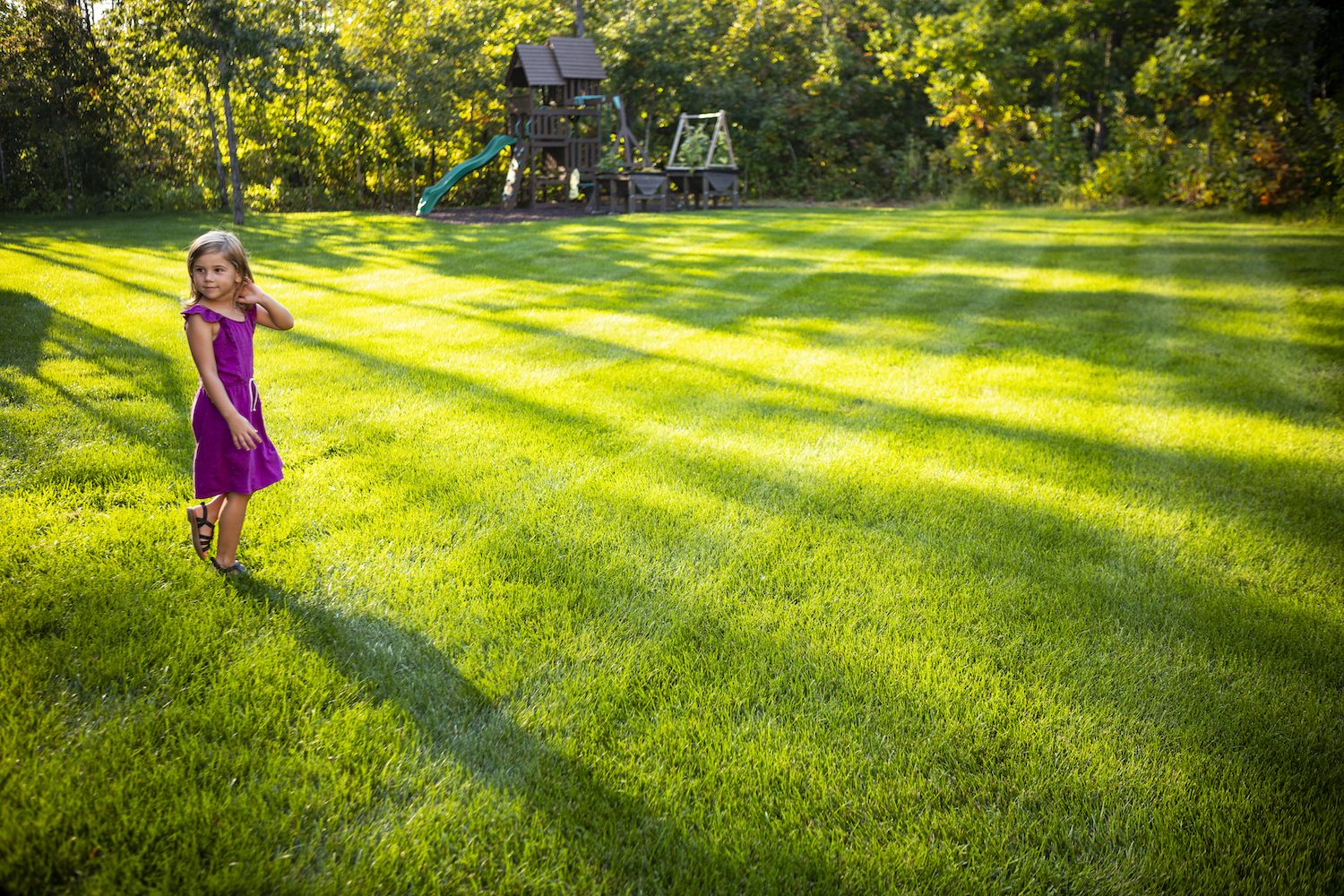
Dark green color is a genetic trait, and plenty of named cultivars are bred for it. Picking seed on color alone is still a mistake, because the darkest variety in the catalog may be the wrong grass for your sun, shade, traffic, and winters. Here is how to think about both.
The dark green cultivars
Kentucky bluegrass is best known for deep color, but perennial ryegrass and turf-type tall fescue both have dark cultivars worth knowing. Color ratings for these come from independent variety trials, which is the right place to compare rather than the front of a bag.
Kentucky bluegrass
Midnight, Bewitched, Total Eclipse, Blackstone, Arcadia, Legend, Prosperity, Blueberry, Bedazzled, Blue Note, Washington, Hampton, and Emblem.
Perennial ryegrass
Pangea, Manhattan 7, Paragon 2, Hawkeye, Caddyshack II, Parkside, and Prominent.
Turf-type tall fescue
Rhambler 2, Titanium 2, Snapback, Regenerate 2, 4th Millennium, and Traverse.
One regional caution on that last group: turf-type tall fescue is less cold hardy than Kentucky bluegrass and can take winter injury in Minnesota and northern Wisconsin, particularly in open areas with little snow cover. It also does not spread, so damage does not fill in on its own. It has a place in a blend, and it should not be the backbone of a lawn this far north.
Is the darkest grass the best grass here
Not necessarily, and color should be near the bottom of your list. The factors that determine whether a lawn thrives are:
- Sun and shade conditions in the specific areas you are seeding
- Disease resistance
- Drought tolerance
- Cold hardiness and frost tolerance
- Spring green-up timing
- Leaf texture, and whether it blends with the grass you already have
- Foot traffic tolerance
- Tolerance for the mowing height you actually mow at
- Insect resistance
- Water and fertilizer requirements
A very dark cultivar that is susceptible to the diseases your yard produces every August is a worse outcome than a slightly lighter one that stays healthy. Healthy grass looks green. Stressed grass does not, whatever its genetics say.
Why a blend wins
Most seed used in Wisconsin and Minnesota is a blend of Kentucky bluegrass, perennial ryegrass, and fescue, and that is the right approach. Each species has distinct strengths. Fine fescues handle shade. Kentucky bluegrass thrives in sun and spreads by rhizomes to repair itself. Perennial ryegrass germinates fast and takes foot traffic well.
A blend gives you some of each and spreads your disease risk, since a single-variety lawn can be taken apart by one pathogen that variety happens to be susceptible to.
The mix should match the site. A shady yard gets weighted toward fescue. A sunny yard gets more bluegrass. Ryegrass earns its place on erosion-prone slopes and in yards with dogs, where you need coverage fast: ryegrass can be up in about a week, while Kentucky bluegrass can take three to four weeks to germinate.
Buy good seed, and match what you have
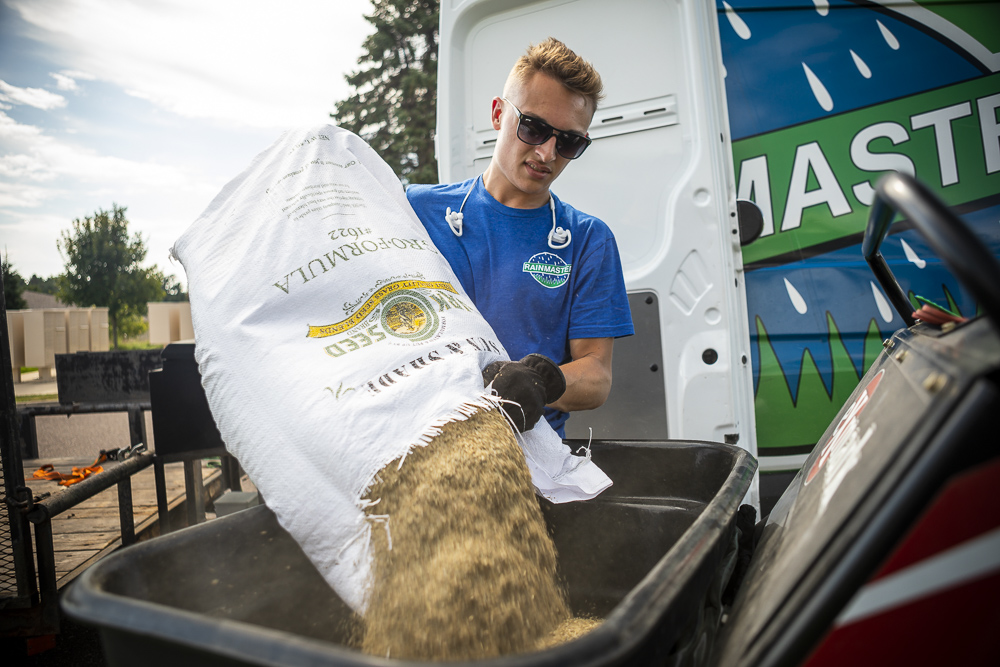
Skip the cheap seed. Inexpensive bags stacked at the home improvement store frequently contain weed seed and undesirable grass species, and it does not matter how dark the named variety is if the bag also plants the problems you will pay to treat later. Read the seed label for percentages of other crop, inert matter, and weed seed.
Also match the new seed to the species mix already in your lawn. Dropping a very dark cultivar into a lighter established lawn produces a visible patchwork of different greens and textures, which looks worse than the thin spot you were fixing.
What actually makes grass darker green
Genetics set the ceiling. Management determines whether you get anywhere near it, and most lawns have more room here than they do in cultivar selection.
- Feed it properly. Slow-release granular fertilizer breaks down over weeks and gives steadier color than a soluble product that spikes and fades. Iron is the nutrient most directly tied to deep green color without pushing growth.
- Aerate. Core aeration opens channels so air and water reach the roots. Healthier roots support denser, greener top growth, and it is the fix for the compaction that is quietly limiting a lot of lawns.
- Test soil pH. Nutrients are only available in the right pH range, roughly 6.0 to 7.0. Out of range, the lawn cannot use what you apply, and color is usually the first thing to suffer.
- Mow tall and follow the one-third rule. The leaf is where photosynthesis happens. Remove more than a third of the blade and you are cutting into the plant's ability to produce food and color.
- Water deeply and less often. Deeper roots reach more moisture and nutrients, which shows up above ground.
- Keep the mower blade sharp. A clean cut heals quickly. A torn leaf tip browns off, and a lawn full of browned tips reads as dull from a distance even when the plants are healthy.
Catching problems before color goes
Weeds, insects, and disease all pull color out of a lawn, often before the cause is obvious to a homeowner. Someone on the lawn every few weeks for fertilizer or weed control is also looking at thatch, compaction, disease signatures, and insect pressure, which is how those get caught while they are still small.
A lawn care program that includes aeration, overseeding with quality seed, and soil correction does more for color than any cultivar on the list above. See our service areas for coverage near you.
Bottom line
- Dark green Kentucky bluegrass cultivars include Midnight, Bewitched, Total Eclipse, and Blackstone.
- Turf-type tall fescue is less cold hardy than bluegrass here and does not spread, so keep it as a blend component.
- Pick seed on sun and shade, disease resistance, and traffic first. Color should be near the bottom of the list.
- Ryegrass germinates in about a week; Kentucky bluegrass takes three to four weeks.
- Iron, correct pH, aeration, tall mowing, and a sharp blade affect color more than cultivar choice does.
Frequently asked questions
What is the darkest green grass for a Minnesota lawn?
Among Kentucky bluegrass cultivars, Midnight, Bewitched, Total Eclipse, and Blackstone rate among the darkest in variety trials. Dark cultivars exist in perennial ryegrass and turf-type tall fescue as well.
Should I seed with just one dark cultivar?
No. A single-variety lawn carries all of that variety's disease susceptibility, and no one grass handles sun, shade, and traffic equally. A blend matched to your site performs better and looks more consistent year to year.
Can tall fescue survive a Minnesota winter?
Turf-type tall fescue is noticeably less cold hardy than Kentucky bluegrass and can suffer winter injury here, especially where snow cover is thin. Since it does not spread, that damage does not fill in by itself.
Why is my lawn light green even though I fertilize?
Soil pH out of range, compaction, a dull mower blade, or an iron shortage will all do it. Start with a soil test, since fertilizer cannot help if the nutrients are chemically unavailable.
University of Minnesota Extension, Seeding and sodding home lawns.
University of Wisconsin Extension, Lawn establishment.


