


What Do Lawn Care Services Spray on Grass? Understanding Lawn Care Products
A lawn care visit usually involves one of four categories of material: fertilizer, grub control, disease control, or weed control. Each works differently, and the timing behind each one matters more than the product itself.
Fertilizer, and why it is usually not sprayed
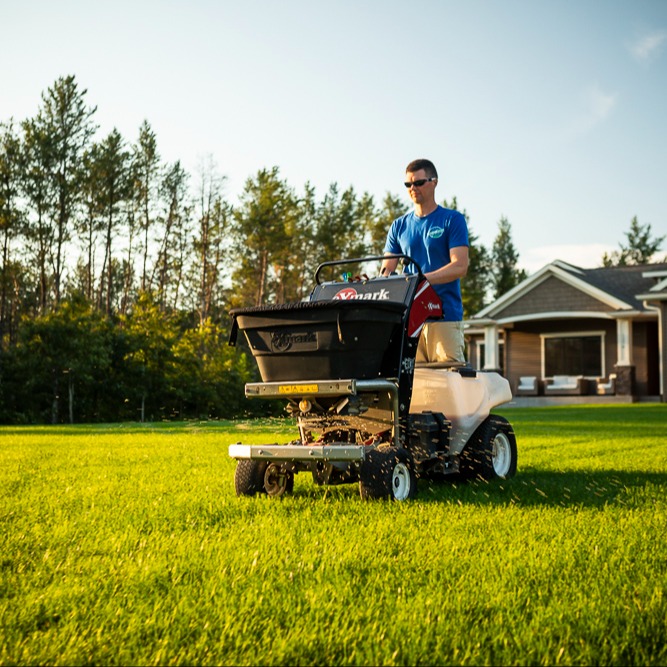
Most people picture a spray tank, but fertilizer is better applied as granules spread over the lawn. Granular formulations cost more than the common liquid products, and they are worth it, because they break down slowly and feed the lawn consistently between visits rather than giving one quick flush of color. Good granular products also carry organic nutrients that produce the deep green color homeowners actually want.
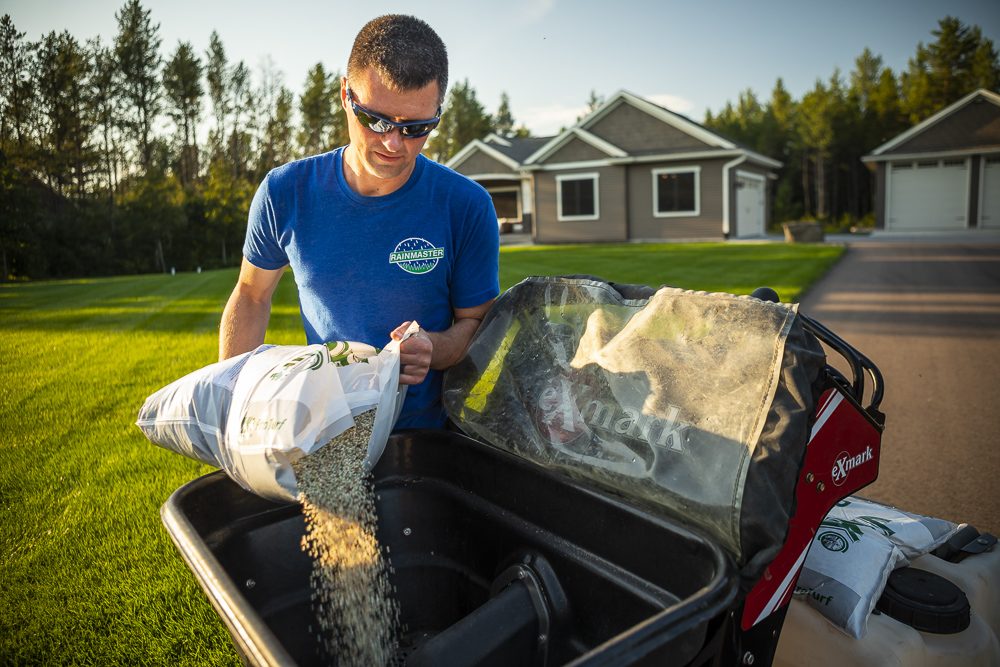
RainMaster uses premium professional-grade granular fertilizer. Not every company in Wisconsin and Minnesota does, and it is a fair question to ask, because some lawn care employees genuinely do not know what is in the material they are spreading.
One regional detail worth knowing: both Minnesota and Wisconsin restrict phosphorus in lawn fertilizer to protect surface water, so most lawn fertilizer used here carries a zero or near-zero middle number unless a soil test shows a real phosphorus need. If a company proposes a high-phosphorus product for an established lawn, ask for the soil test behind it.
Grub control
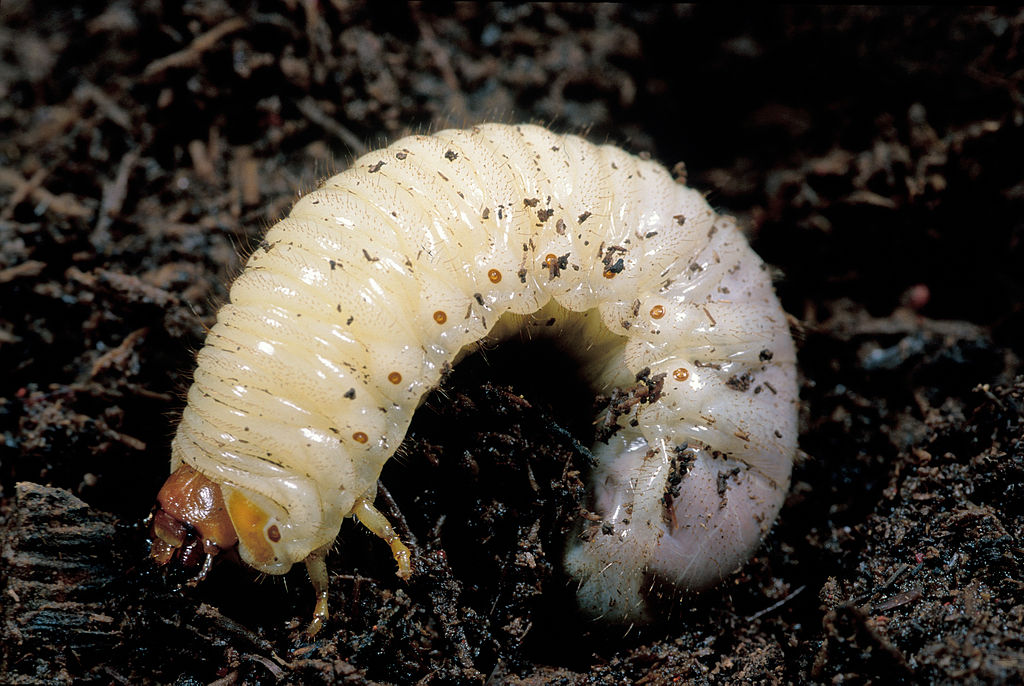
Grubs feed on tender grass roots and soil organic matter, killing sections of lawn by eating the root system out from under it. Preventive grub control works by being present in the root zone when eggs hatch, so the newly hatched larvae die before they cause damage. It does not kill the eggs themselves.
At RainMaster we apply Grub Guard protection on the first visit of the season, and it is selected to stay active through the growing season. That duration is the part to check when comparing programs. In this region the main hatch and the heaviest root feeding run from midsummer into early fall, so a short-lived material applied in spring leaves the lawn unprotected exactly when it matters. We also choose a material with pollinators in mind rather than the broad-spectrum products common at retail.
Disease control
Lawn diseases are fungal, and they show up as discolored patches, rings, or spots that can appear in a matter of days. Fungicides treat diseases including red thread, necrotic ring spot, dollar spot, and the various patch diseases.
Fungicide is not the first response. Most lawn fungus clears on its own once the weather changes, and the turf usually fills back in afterward. What brings it back is the condition that caused it: a sprinkler running at night, a shaded corner where dew sits until noon, compaction, thatch over half an inch, or a nitrogen level that is far too high or too low. Correct those and you need fungicide far less often. Treatment makes sense on severe or recurring cases, and timing is the whole game, since preventive applications have to go down ahead of the high-risk window.
Weed control
Weeds take more than one product and more than one visit, because the categories do different jobs.
- Translocated herbicides move through the plant's system from leaf to root, which is what kills a perennial rather than burning off the top.
- Contact herbicides kill only the tissue they touch. Fine on a young annual, insufficient on an established perennial.
- Pre-emergent stops germinating seed and does nothing to a weed that is already up. This is how crabgrass is controlled, with early spring timing driven by soil temperature.
- Post-emergent treats weeds that are visible and growing.
- Selective products kill target weeds without harming the turf. Non-selective products kill everything green they touch and have no place in a lawn.
Some weeds need the heavier material. Creeping Charlie, for example, gets a tough specialty liquid weed control applied multiple times across the year, and retail products generally will not touch it. That is why a program runs five visits through the season: different weeds emerge at different times, and fall is the strongest window of all for perennial broadleaf weeds, when the plant is moving carbohydrates into its roots.
The application matters more than the product
Every material above has a right rate, a right temperature range, and a right point in the season. The same herbicide applied in 90 degree heat can damage turf that it would have treated cleanly in June. Pre-emergent applied two weeks late protects nothing. Fertilizer spread with an uncalibrated spreader stripes a lawn or burns it.
Beyond the tank and the spreader, the value of a good technician is diagnosis. They catch the early signs of insect pressure, recognize a disease pattern before it spreads, and notice the things no product addresses: soil that is compacted and needs core aeration, thatch that needs to be broken down, a pH that is off far enough that the lawn cannot take up the nutrients being applied, or an irrigation zone throwing water on the driveway.
So the honest answer to what lawn care companies spray on grass is that the materials are a short list and the judgment around them is the long one. If you want to know specifically what would go on your lawn and when, a lawn care walkthrough answers it property by property.
Bottom line
- The four categories are fertilizer, grub control, disease control, and weed control. Fertilizer is best applied granular, not sprayed.
- Minnesota and Wisconsin both restrict phosphorus in lawn fertilizer, so most products here show a zero or near-zero middle number.
- Preventive grub control has to still be active during the midsummer to early fall hatch, so ask how long it lasts.
- Most lawn fungus resolves on its own; fungicide addresses severe cases, and correcting watering, airflow, and thatch prevents recurrence.
- Weed control needs several product types across five visits, with fall the strongest window for perennial broadleaf weeds.
Frequently asked questions
Is the spray lawn care companies use safe around kids and pets?
Products are applied by licensed technicians at labeled rates, and the standard instruction is to stay off treated areas until they are dry. Keep kids and pets inside during the application and until the lawn has dried, and pick up toys and water bowls beforehand.
Why is my lawn company spreading granules instead of spraying?
Because fertilizer works better in granular form. It releases slowly into the soil and feeds the lawn between visits, while a liquid feeding is largely used up quickly. Weed control is the opposite and works better sprayed, so most visits involve both.
Do I need fungicide on my lawn?
Usually not. Most lawn fungus clears up as weather changes and the turf fills back in. Fungicide is for severe or recurring disease, and it works best when the underlying cause, night watering, poor airflow, thatch, compaction, or a nitrogen imbalance, is corrected at the same time.
How many lawn treatments do I need per year?
Five visits across the season covers cool-season lawns in this region, because weeds emerge at different times and fertility has to be spread out. The exact schedule depends on soil temperature in spring and on what the lawn shows through the summer.
University of Wisconsin Division of Extension, Lawn Fertilization.
University of Minnesota Extension, Fertilizing lawns.


