


8 Ways Your Irrigation System Could be Wasting Water
An irrigation system can waste a remarkable amount of water without anything looking obviously broken. Most of the waste comes from a handful of predictable failures, and nearly all of them are findable on a routine inspection. Here are the eight we run into most in Wisconsin and Minnesota.
1. The controller is set wrong
When an irrigation specialist programs a controller, the run times, start times, and cycle counts are matched to your soil, head types, and zones. Left alone, that program is the single biggest water saver in the system.
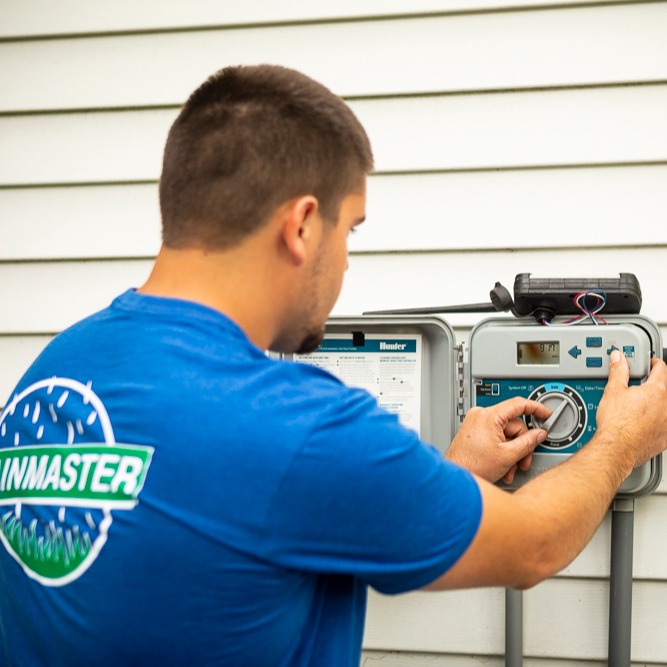
What usually happens instead is manual intervention: a few minutes added here, a daily cycle turned on there, an app setting changed during a dry week and never changed back. The result is a system that no longer matches the yard.
There is one adjustment you should make. Seasonal settings need to change. Spring in Wisconsin and Minnesota is cool and wet, and the schedule that fits May is far too light for a 90-degree August with no rain, and far too heavy for September. Either adjust it yourself at least a few times a season or have it done on a maintenance visit.
2. The rain sensor is not working
A rain sensor interrupts the cycle when enough rain has fallen. It needs almost no attention, but it does need some: batteries in wireless units die, and the sensor body collects leaves, pollen, and debris that keep it from registering rainfall.
A dead sensor means the system runs during a thunderstorm. Check it a couple of times a season, confirm it is unobstructed, and replace batteries on a schedule rather than waiting for a failure.
3. The sprinkler heads are obsolete
Older nozzles atomize water into a fine mist. Mist drifts on wind and evaporates before it reaches soil, so a meaningful share of what you pay for never waters anything.
Current water-saving nozzles produce larger, heavier droplets that fall where they are aimed, and they apply water at a lower precipitation rate so soil has time to absorb it instead of running off. Retrofitting nozzles on an existing system is one of the cheapest efficiency upgrades available, and it does not require replacing the system.
4. Heads are misaligned, damaged, or clogged
Sprinkler heads take abuse. Frost heave through a Wisconsin winter tilts them. Mowers clip them. Snowplows shear them. Grit and mineral residue clog nozzles. Dogs and kids knock them sideways.
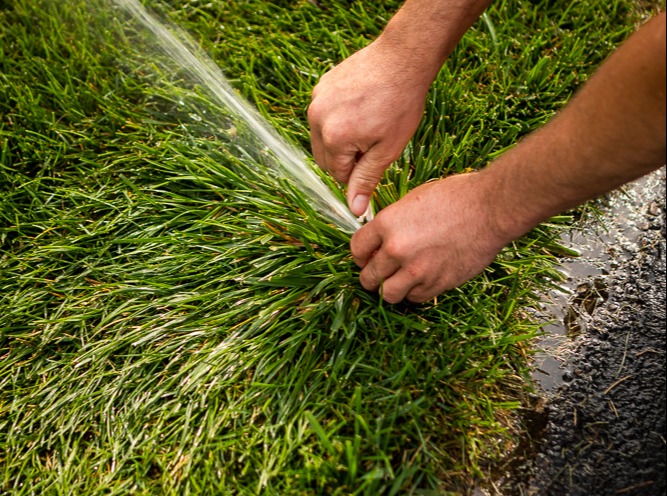
A tilted head waters the driveway or the side of the house. A clogged nozzle leaves a dry wedge in the zone, and the usual response is to add run time to the whole zone, which overwaters everything else to compensate for one bad head. The fix is to run each zone and watch it, which is exactly what a spring startup is for.
5. Leaking valves
Zone valves are the faucets of the system, opening and closing on command from the controller. Like any faucet they can leak. Debris lodged in the diaphragm keeps the valve from seating, a solenoid fails, or the valve is simply old. A leaking valve weeps water continuously, often into the valve box or the lowest head on the zone, around the clock, with no visible run time attached to it.
6. Low-head drainage
This is water loss while the system is off. When a zone shuts down, water left in the lateral lines flows downhill to the lowest point and drains out through the lowest sprinkler head until the pipe is empty. On a sloped yard, that can be a significant volume every single cycle, and it saturates one small area while the rest of the zone gets nothing extra.
Check valves installed in the heads or in the line stop it. On a system with any grade to it, this is a worthwhile retrofit.
7. A broken water line
If several heads on a zone are weak or dead, suspect the lateral line feeding them. A cracked or separated line leaks the entire time the zone runs, and because it is underground, it can continue for a full season unnoticed.
Signs to watch for: a persistently soggy area with no head near it, a drop in pressure across a whole zone, unexplained gravel or soil washing at a low point, and a water bill that jumps without a schedule change.
8. It has been too long since a tune-up
If a professional has not looked at the system in a year or more, assume it is wasting water. Every item above is found by inspection, and most are cheap to fix at the point they are found and expensive to ignore.
The right inspection schedule for this climate is three visits a year:
- Spring startup. Charge the system, check every head, reprogram the controller for spring conditions, verify the rain sensor, and run every zone.
- Midsummer inspection. This is the visit people skip and the one that matters most. The system is under peak demand, plants are at full growth so coverage can actually be evaluated, and failures happen under load.
- Fall shutdown. Blow out the lines, drain the backflow device, and protect anything that holds water before the first hard freeze.
An irrigation maintenance plan puts those visits on the calendar so problems get caught at the inspection rather than on the water bill. You also get advice along the way, whether that is cutting back run times, correcting a zone that was never right, or retrofitting nozzles and a smart controller.
Bottom line
- Leave a professionally programmed controller alone, with one exception: adjust it for the season, because a May schedule is wrong for August.
- Check the rain sensor for dead batteries and debris a couple of times a season.
- Replace misting nozzles with current water-saving heads, and install check valves where low-head drainage occurs on slopes.
- Weak or dead heads across a whole zone usually mean a broken lateral line, not a bad head.
- Inspect three times a year: spring startup, a midsummer check under peak demand, and fall shutdown before the first hard freeze.
Frequently asked questions
How can I tell if my sprinkler system is wasting water?
Run each zone and watch it. Look for mist instead of droplets, heads spraying pavement, dry wedges inside a zone, water weeping from the lowest head after shutoff, and soggy ground with no head nearby. A water bill that climbs without a schedule change is the other signal.
What is low-head drainage?
Water left in the lines after a zone shuts off runs downhill and empties out through the lowest sprinkler head. It wastes water every cycle and floods one small area. Check valves in the heads or the line stop it.
How often should an irrigation system be inspected?
Three times a year in Wisconsin and Minnesota: spring startup, a midsummer inspection while the system is under peak demand, and fall winterization. The midsummer visit is the one most often skipped and the one that finds the most.
Do I need a whole new system to save water?
Usually not. Nozzle retrofits, a smart controller, check valves, and correct controller programming deliver most of the savings on an existing system, and all four can be done without replacing pipe.
U.S. Environmental Protection Agency WaterSense, Sprinkler Spruce-Up.
U.S. Environmental Protection Agency WaterSense, Watering Tips.


