


Do I Need Warm Or Cool Season Grass? Lawn Care Basics for Eau Claire, WI
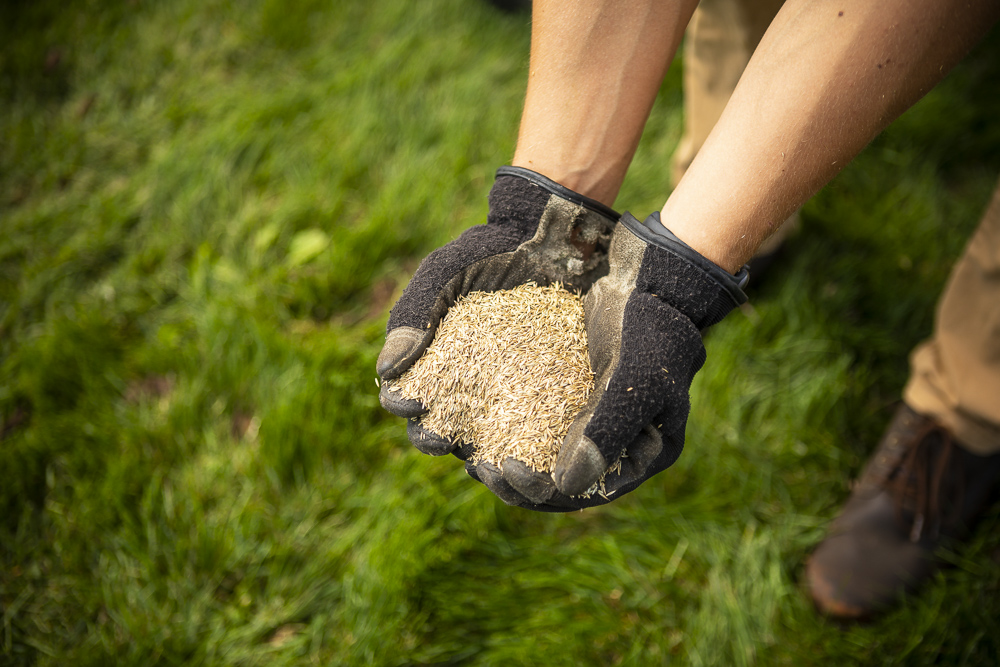
Grass selection in Wisconsin comes down to one fork in the road: cool-season or warm-season. For Eau Claire the answer is settled, and the more useful questions are which cool-season species to blend, how to read a seed tag, and how to get new seed to actually establish.
What cool-season and warm-season mean
The difference is when each type grows actively.
Cool-season grasses start moving in late winter or early spring, green up and send out shoots early, set seed in spring or early summer, then slow down or go dormant in summer heat. When fall temperatures drop, they resume growing and keep going until the ground freezes. They tolerate low temperatures, frost, and lower light levels well.
Warm-season grasses wait for sustained warmth, pushing new leaves in late spring or early summer, setting seed in summer or early fall, and going dormant in winter. They need more light and have much less frost tolerance.
In practical terms, each type has an advantage in the climate it evolved for, which is why the choice is made by location rather than preference.
The best grass types for Eau Claire
Cool-season grasses, without qualification. Warm-season species will not survive Wisconsin winters, and even in a mild year they would be brown for the months you most want a green lawn.
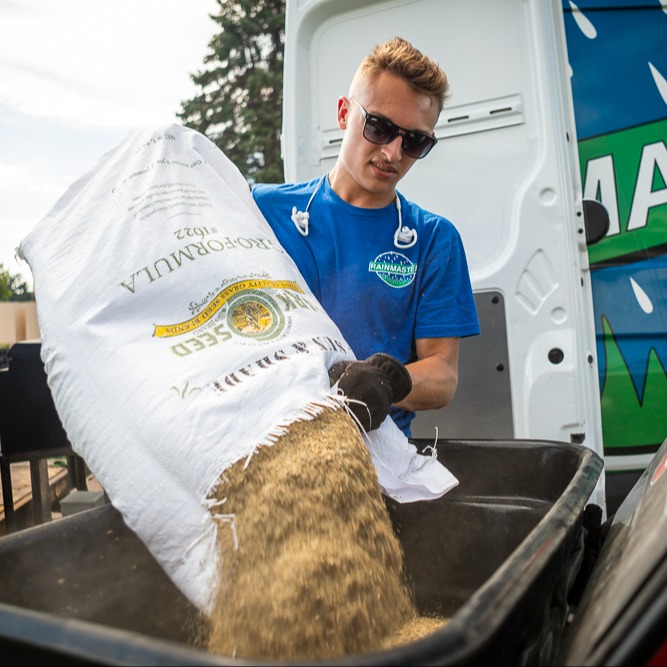
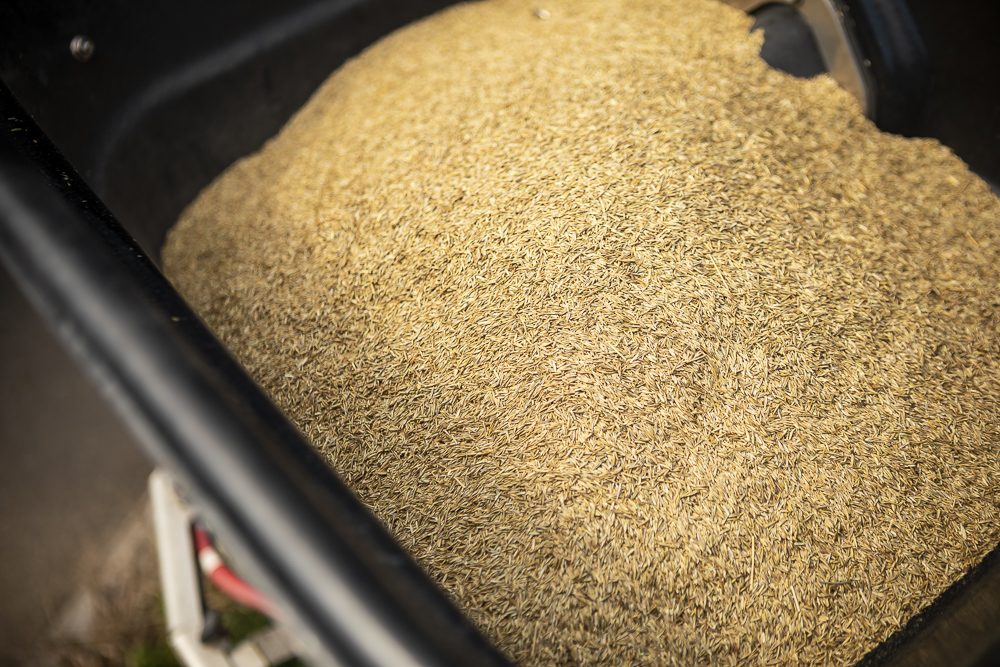
At RainMaster we overseed with a blend of Kentucky bluegrass, perennial ryegrass, and fescue, all cool-season species suited to this climate. The blend matters as much as the species:
- Disease and stress insurance. Each species is susceptible to different diseases and stresses. A lawn planted 100 percent to one species can be taken down broadly by the one problem that species cannot handle. A blend means a setback instead of a loss.
- Mixed light conditions. Most yards have both sun and shade. Fine fescues tolerate shade better; Kentucky bluegrass wants sun and spreads by rhizomes; perennial ryegrass germinates fast and establishes quickly. A blend lets the right species dominate in each part of the yard.
- Traffic and recovery. Bluegrass spreads and repairs itself over time. Perennial ryegrass and tall fescue are bunch-type grasses that cannot spread into a bare patch, so having some spreading capacity in the mix helps.
How to buy grass seed in Wisconsin
There is a good, better, and best tier, and the differences are printed on the label tag if you read it.
Lower-end bags carry a significant percentage of inert matter, filler that is not seed at all, plus off-type grass species and sometimes weed seed.
Mid-tier bags may include a water-absorbent coating on the seed. It sounds sophisticated, and it does hold moisture, but coating is weight you are paying for instead of seed, so you get less actual seed per bag.
The best bags contain more pure seed, less inert matter, named cultivars rather than generic species, and a recent test date. They cost more per bag and more of what is in them is what you came for.
Read the tag before you buy: species and cultivars, purity percentage, inert matter percentage, weed seed and other crop percentages, germination rate, and test date.
How to overseed a lawn
- Follow the rate on the bag. This is the most common failure. If the label calls for 3 pounds per thousand square feet and you spread a pound and a half, the result will be thin and you will blame the seed.
- Get seed in contact with soil. Seed sitting on thatch or matted grass will not germinate reliably. Rake to expose soil, scratch the seed in, and tamp lightly. This is why overseeding right after core aeration works so well: the holes are an ideal seedbed.
- Water consistently and lightly. New seed needs the surface to stay moist, which means two to four short cycles a day. That is difficult to do by hand for four to six weeks straight, which is why a timer or an irrigation system is worth considering before you seed, not after.
- Hold off on weed control for at least four mowings unless a professional product labeled for new seedings is used, and do not apply crabgrass pre-emergent to a seeded area, because it blocks grass seed from establishing.
- Seed at the right time. Early fall is the best window here, with late August through mid-September ideal: warm soil, cool air, reliable rain, and much less weed seed in the air.
Lawn seeding questions
Can you mix cool-season and warm-season grass?
You should not. The two differ in texture, color, and dormancy timing, so a mixed lawn looks patchy and goes off color in sections at different times of year. Some transition-zone areas in the middle of the country do blend them to extend green-up, but that logic does not apply in Wisconsin.
Which grasses are which?
Cool-season: Kentucky bluegrass, perennial ryegrass, fine fescues, and tall fescue. Warm-season: bermudagrass, bahiagrass, centipedegrass, and zoysiagrass.
What temperatures do they prefer?
Cool-season grasses grow best with air temperatures around 60 to 75 degrees Fahrenheit. Shoot growth begins when soil reaches roughly 45 degrees, and root growth is strongest with soil around 50 to 65 degrees. Warm-season grasses want air temperatures closer to 80 to 95 degrees and soil above about 65 degrees.
When should cool-season seed go down?
Early fall is best. Wait for daytime air temperatures around 60 to 75 degrees and soil temperatures around 50 to 65 degrees. Germination generally takes one to four weeks depending on species and temperature; perennial ryegrass is fastest and Kentucky bluegrass is slowest. Mow once the new grass reaches normal mowing height across the area, usually three to four weeks, not on a fixed calendar date. Full maturity, where the stand knits together and holds up to traffic, takes a season or two.
Bottom line
- Eau Claire lawns need cool-season grass. Warm-season species will not survive Wisconsin winters.
- Use a blend of Kentucky bluegrass, perennial ryegrass, and fescue rather than a single species, for disease insurance and mixed sun and shade.
- Read the seed tag: purity, inert matter, weed seed, germination rate, and test date. Coated seed means less actual seed per bag.
- Spread the full labeled rate, get seed in soil contact, and water two to four short cycles a day for four to six weeks.
- Seed in early fall, ideally late August through mid-September, and mow when the new grass reaches mowing height rather than on a set date.
Frequently asked questions
Do I need warm-season or cool-season grass in Wisconsin?
Cool-season. Kentucky bluegrass, perennial ryegrass, and fescues handle the cold, frost, and lower light here. Warm-season species such as bermudagrass and zoysiagrass will not survive the winters.
Why use a blend instead of one grass species?
Each species is vulnerable to different diseases and stresses and suited to different light. A blend means one problem thins the lawn rather than taking it out, and it lets the best-adapted species dominate in each part of the yard.
How do I tell good grass seed from cheap seed?
Read the label tag. Cheap bags show high inert matter, generic species rather than named cultivars, and sometimes weed seed. Mid-grade bags may be padded with a water-absorbent coating. Good seed shows high purity, named cultivars, a strong germination rate, and a recent test date.
How often do I water new grass seed?
Two to four short cycles a day to keep the surface moist, for the first four to six weeks. After that, shift to longer and less frequent watering so roots grow downward.
University of Wisconsin Extension, Lawn Establishment and Renovation.
University of Minnesota Extension, Seeding and Sodding Home Lawns.


