


TruGreen vs RainMaster: Comparing 2 Lawn Care Options for Eau Claire, WI & Blaine, MN
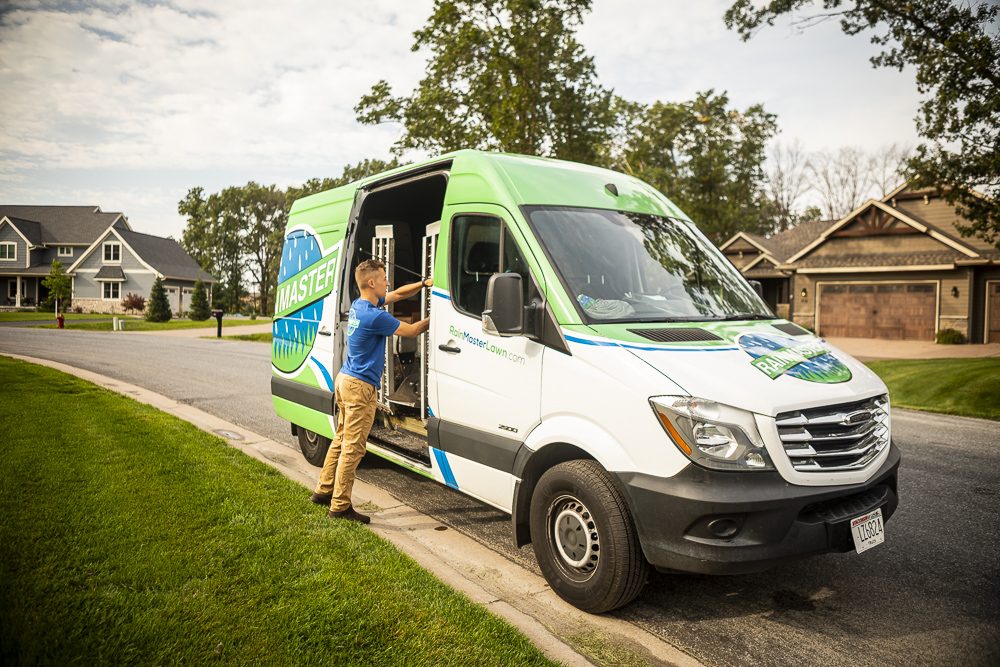
TruGreen is the largest lawn care company in the country. RainMaster has been treating lawns in the Chippewa Valley and the Twin Cities since 1999. Both will fertilize your lawn and treat your weeds, so the real question is what the structural differences mean for the service you actually receive.
Who picks up when you call
When you call RainMaster you reach our local office in Eau Claire, Wisconsin or Blaine, Minnesota. Not a regional call center in another state. You can ask to speak with any of us, including the lawn care specialist who services your property, and a lot of our clients have their specialist's mobile number.

That sounds like a small thing until you have a specific question about a specific patch of your lawn. A centralized call center can look up your account and reschedule a visit. It cannot tell you what the technician saw in your back corner last Tuesday.
Who is actually treating your lawn
National providers typically staff heavily for the season and scale back after it. RainMaster specialists work year round, and the offseason is spent on training: classes, certifications, and webinars with turf professionals from around the world. Our Eau Claire and Blaine teams include people with horticulture degrees and decades of experience.
Why that matters is diagnosis. Applying fertilizer is not hard. Correctly identifying that a straw-brown patch is Ascochyta leaf blight that will recover on its own rather than grub damage that needs curative treatment and overseeding, that takes training. Getting it wrong costs you either money on an unnecessary treatment or a season of damage.
We will be straight with you about what that staffing model means: our prices are not the cheapest in the market. Year-round staff, ongoing education, and premium materials cost more than seasonal labor and low-bid product.
How fast a company can change its approach
This is the real advantage of local scale, and it is not about caring more. A national operation sets product lists, programs, and procedures across an enormous footprint, and changing them takes time. That is a reasonable way to run something that size.
One local company can switch products next week if we see a reason to. When we notice disease pressure building in a particular part of the Eau Claire market, or a weed spectrum shifting after an unusual spring, we adapt to that. Your lawn gets a strategy built for conditions in the Chippewa Valley or the north Twin Cities metro, not a program designed to work acceptably in forty states.
The same goes for timing. Crabgrass pre-emergent has to go down based on local soil temperature, and a company making that call locally has an easier time hitting the window.
Liquid versus granular fertilizer
You will see this framed as a good-versus-bad question. It is really a trade-off, so here is the honest version.
- Liquid fertilizer is sprayed from a tank and acts fast. It gives a quick response and allows nutrients and weed control to be applied in one pass, which is efficient.
- Granular fertilizer is spread dry and breaks down over weeks. It costs more and takes longer to apply, but it delivers a consistent, extended feeding rather than a spike, and it is less prone to burn.
RainMaster uses granular fertilizer, which is more expensive than the liquid products many competitors use. For cool-season lawns in this climate we think the slow, steady release is the better choice, and our granular product also contains organic nutrients that improve color and density. We also do weed control as spot treatment rather than blanketing the whole lawn, which is a separate decision from the fertilizer and one most tank-based programs cannot make.
The small operational things
A few RainMaster practices that are unusual in the industry:
- A phone call after the visit. Our specialists call you when they are done on your property and tell you what they did and what they saw. It takes two minutes and it is rare.
- Advance notice before pest treatments so pets and kids are inside and toys are picked up.
- Both services under one roof. Most companies do lawn care or irrigation, not both. We do both, which matters most around aeration and overseeding, when sprinkler heads need flagging and the controller needs a new schedule for new seed. See lawn care and irrigation.
How to decide
Both models are legitimate and the right answer depends on what you want.
A national provider is a reasonable choice if price is the deciding factor, you want a standardized program, and you are comfortable managing the relationship through a call center.
A local company makes more sense if your lawn has specific problems that need diagnosis, you want to talk to the person treating it, you care about product choices and pollinator safety, or you want lawn care and irrigation coordinated instead of two companies working around each other.
Many of our customers came from a national provider for a simple reason: they wanted results, and they wanted to reach a human being who had actually stood on their lawn.
Bottom line
- Calling RainMaster reaches a local Eau Claire or Blaine office, often the specialist who services your lawn directly.
- Our specialists work year round and spend the offseason on training and certifications, which is what makes accurate diagnosis possible.
- A single local company can change products and timing quickly to match local disease, weed, and soil temperature conditions.
- Granular and liquid fertilizer are a trade-off, not good versus bad. We use granular for steady release and add organic nutrients.
- We are not the cheapest option, and we handle both lawn care and irrigation, which matters at aeration and overseeding time.
Frequently asked questions
Is local lawn care more expensive than a national company?
Often, yes, and ours is. Year-round staff, ongoing training, granular fertilizer, and pollinator-safe insect control cost more than seasonal labor and low-bid materials. The question is whether the results justify it for your lawn.
Does it matter whether fertilizer is liquid or granular?
Both work. Liquid acts faster and applies efficiently in one pass with weed control. Granular releases over weeks for a steadier feeding and is less likely to burn. We chose granular for cool-season lawns in this climate and accept the higher cost.
Why does having lawn care and irrigation under one company help?
Mostly at aeration and overseeding. Sprinkler heads need flagging before an aerator runs over them, and new seed needs a completely different watering schedule. When one company does both, that is coordinated instead of left to you.
Can I switch mid-season?
Yes. We will look at what has already been applied, where the lawn is in the season, and build the remaining visits around that rather than restarting a program from scratch.
University of Minnesota Extension, Fertilizing lawns.
University of Wisconsin Extension, Lawn fertilization.


