


6 Tips for Shutting Down Sprinkler System for Winter in Eau Claire, WI & Minneapolis
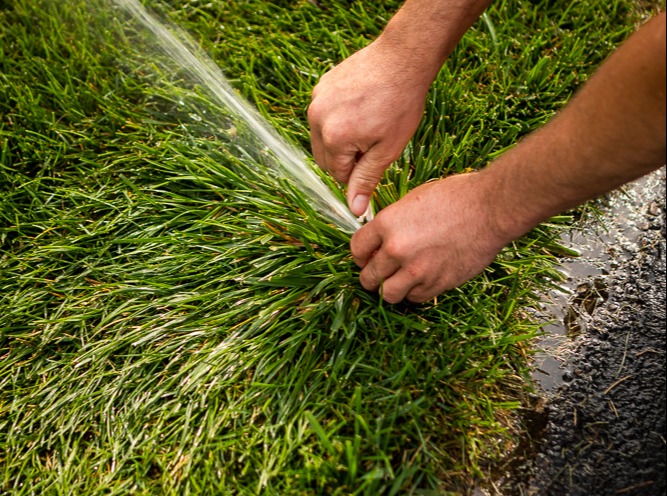
Every drop of water left in your irrigation system is a potential repair bill once the ground freezes. Shutting a sprinkler system down for winter in the Chippewa Valley or the Twin Cities is less about turning off a valve and more about getting water completely out of pipes, valves, heads, pumps, and the backflow device. Here are the six things that matter most.
1. Get the water out, completely
This is the whole job. Water expands when it freezes, and it does not care whether it is sitting in a lateral line, a valve body, a rotor gear case, or the brass body of your backflow preventer. If it freezes and expands in there, something cracks. In Eau Claire and the Twin Cities, you want this done before the first sustained hard freeze, which in most years means sometime in October.
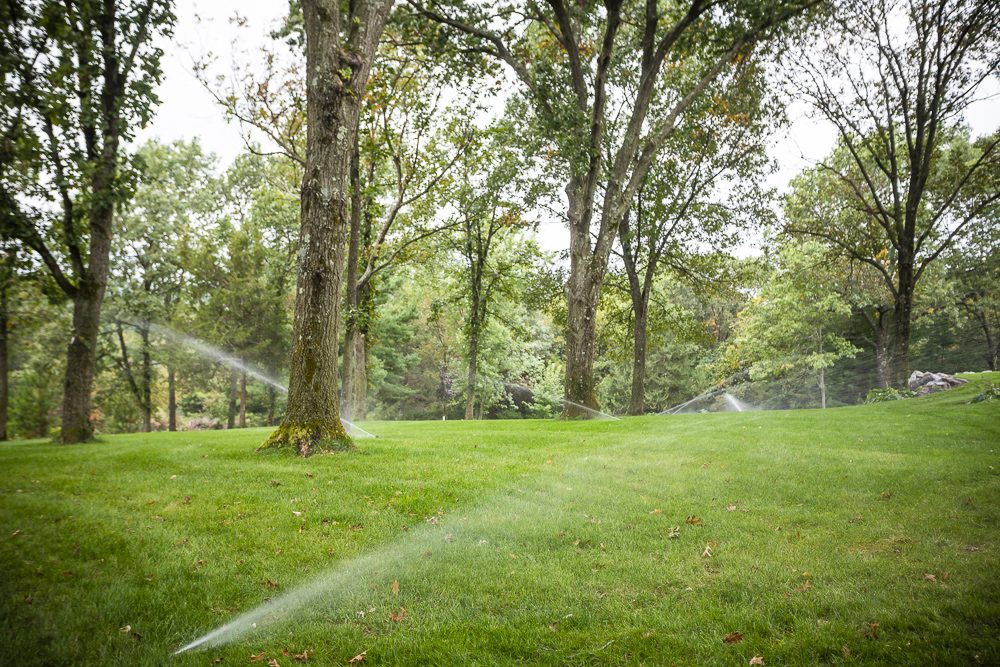
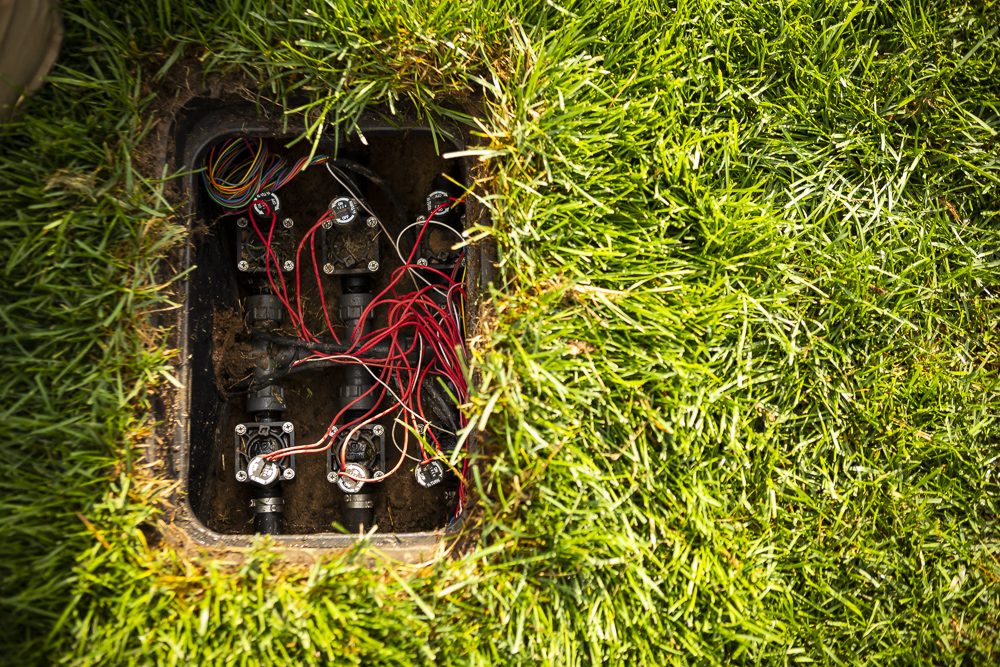
A proper blowout runs each zone individually, long enough to push the standing water out through the heads, and then moves on. Zones get cycled more than once because water keeps finding its way back to the low points in the line.
2. Your garage air compressor is not the right tool
This is the most common reason DIY winterization goes wrong. A workshop or garage compressor typically puts out 100 to 160 psi. That is high pressure with very little volume, and volume is what actually moves water out of a buried pipe.
- It is about CFM, not PSI. You need a wall of moving air, not a hard, thin stream of it. A small tank compressor empties, recovers, empties again, and never develops the airflow to clear a zone.
- High pressure breaks things. Most irrigation components are rated to about 100 psi. Push 120 psi into them and you can blow them apart. Heads come off. Pipes burst. It is both a spectacle and genuinely dangerous.
- Running air too long melts gears. Homeowners trying to be thorough leave the air on, and the heat and friction from dry air spinning a rotor can melt the gears inside the head.
Our compressor is pulled on a trailer behind a truck, runs a diesel engine, and produces a large volume of air at low pressure. We run 60 to 80 psi. That combination is what clears a line without destroying it.
3. Do not forget the lake pump
Plenty of properties around Eau Claire, Chippewa Falls, and the western Twin Cities pull irrigation water from a lake or river instead of a municipal line. A lake pump has to be winterized on its own or freezing temperatures will break it.
- Add RV antifreeze to protect the pump internals.
- Cover the open ends of pipes so mice and other critters do not move in for the winter.
- Remove the wiring from the pump so it cannot be switched on accidentally. We do this on every pump we shut down.
- Pull the intake out of the water and store it. Spring flooding and ice movement can carry an intake away.
4. Prep the backflow device
Freezing water inside a backflow preventer damages the internal components and can crack the body outright. If the body cracks, you are not buying a part in spring, you are calling a plumber.
The complication is that every backflow assembly is a little different, and each one has its own winterizing procedure: specific test cocks to open, specific valves to leave partially open, specific orientation. If the manual is causing you more confusion than it resolves, that is a good argument for having an irrigation company handle it. The device also has to be ready to be tested again in spring, so getting it through winter intact matters twice.
5. Check what is inside the house
The indoor shutoff gets overlooked constantly. If you have an irrigation supply valve in the basement or a utility room, make sure it is fully closed, not almost closed. A slow trickle past a partly closed valve will refill the line you just spent an hour clearing, and that water goes right back out to the coldest part of the system.
While you are down there, note where that valve is and whether it drains. Knowing it in October saves you hunting for it in April.
6. Doing it yourself does not save much
Handling winterization yourself might save you a little under a hundred dollars. That is real money. The problem is the downside is not symmetrical.
The repairs we do because of improper winterization average $250 to $1,500. A pump that was not winterized correctly is the $1,500 end of that range. Valves that still held water cost $300 to $500 per box to repair. One missed step can erase ten years of DIY savings in a single spring.
That is why winterization is included in every one of our irrigation maintenance packages rather than sold as an add-on. Packages start at $239 a year, and every visit is planned around system performance, lower water use, and a healthier landscape.
Timing it right in the Upper Midwest
Aim for the window after you have stopped watering but before overnight lows settle below freezing for several nights in a row. Late September through October covers most years in both service areas. Waiting for the first snow is waiting too long, because the ground often freezes at the surface before the snow arrives. If you are not sure how late you can push it, get on the schedule early and water manually if the fall stays warm.
Bottom line
- Water left in pipes, valves, heads, pumps, or the backflow device is what breaks a system, so a full blowout is the entire point.
- Air volume (CFM) clears a line; high pressure from a shop compressor does not, and above 100 psi it damages components.
- Lake pumps need antifreeze, capped pipe ends, disconnected wiring, and the intake pulled and stored.
- Every backflow assembly winterizes differently, and a cracked body means a plumber in spring.
- DIY saves under $100; a missed step averages $250 to $1,500 in repairs.
Frequently asked questions
When should I shut down my sprinkler system in Wisconsin or Minnesota?
Late September through October in most years. You want to be done before overnight temperatures stay below freezing for several nights in a row, not after the first snow. The surface of the ground often freezes before snow arrives.
Can I just drain my system instead of blowing it out?
Only if the system was installed with manual or automatic drain valves at every low point and the heads drain as well, which is uncommon in this region. Most systems here hold water in the laterals and valve bodies regardless of grade, so compressed air is the only way to clear them.
What psi should be used to blow out sprinkler lines?
We run 60 to 80 psi. Most irrigation components are rated to roughly 100 psi, so going higher risks blowing heads off and bursting pipe. The limiting factor on a good blowout is airflow volume, not pressure.
Does winterization include the backflow test?
No. Winterization protects the backflow device through the winter. The required annual test happens in spring, at the activation visit.
EPA WaterSense, Sprinkler Spruce-Up.
Irrigation Association, Irrigation system maintenance resources.


