


Tick Yard Treatment in Minneapolis: Why it’s Worth the Money
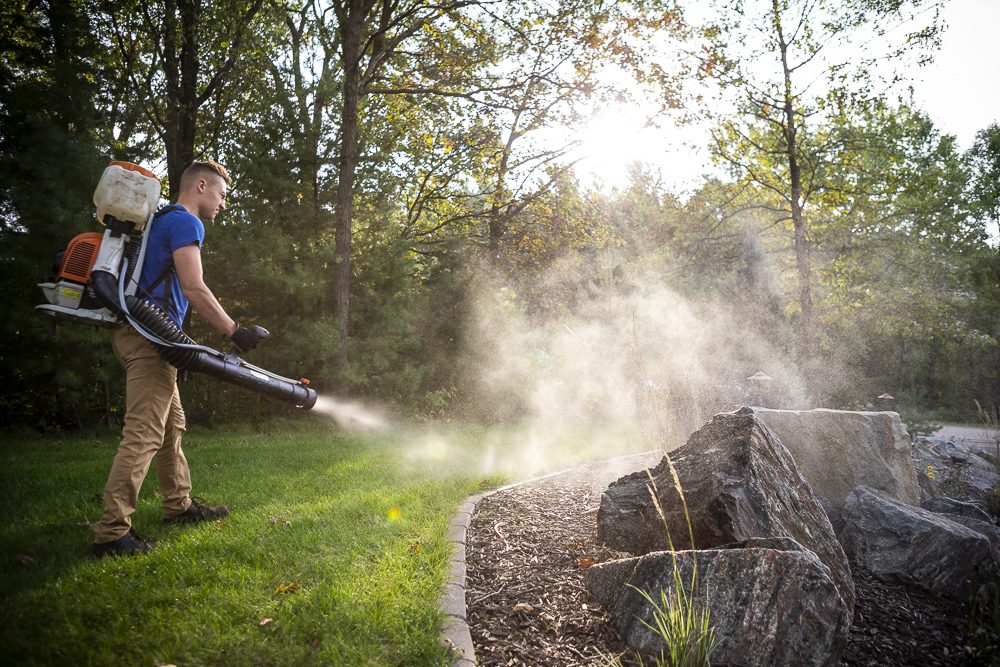
Tick yard treatment is worth the money if your property has a wooded edge, dense shade, leaf litter, or a dog that patrols the perimeter, because those are the places ticks actually live. A barrier program treats that habitat on a schedule, every three weeks for six visits from spring through fall, and the same application reduces mosquitoes. What it buys you is a large reduction in ticks on the property, not a tick-free yard.
First, how do you know you have ticks?
Unless your yard is a sunny expanse of short turf with no trees and no beds, you probably have some. Ticks need humidity, shade, and a host, and a typical Minneapolis or Eau Claire lot supplies all three.
Three ways to confirm it without guessing:
- Check the dog. If you are pulling ticks off a dog that only walks the yard, the ticks are coming from the yard.
- Walk the edge in light clothing. Light pants and socks make a crawling tick obvious. Walk the wooded border, the back of the shed, and the shaded strip along a fence line.
- Drag a white cloth. A white towel or pillowcase dragged slowly over leaf litter and tall grass at the yard edge picks up questing ticks. It is the same method used for surveys, and it takes ten minutes.
Where ticks are on your property, and how they find you
Ticks concentrate where the mowed lawn meets something else: woods, brush, a creek bank, a stone wall, an unmowed ditch. Inside the yard, they hold in the humid, shaded spots:
- Under plant leaves and in ground cover
- Shaded beds and the north side of the house
- Damp low areas that never dry out
- Under decks and porches
- Low tree limbs and dense shrubs
- Wood piles and stacked brush
- Leaf litter anywhere it accumulates
One correction worth making, because the opposite gets repeated constantly: ticks do not jump, fly, or drop out of trees. A tick climbs to the tip of a grass blade or a low leaf, holds on with its back legs, and extends its front legs into the air. That behavior is called questing. When a person, deer, or dog brushes past, it grabs on and climbs. That is why the treatment goes on foliage and low vegetation, and why mowing and leaf removal matter so much.
Why this matters in Wisconsin and Minnesota
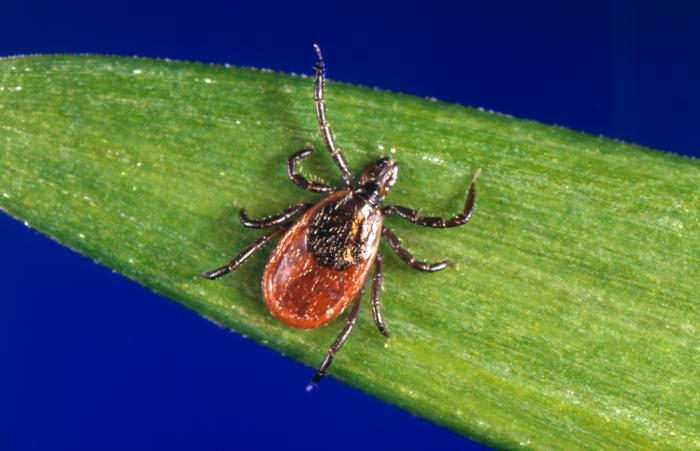
Both states are inside the range of the blacklegged tick, also called the deer tick, which is the species that transmits Lyme disease here along with anaplasmosis and babesiosis. The American dog tick is the bigger, flatter brown tick most people find first, and it is not a Lyme vector, which is why identifying what you pulled off matters.
Timing surprises people. Nymphs, which are the size of a poppy seed and the hardest to spot, are most active in late spring and early summer. Adults are active in spring and again in fall, and they will quest on any day the ground is thawed and temperatures are above freezing. A tick found in November is not unusual.
A tick cuts into the skin, inserts its feeding tube, and feeds slowly over several days. Pathogens pass in the tick's saliva during that feeding, so prompt removal reduces risk. Find one, remove it with fine-tipped tweezers close to the skin, pull straight out, and watch the site.
What a barrier treatment program actually is
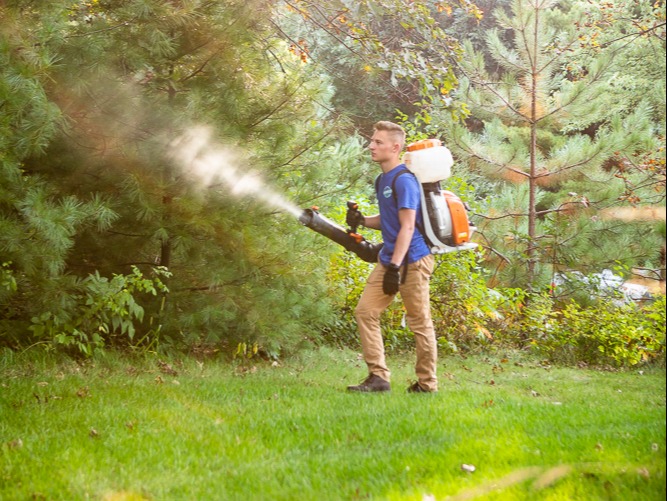
Treatment targets ticks where they live and breed rather than broadcasting over open lawn. Specialists spray the perimeter of the property and the harborage inside it:
- The undersides of plant leaves
- Shaded areas and bed interiors
- Wet and low areas
- Under decks
- Low tree limbs
- Wood piles
RainMaster's barrier spray runs on regular visits every three weeks, six visits total from spring through fall. The results on each visit are immediate, and the barrier breaks down over time, which is why the interval matters more than any single application. The same spray reduces mosquitoes, so one program addresses both pests with each visit. Kids and pets can return once treated areas are dry, generally about 30 minutes.
Commercial applicators in both states are licensed, Wisconsin through the Department of Agriculture, Trade and Consumer Protection and Minnesota through the Department of Agriculture. Ask any company you are considering for its license and its insurance.
What treatment does not do
No tick program delivers 100 percent control, and you should be skeptical of any company that claims otherwise. We call it reduction because that is what it is. Treatment also does nothing for the ticks your dog picks up on a trail or at the neighbor's, so keep using the prevention your veterinarian prescribes and keep doing tick checks after time outdoors.
Make the treatment work harder
Habitat work compounds the effect of every application:
- Keep the lawn mowed and the edges cut back. Short, sunny turf is poor tick habitat.
- Remove leaf litter. It is the single best tick shelter on most properties.
- Put a dry buffer at the wood line. A few feet of wood chips or gravel between lawn and woods gives ticks a strip they do not like to cross.
- Move the human activity inward. Play sets, patios, fire pits, and seating belong in the sunny middle of the yard, not against the tree line.
- Stack wood neatly, off the ground, in the sun. Wet wood piles hold both ticks and the rodents that feed them.
- Discourage deer and rodents. Fencing, removing old furniture and junk, and cleaning up birdseed all reduce the hosts that bring ticks in.
- Fix chronically wet ground. A leaking head or a zone soaking a shaded bed every day creates permanent tick habitat. That is an irrigation problem worth correcting.
So is it worth the money?
Look at what you are buying. A season of treatment is roughly the cost of a few restaurant dinners, and the alternative is either not using half your yard or doing it yourself, which means buying the right product, applying it correctly to foliage every three weeks for six months, and repeating after heavy rain. Most homeowners try that for one season.
If you are ready to stop stressing about ticks, request a quote or call 888-839-8484 and we will get your property on the tick and mosquito reduction schedule.
Bottom line
- Ticks live in shade, leaf litter, ground cover, and the strip where your lawn meets woods or brush, not in open sunny turf.
- Ticks do not jump or fall from trees; they quest on low vegetation and grab a passing host, which is why foliage treatment and mowing work.
- A barrier program runs every three weeks, six visits spring through fall, and reduces mosquitoes with the same application.
- Expect a large reduction, not elimination, and keep up vet-prescribed prevention and tick checks for pets and people.
- Leaf removal, a wood chip buffer at the tree line, neat wood stacks, and moving play areas away from edges all multiply the effect.
Frequently asked questions
Do yard tick treatments actually work?
Yes, when the product is applied to the places ticks rest rather than over the open lawn, and when it is reapplied on schedule. You get an immediate reduction after each visit. No program removes every tick.
How often does a yard need tick treatment in Minnesota or Wisconsin?
Every three weeks through the season, which works out to about six visits from spring through fall. The barrier degrades with sun, rain, irrigation, and new plant growth.
Is tick spray safe around kids and pets?
Keep children and pets inside during the application and until treated foliage is dry, roughly 30 minutes. Bring in pet bowls, toys, and outdoor bedding beforehand, and tell the applicator about ponds, gardens, hives, or chickens.
Does tick treatment replace flea and tick medication for my dog?
No. Yard treatment lowers the number of ticks at home. Your veterinarian's prevention protects the animal from the ticks it meets anywhere else, including on walks and trails.


