


Tick Facts & Myths (for MN & WI Homeowners)
Ticks are small, unpleasant, and poorly understood, which is a reliable recipe for bad information. Some of the most common advice about them is wrong in ways that make people both more anxious and less protected. Here is what holds up.
Myth: ticks burrow under your skin
They do not. A tick cuts into the surface of the skin, inserts a feeding tube, and stays attached at the surface while it feeds. When it is full, it detaches and drops off on its own.
The less pleasant part is the timeline: that usually takes three to six days. The area around the bite may swell around the tick's head, which is what gives the impression that it has gone under the skin, but the body of the tick remains outside.
Myth: just stay out of the woods and you are fine
You are more likely to encounter ticks in woods and in fields with tall grass, that much is true. But ticks live anywhere they can find humidity, cover, and a host passing by, and that includes your yard.
The specific places in a residential yard are predictable: the band where lawn meets wood line, shady spots where damp leaves and yard debris collect, tall grass and brush at the property edge, under decks, and around wood piles. Those are a small fraction of a typical yard, which is the useful part of this.
Myth: remove a tick with a flame
The idea is that heat makes the tick back out. It does not reliably work, and it increases the chance the tick regurgitates into the bite, which is the opposite of what you want. The same applies to petroleum jelly, nail polish, and alcohol.
Do this instead: use fine-tipped tweezers to grasp the tick as close to the skin as possible, then pull straight out with steady pressure, without twisting or jerking, which reduces the chance of leaving mouthparts embedded. Clean the bite and your hands afterward, and note the date.
Myth: ticks are only active in warm weather
You are more likely to run into them in the warmer months, but ticks can be active any time the temperature is above about 40 degrees. In Wisconsin and Minnesota that means a mild stretch in November, a thaw in March, and plenty of days when you are raking leaves or carrying firewood rather than mowing.
Adult blacklegged ticks are in fact most active in spring and fall rather than midsummer. The nymphs, which are the smallest and the hardest to spot, peak in late spring and early summer.
Fact: they are lazy
Ticks do not hunt. A tick climbs to the tip of a grass blade or a low plant stem, usually within a couple of feet of the ground, extends its front legs, and waits for a host to brush past. That behavior is called questing, and it is the whole strategy.
Worth clearing up, because it causes a lot of unnecessary worry: ticks cannot jump or fly, and they do not drop out of trees. They do not climb into tree canopies at all. If you find one on your scalp, it climbed there after catching a ride at ankle or knee height.
Fact: they are gross
The tick cuts into the host's skin, inserts its feeding tube, and draws blood slowly over a period of days until it is engorged. Some species secrete a cement-like substance that holds them in place while they feed, which is why they are harder to remove than you would expect from something that size.
Fact: yes, they carry diseases
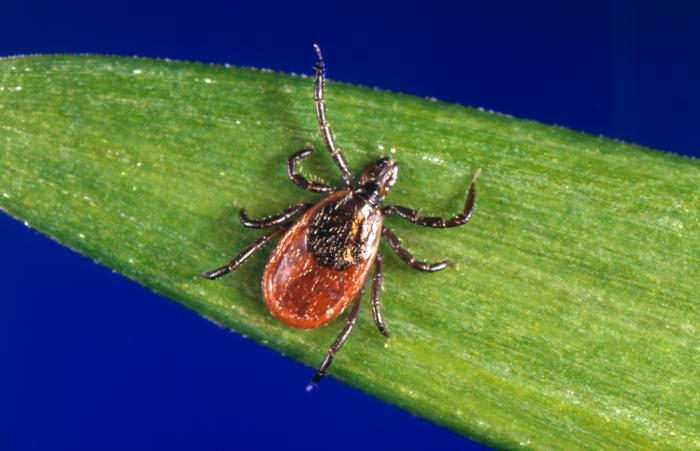
As a tick feeds, small amounts of its saliva enter the host, and that is the route of disease transmission. In Wisconsin, Lyme disease is the most commonly reported tickborne illness. It is carried by the blacklegged tick, also called the deer tick, which is the small dark species found in wooded and brushy habitat. The same tick can also transmit anaplasmosis and babesiosis, both of which occur in this region.
Not every tick carries the same risk. The American dog tick, which is noticeably larger with light mottled markings on its back, is common here and does not transmit Lyme disease. How long a tick was attached also matters, which is why a daily tick check after yard work is the single most effective habit available to you.
Fact: they are great at hiding
Ticks concentrate in a narrow set of places: the yard edge where it borders woods, shady spots where damp leaves and debris accumulate, dense low groundcover, under decks, and wood piles.
That is actually good news. A pest that hides in predictable, limited habitat is a pest you can target where it lives rather than treating the whole property.
Fact: you can make your yard less inviting
Almost everything on this list works by drying out tick habitat or removing the animals that bring them in.
- Remove leaf litter, especially along the wood line
- Clear tall grass and brush around the house and at the lawn edge
- Keep the lawn mowed on a regular schedule
- Stack firewood neatly in a dry spot, off the ground
- Keep playground equipment, decks, and patios away from yard edges and trees
- Eliminate standing water in old tires, clogged gutters, buckets, wheelbarrows, and empty flower pots
- Discourage deer, raccoons, rodents, and stray animals, including with fencing where it makes sense
- Remove old furniture, mattresses, and trash that give ticks and rodents cover
A three-foot band of wood chips or gravel between lawn and wood line is a worthwhile addition. Ticks are reluctant to cross dry open ground, and it gives kids a visible boundary.
Now what
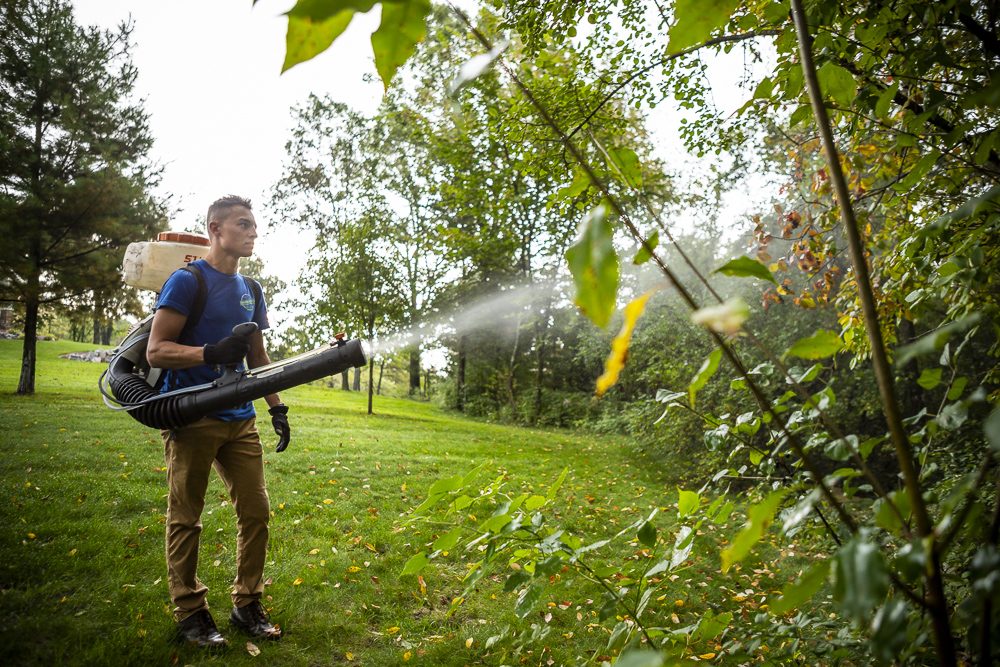
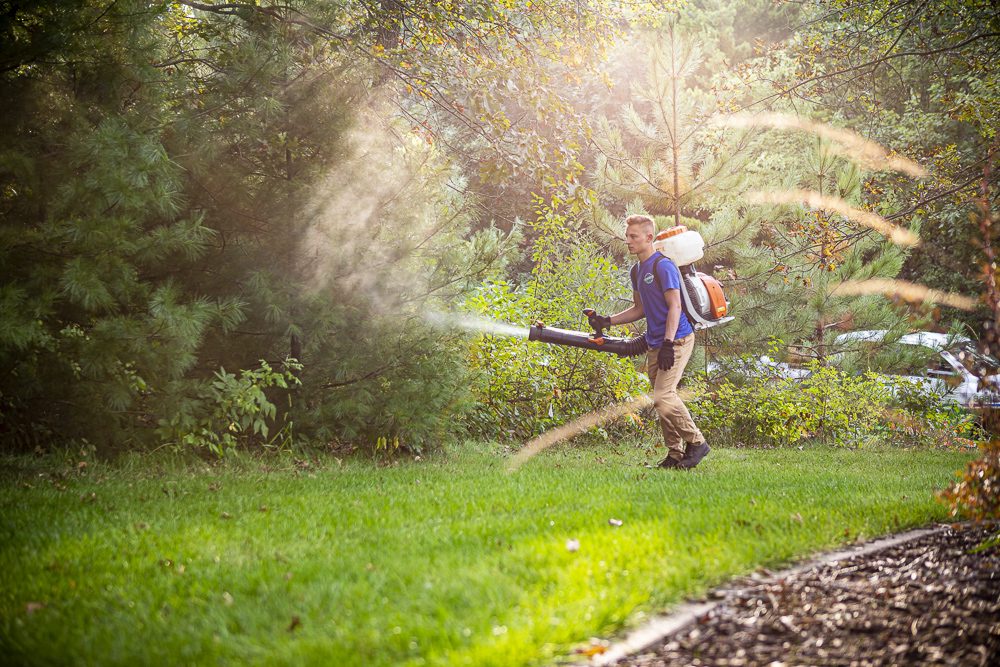
Targeting ticks where they live and breed is the most effective approach. Our barrier spray reduces ticks on the property across the season, with regular visits every three weeks and six visits total from spring through fall. Specialists treat the perimeter and the harborage areas rather than the open lawn: under plant leaves, shady areas, wet areas and low spots, under decks, the brushy yard edge and low vegetation, and wood piles.
You see a large reduction in ticks once treatment begins, and the same application reduces mosquitoes, so both pests are handled together. No tick control program delivers 100 percent control, because deer, rodents, and birds carry ticks back in continuously, but the reduction in the area where your family spends time is substantial.
The service starts at $579 a year depending on the size of your yard, with applications every three weeks. See pest control for how the program works.
Bottom line
- Ticks do not burrow under the skin; they attach at the surface, feed for three to six days, and detach on their own.
- Never use a flame, petroleum jelly, or nail polish. Grasp with fine-tipped tweezers close to the skin and pull straight out without twisting.
- Ticks stay active above about 40 degrees, and adult blacklegged ticks peak in spring and fall rather than midsummer.
- They cannot jump or fly and do not drop from trees; they quest from low vegetation within a couple feet of the ground.
- Barrier treatment every three weeks, six visits spring through fall, starts at $579 a year by yard size and also reduces mosquitoes.
Frequently asked questions
What is the right way to remove a tick?
Grasp it with fine-tipped tweezers as close to the skin as you can, then pull straight out with steady pressure, no twisting or jerking. Clean the bite and your hands, and note the date in case symptoms appear later.
Are ticks active in winter in Wisconsin and Minnesota?
They can be active whenever temperatures rise above about 40 degrees, which happens in November, during thaws, and in early spring. Raking leaves and moving firewood are real exposure activities, not just summer hiking.
Do all ticks carry Lyme disease?
No. Lyme disease is carried by the blacklegged tick, also called the deer tick. The larger American dog tick, which is common here, does not transmit it. Identification and how long the tick was attached both matter.
How much does yard tick treatment cost?
Our program starts at $579 a year depending on yard size, with applications every three weeks and six visits spring through fall. The same treatment reduces ticks.
University of Minnesota Extension, Ticks.
Wisconsin Department of Natural Resources, Outdoor health and safety resources.


