


5 Lawn Fertilizer Tips For Minneapolis & Eau Claire, WI Homeowners
Fertilizer is the most purchased and most misapplied lawn product there is. Five things determine whether what you spread actually reaches the plant, and only one of them is which bag you bought.
1. Soil pH decides whether fertilizer works at all
Nutrients are only available to grass within a certain pH range. Outside it, the nutrients are physically present in the soil but chemically locked up, so the plant cannot take them in. Cool-season turf does best in the slightly acidic to neutral range, roughly 6.0 to 7.0.
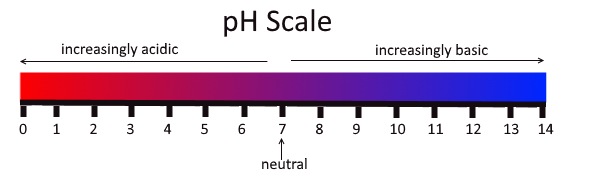
The consequence is that fertilizing a lawn with a pH problem wastes money. More product does not override chemistry. Soils across Wisconsin and Minnesota vary widely, from acidic sands to alkaline soils over limestone, and builder's fill around a newer home can be nothing like the native soil two blocks away. The only way to know is a soil test, so if you are shopping for a fertilizer service, ask whether pH testing is part of the plan.
Correcting pH is slow. Lime raises pH over seasons, and lowering pH takes elemental sulfur, also over seasons. Neither is a one-visit fix, and gypsum does not lower pH at all despite being sold as if it does. Gypsum adds calcium and sulfur and is used on sodic soils; it is not a pH corrector.
2. Soil conditioner makes fertilizer work harder
Fertilizer feeds the plant. A soil conditioner improves the material the plant is rooted in. It is a blend of minerals that loosens tight clay so roots and water can move through it, and gives sandy soil more body so it holds water and nutrients instead of letting them pass through.
Over time it builds organic matter, which raises the soil's capacity to hold nutrients between applications. That is the real return: the same fertilizer produces a better result because less of it leaches past the root zone. RainMaster includes soil conditioner in our top-tier program, and it is available as an add-on with the other programs.
3. Choose granular over liquid
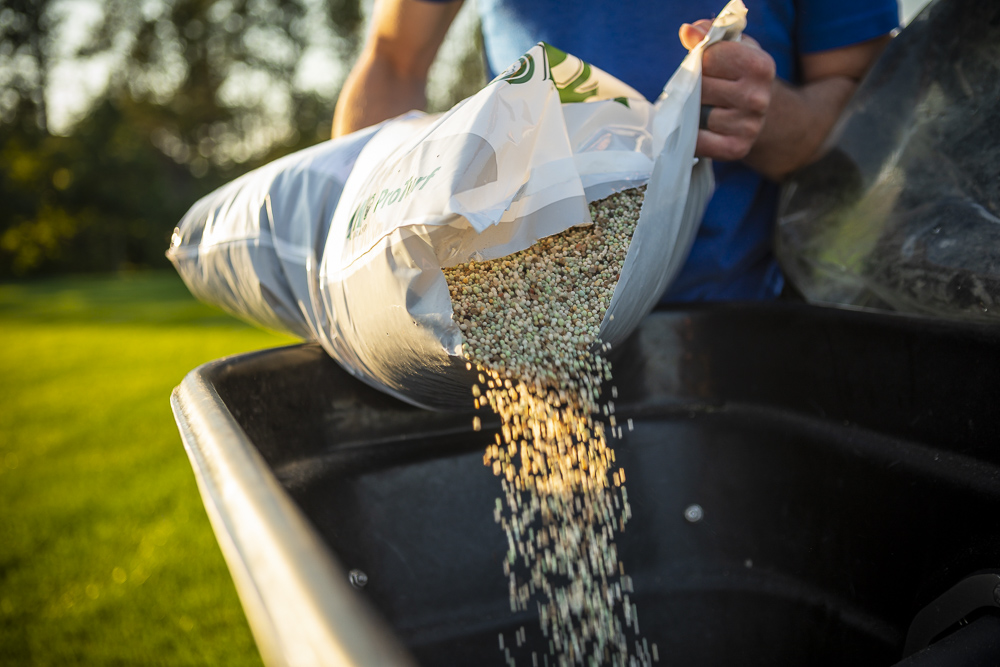
For lawn fertilizer, granular is the better form. It costs more than the common liquid products, and it earns the difference by breaking down slowly, feeding consistently between visits rather than producing one quick flush of color that fades in a few weeks. Quality granular products also carry organic nutrients that produce the deep green color homeowners actually want, not the brief fluorescent green of a heavy liquid feeding.
RainMaster uses premium professional-grade granular formulations. Not every lawn fertilizer service in Eau Claire or the Twin Cities does, and it is a reasonable question to ask before signing.
4. What the three numbers mean
Every fertilizer label carries three numbers, such as 10-10-10 or 24-8-16. They are percentages by weight:
- First number: nitrogen. Drives leaf growth, density, and color. This is the number that matters most for an established lawn.
- Second number: phosphate. Supports root development and establishment, which is why starter fertilizers for new seed carry more of it.
- Third number: potash. Supports stress tolerance, including cold and drought hardiness, which matters going into a Midwest winter.
A regional detail that explains a lot of labels: both Minnesota and Wisconsin restrict phosphorus in lawn fertilizer to protect lakes and streams. Most lawn fertilizer sold here carries a zero or near-zero middle number unless a soil test shows a genuine phosphorus need, or unless it is a starter fertilizer for new seeding. If a company recommends high-phosphorus product on an established lawn, ask to see the soil test.
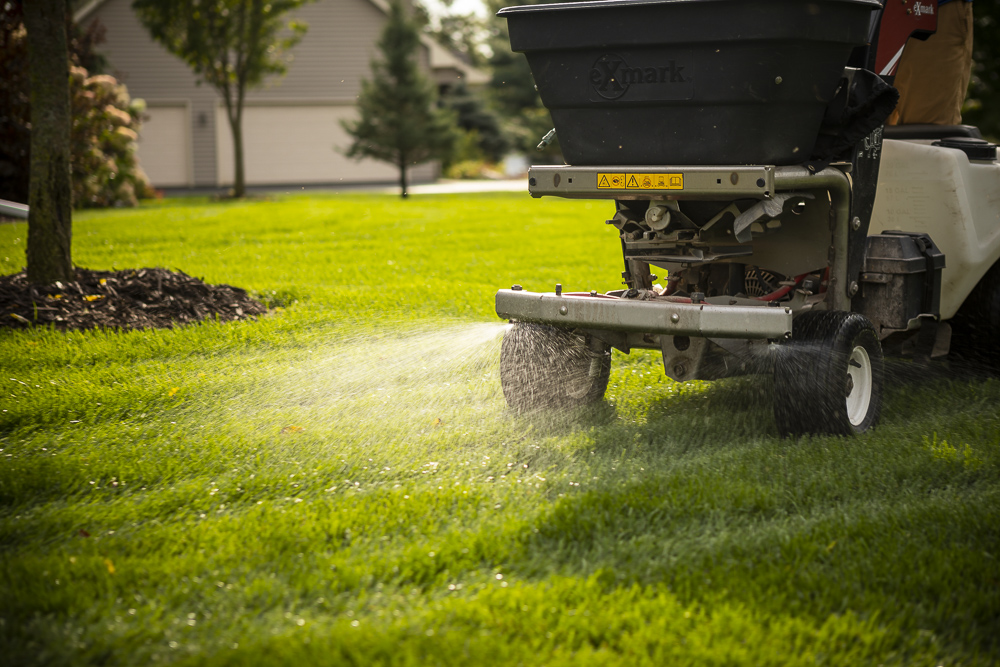
Then the arithmetic problem nobody wants on a Saturday: how many bags for your square footage, and how do you calibrate the spreader so the rate is right? Over-application is a real hazard. Excess nitrogen and salt in the soil damages or kills grass, which is fertilizer burn, and it usually shows up as stripes or a dead strip exactly where the spreader paused.
5. Fertilizer alone does not fix a lawn
Fertilizer is one input, and when a lawn is struggling it is usually not the limiting one. Common actual causes:
- Compaction. Roots cannot expand, and air, water, and nutrients cannot reach them. Core aeration addresses it.
- pH out of range, which blocks uptake as described above.
- Weeds, insects, or disease competing with or consuming the turf.
- Mowing and watering habits. Mowing below three inches and watering lightly every day will undo a good fertility program by themselves.
- Thatch over half an inch, which intercepts water and product before either reaches soil.
- Uneven irrigation coverage, which produces chronic thin areas that look like a nutrition problem and are not.
Our lawn care programs are built around that reality. They get rid of weeds and crabgrass, protect the lawn from insects and grubs, aerate to improve the soil, overseed to fill thin areas, and apply materials to correct pH issues, with organic-based granular fertilizer at the top of all three programs. If some areas never respond while the rest improves, have the irrigation system checked before adding more product.
Bottom line
- Soil pH determines whether fertilizer is available to the plant; outside roughly 6.0 to 7.0, nutrients get locked up.
- Gypsum does not lower soil pH. Sulfur lowers it and lime raises it, both over multiple seasons.
- Soil conditioner improves clay and sandy soils so the fertilizer you already pay for goes further.
- The three numbers are nitrogen, phosphate, and potash; Minnesota and Wisconsin restrict phosphorus in lawn fertilizer.
- Compaction, thatch, pH, mowing height, and watering all limit results more often than the fertilizer formula does.
Frequently asked questions
What do the three numbers on fertilizer mean?
They are the percentages of nitrogen, phosphate, and potash by weight. Nitrogen drives color and growth, phosphate supports root establishment, and potash supports stress and cold tolerance. For an established lawn, nitrogen is the number that matters most.
Does gypsum lower soil pH?
No. Gypsum supplies calcium and sulfur and is used to improve sodic soils; it does not meaningfully change pH. To lower pH you need elemental sulfur, and to raise it you need lime, and both work over seasons rather than weeks.
Why is the middle number zero on the fertilizer my lawn company uses?
Because Minnesota and Wisconsin restrict phosphorus in lawn fertilizer to protect surface water. Established lawns generally do not need added phosphorus, and exceptions require a soil test showing a deficiency or a starter fertilizer for new seed.
Can you put down too much fertilizer?
Yes. Excess nitrogen and salt damage or kill grass, which is fertilizer burn, and it typically appears as stripes or dead patches where the spreader overlapped or paused. Calibrating the spreader and matching the rate to your square footage prevents it.
University of Wisconsin Division of Extension, Lawn Fertilization.
University of Minnesota Extension, Fertilizing lawns.


