


6 Things Your Irrigation Maintenance Company Should be Doing
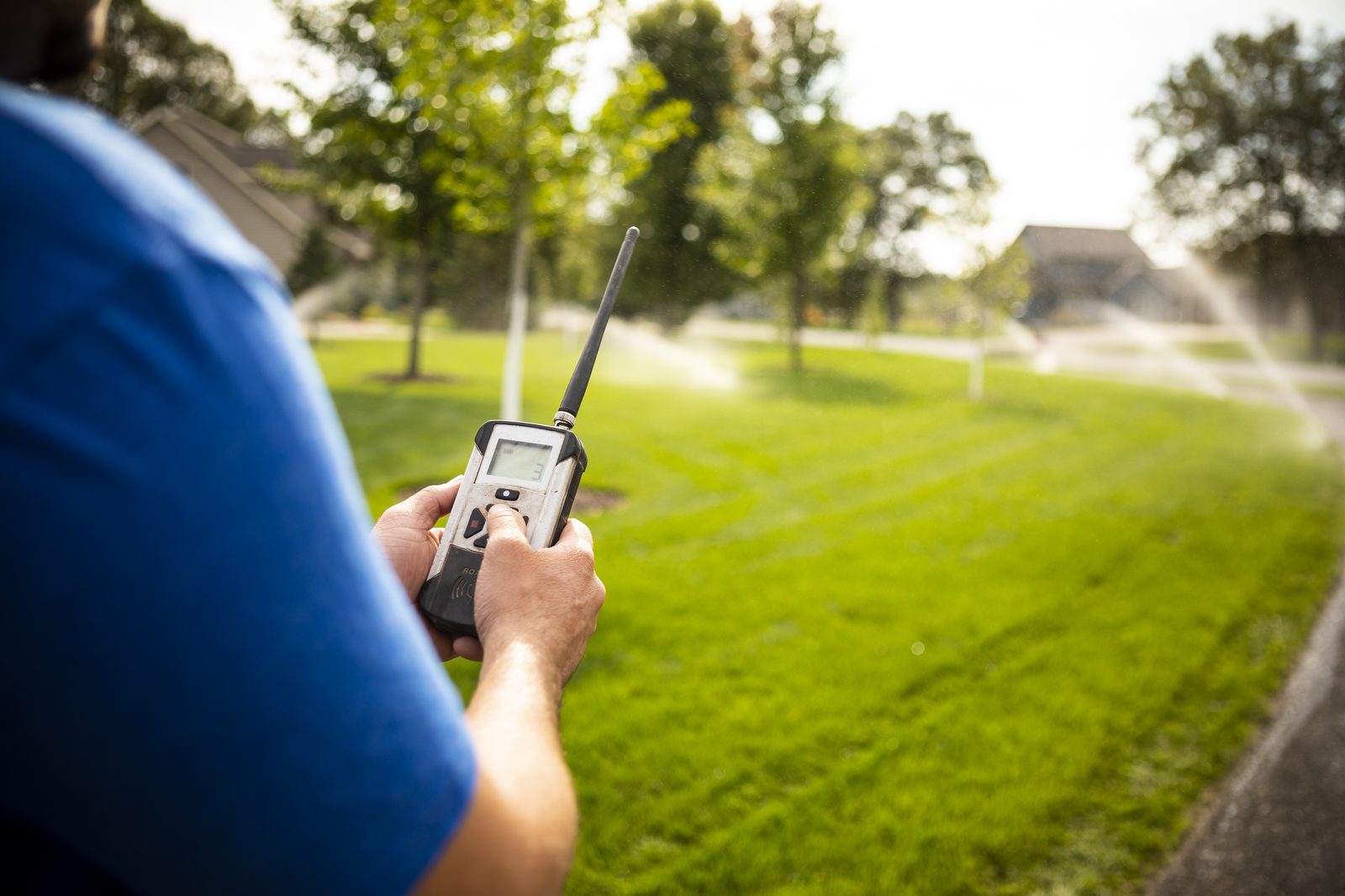
Irrigation maintenance is not one annual visit and a signature on an invoice. A system in Wisconsin or Minnesota goes through frost heave, a hard summer, and a hard freeze every year, and the work splits into three seasonal visits plus the upgrades that make the system more efficient. Here is what the company you hire should be doing.
1. Improve the system's efficiency, not just keep it running
Most waste in an irrigation system is invisible until someone looks for it: heads overshooting turf onto the driveway, a zone running during a rainstorm because the rain sensor failed, spray heads and rotor heads mixed on the same zone so one area floods while another stays dry, a controller still programmed for May in the middle of August.
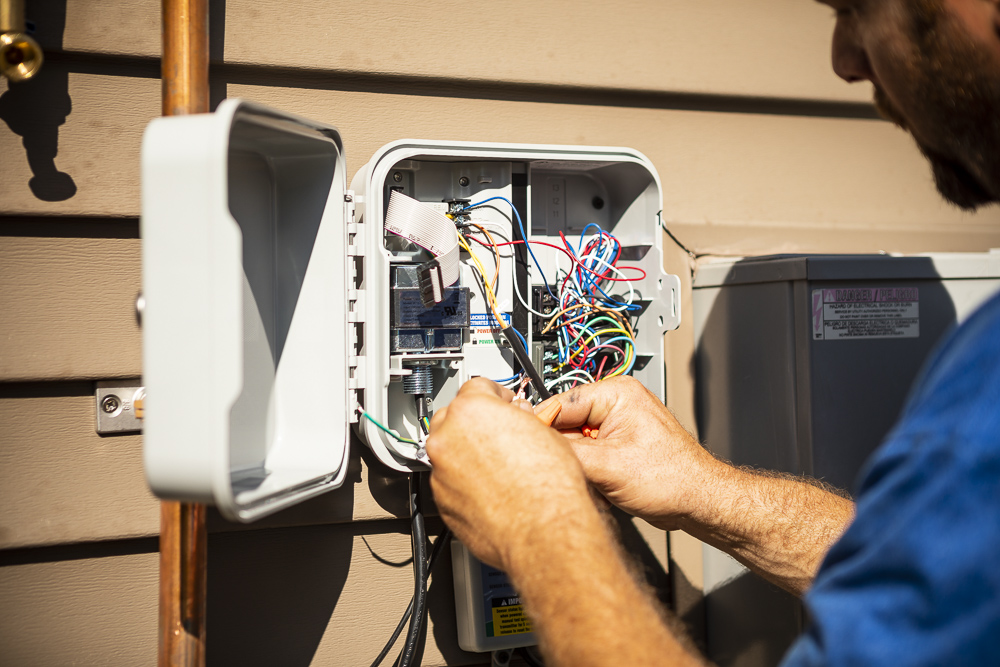
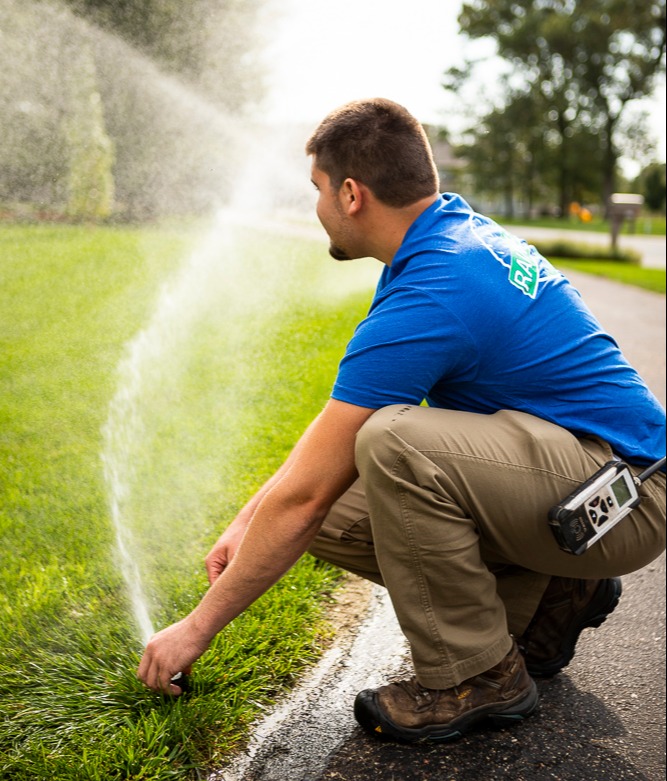
Current technology closes most of those gaps. Water-saving nozzles put out heavier droplets at a lower application rate so water lands where it is aimed and has time to infiltrate. Smart controllers adjust to weather and soil instead of running a fixed program. Rain sensors interrupt cycles when it rains.
Technology alone is not the point, though. On every routine visit, a maintenance company should be finding the waste you did not know about and telling you what it costs. That is the difference between maintenance and a service call.
2. Retrofit an existing system with smart controls
You should not have to replace a working system to get modern efficiency. A competent irrigation company will retrofit what you have, even if they did not install it: swap nozzles, add a smart controller, add or replace a rain sensor, install check valves where low-head drainage is wasting water, and correct zone layout problems where it is practical.
Someone who will only work on systems they installed, or who answers every question with a quote for a full replacement, is not maintaining your system.
3. Activate the system properly in spring
In Eau Claire and Minneapolis, activation runs from mid-April through the end of May depending on the weather, because the system cannot be charged until the risk of a hard freeze has passed. A winter here takes a toll, so almost every system needs adjustment before the watering season starts. A real spring startup covers:
Inspect every sprinkler head
Frost heave tilts heads so they water the driveway instead of the lawn. Snowplows shear them off. Fittings work loose over the winter and leak. Nozzles clog with grit. The only way to find all of it is to run each zone and watch it.
Reprogram the controller
Plenty of homeowners unplug the controller for the winter and it loses its program. Even when it holds the settings, last year's late-season program is wrong for a cool, wet Wisconsin spring. Start times, run times, and cycle counts should be set for current conditions, not carried over from August.
Check the rain sensor
Confirm it is unobstructed by debris and that batteries in a wireless unit are good. A failed sensor is silent; nothing tells you it stopped working except the system running in the rain.
Test every zone
Each zone should open and close on command and deliver even coverage across its area. This is where leaks, dead valves, broken laterals, and winter damage turn up, while they are still small.
4. Inspect mid-season and make repairs
Spring and fall visits are not enough, and the midsummer visit is the one most often skipped. Think about when the system works hardest: July and August, the hottest and driest stretch, when failures matter most and the lawn has the least margin for error.
A midsummer inspection should include checking heads again, testing every zone, and updating the controller for peak summer demand. It is also the only time of year coverage can be judged accurately, because shrubs and perennials are at full size and may now be blocking spray patterns that were clear in April.
5. Winterize to prevent freeze damage
This is the one that costs real money when it is done badly. Water left in pipes, valves, and heads expands when it freezes and cracks whatever is holding it. The system has to be shut down and cleared before the first deep freeze, not after it.
Complete winterization includes:
- Clearing the lines, valves, and heads of water so nothing is left to freeze and expand.
- Draining the backflow device. Freezing water damages the internal components and can crack the body, and a backflow assembly is not a cheap part.
- Winterizing a lake pump if you draw from one: protect it with RV antifreeze, cap the pipe ends so animals do not nest inside, and disconnect the wiring so the pump cannot be energized dry.
For properties where RainMaster also handles snow removal, it helps to flag head locations before plowing starts, since plow damage is one of the most common sources of spring repairs.
6. Give you real recommendations about the lawn
This feels like a bonus and it should be standard. The person who sees your system run three times a year knows more about how your yard uses water than anyone else, and that knowledge is worth passing on: whether you are watering too much or too little, which zone is the weak one, what a nozzle retrofit would actually save, how a smart controller would change the schedule, and which problems are about to turn into repairs.
A good irrigation specialist understands turf, not just hardware. Run times, cycle timing, and coverage are lawn health decisions as much as plumbing decisions, which is why irrigation and lawn care work better coordinated than separate.
What to expect from RainMaster
RainMaster has served the Chippewa Valley and the Twin Cities since 1999, and we offer three irrigation maintenance programs so you can match the level of service to the system and the property. The work covers spring activation, a midsummer inspection, fall winterization, repairs as needed, and recommendations along the way. Call 888-839-8484 or request a quote to talk through which program fits.
Bottom line
- Maintenance should include three seasonal visits: spring activation, a midsummer inspection under peak demand, and fall winterization.
- Spring activation means inspecting every head, reprogramming the controller for spring, checking the rain sensor, and running every zone.
- A good company retrofits what you already have, including nozzles, smart controllers, rain sensors, and check valves, without pushing a full replacement.
- Winterization has to clear water from lines, valves, heads, and the backflow device before the first deep freeze, plus the lake pump if you use one.
- Expect real recommendations about watering and lawn health, not just repairs.
Frequently asked questions
When should an irrigation system be activated in Wisconsin and Minnesota?
Between mid-April and the end of May, depending on the weather, once the risk of a hard freeze has passed. Charging a system too early risks freeze damage to the components you just pressurized.
Is a midsummer irrigation inspection really necessary?
It is the most useful visit of the three. The system is under peak demand, so problems show up under load, and shrubs and perennials are at full growth, which is the only time spray coverage can be evaluated accurately.
What does irrigation winterization include?
Clearing water out of the pipes, valves, and heads before the first deep freeze, draining the backflow device, and protecting a lake pump with antifreeze, capped pipe ends, and disconnected wiring if you have one.
Can a company service an irrigation system it did not install?
Yes, and it should. Maintenance, repairs, and efficiency retrofits such as nozzle swaps and smart controllers can all be done on an existing system regardless of who installed it.
U.S. Environmental Protection Agency WaterSense, Sprinkler Spruce-Up.
Irrigation Association, Irrigation industry standards and best practices.


