


There's a Fungus Among Us! Understanding Summer Lawn Diseases in WI & MN
Most of the ugly patches that show up in a Wisconsin or Minnesota lawn during the growing season are fungal, and each one has its own trigger conditions. Identifying which disease you are looking at tells you what to change, because nearly all of these are driven by how the lawn is watered, mowed, and fed.
What these diseases actually are
Lawn disease pathogens live in the soil and thatch all year and do nothing until conditions favor them. What varies is which conditions. Some of these fungi need heat and humidity. Others need cool, wet weather, which is why a disease that shows up in May is not the same problem as one that shows up in August.
Here are the five we see most in this region, what each looks like, and what to correct.
Red thread
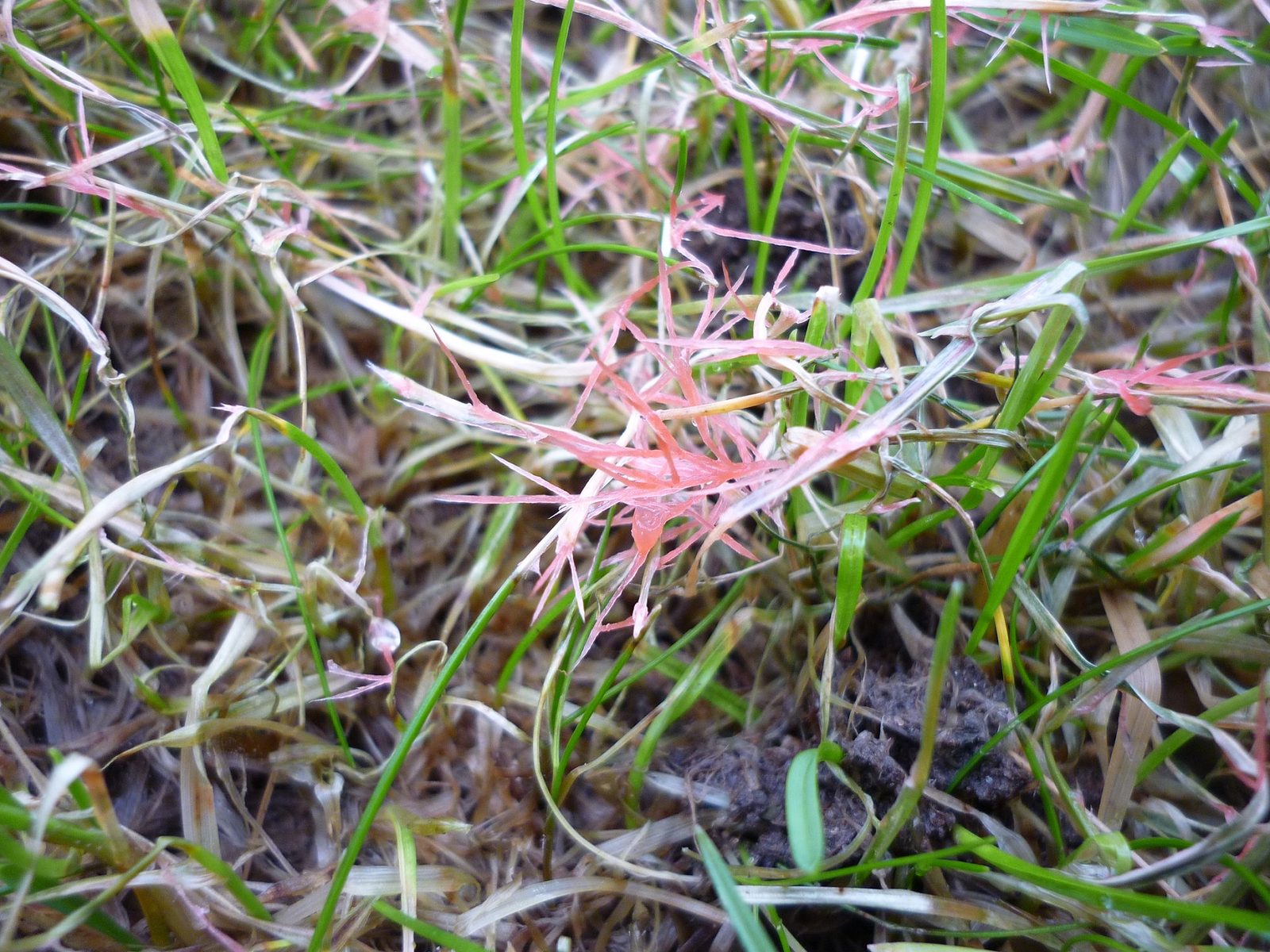
This one looks exactly like its name. You get tan, pink, or red circular patches from a few inches to about two feet across, with fine red tendrils protruding from the leaf blades. Those threads are the easiest positive identification in lawn care.
One important correction to what you may have read elsewhere: red thread is a cool, humid-weather disease, not a heat disease. It shows up in spring and fall, in the 40 to 70 degree range, during stretches of prolonged leaf wetness. It is also strongly associated with low nitrogen, so it tends to appear on underfed lawns.
What to correct: red thread does not attack the roots, so the lawn recovers. Adequate, balanced fertility in spring and fall is the practical fix. Improving air movement so the canopy dries faster helps too.
Dollar spot
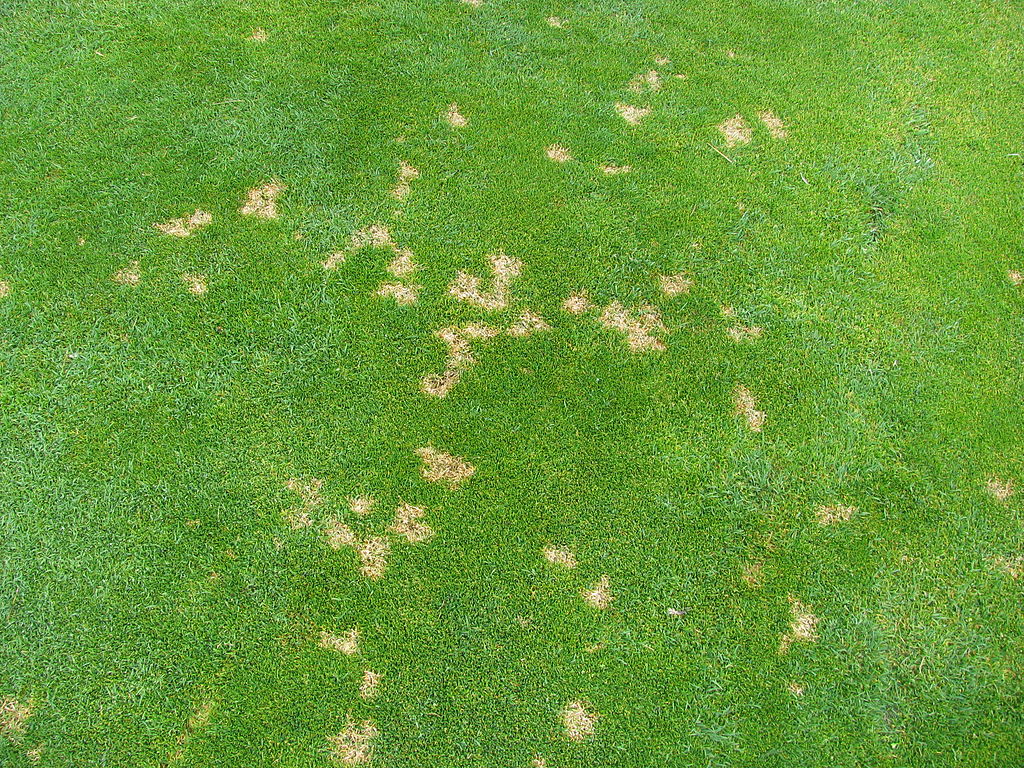
Small bleached patches, roughly a few inches to a foot across, that can run together. Dollar spot favors high humidity with heavy dew, and like red thread it is worse on lawns short on nitrogen.
What to correct: do not water too frequently, since the pathogen needs extended leaf wetness. Water deeply and less often, early in the morning. An appropriate nitrogen application helps the lawn grow through it.
Necrotic ring spot
Circular straw-colored patches, usually under 12 inches across, often with a ring of green grass in the middle. It is a root and crown disease, which makes it one of the more serious ones on this list. It develops in cool, wet conditions and then shows its worst symptoms when heat and drought arrive and the damaged roots cannot keep up.
It is most common in sodded lawns, though it appears in seeded lawns as well, and it strongly favors compacted soil.
What to correct: aeration is the main tool. Reduce compaction, improve drainage, and keep fertility consistent. Lawns recovering from necrotic ring spot often need aeration, overseeding, and a pH correction together, because the root system has to be rebuilt.
Ascochyta leaf blight
This one is dramatic and mostly harmless. Large irregular areas of turf turn straw-brown and look dead, sometimes appearing overnight after hot, humid weather. Homeowners frequently assume the lawn is lost.
It affects the leaf only, not the crowns or roots, so the grass typically recovers in two to three weeks depending on weather.
What to correct: core aerate at least once a year to reduce thatch and improve water penetration. Keep the mowing height at three inches or higher, keep the blade sharp, and avoid mowing when the grass is wet, since the pathogen enters through cut leaf tips.
Brown patch
Brown patch arrives in mid to late summer when the weather is hot and humid, especially when nighttime temperatures stay warm and the canopy never dries. It shows as irregular circular patches of brownish yellow turf, from six inches to several feet across.
A lawn is more susceptible if it is overwatered, pushed with too much nitrogen going into summer heat, or sitting on poorly drained, compacted soil with a thick thatch layer.
What to correct: stop overwatering and stop over-fertilizing in summer. Water early in the day so the lawn dries before evening. Aerate annually and keep thatch in check.
Lawn disease control comes down to conditions
Every disease on this list is triggered by environmental conditions, which is why prevention through proper mowing, watering, and fertilizing does more than reactive treatment. A healthy lawn absorbs stress, whether that stress is drought, insects, or disease.
Three habits cover most of it: mow high and with a sharp blade, water deeply and infrequently in the early morning, and feed on a schedule appropriate to the season rather than in heavy bursts.
When treatment is the right call
If the same disease appears in the same areas every year, a preventive fungus control product is worth discussing, because preventive timing works better than curative timing for most turf pathogens. More commonly, we treat these diseases when they appear.
Either way, be patient. It can take a month or longer to see results, and it generally takes multiple treatments. Treatment also does not substitute for correcting the underlying condition. If the lawn has compacted soil, poor drainage, or an irrigation schedule that waters lightly every morning, the disease will be back next season regardless of what was sprayed this one.
A proactive lawn care program with a nutrition plan and annual aeration addresses most of what makes a lawn vulnerable. Pairing it with irrigation maintenance matters more than people expect, because a system that waters at the wrong time of day or in short daily cycles is actively creating disease conditions.
Bottom line
- Red thread is a cool, humid-weather disease tied to low nitrogen, not a heat disease. It does not harm roots.
- Necrotic ring spot attacks roots and crowns, favors compacted and sodded lawns, and usually needs aeration plus overseeding to recover.
- Ascochyta leaf blight looks catastrophic and typically grows out in two to three weeks.
- Brown patch is the hot, humid-weather disease, made worse by overwatering and summer nitrogen.
- Water deeply in the early morning, mow high with a sharp blade, and aerate annually. That prevents more than any spray.
Frequently asked questions
Is red thread caused by hot weather?
No. Red thread develops in cool, humid conditions, roughly 40 to 70 degrees with long periods of leaf wetness, which is why it shows up in spring and fall. It is also linked to low nitrogen, so an underfed lawn is more likely to get it.
Which of these diseases will actually kill my grass?
Necrotic ring spot is the one to take seriously, because it damages roots and crowns. Red thread and ascochyta leaf blight affect only the leaf and grow out. Dollar spot and brown patch can thin turf significantly if conditions persist.
Will a fungicide fix the problem?
It can stop active spread, but it does not change the conditions that caused it. Compaction, poor drainage, frequent shallow watering, and heavy summer nitrogen will bring the same disease back next year.
How long does it take for lawn disease treatment to work?
Plan on a month or more, and usually multiple applications. Recovery depends on weather and on whether the underlying condition has been corrected.
University of Wisconsin Extension, Red thread.
University of Wisconsin Extension, Turf disease identification.


