


The Ultimate Guide to Fall Lawn Fertilization and Overseeding
Fall is when a cool-season lawn in Wisconsin or Minnesota does its real work. Soil is still warm, air and nights are cool, weed competition is collapsing, and grass puts its energy into roots and carbohydrate storage instead of top growth. Fertilizing and overseeding inside that window produces a denser lawn next spring than any amount of spring effort.
Why fall beats spring for cool-season turf
Lawns here are built on Kentucky bluegrass, perennial ryegrass, and fine fescues. All three grow best in the temperature range that September and October deliver. Four things line up at once:
- Warm soil, cool air. Soil holds summer heat for weeks after air temperatures drop, which is ideal for root growth and for germination.
- Reliable moisture. Heavy morning dew and cooler days mean seed and seedlings stay moist between waterings instead of baking by noon.
- Weeds are done. Crabgrass has finished germinating for the year and summer annual weeds are dying off, so new seedlings are not competing for light and water.
- Roots keep working. Top growth slows first. Roots continue growing until soil temperature falls toward the low 40s, long after the last mow.
What fall fertilization does
As temperatures drop, grass shifts from producing blades to building roots and storing carbohydrates for winter. Feeding during that shift is what produces earlier green-up, denser turf, and better drought tolerance the following July. It also fills in the lawn enough to crowd out crabgrass before it germinates next June.
Timing the applications
The main fall feeding goes down while the grass is still actively growing and temperatures have cooled, which in our region is roughly late August through early October. A second late-season application after top growth has stopped but before the ground freezes, typically late October into early November, goes to root and carbohydrate storage rather than blade growth.
What to avoid is pushing a flush of soft top growth late in the fall. Lush growth heading into snow cover is what feeds snow mold, and in the Upper Midwest, snow mold is a predictable spring problem on lawns that were fertilized too heavily too late or left too long before winter.
Overseeding: the window and the method
Grass seed germinates when soil temperature at seed depth is roughly 50 to 65 degrees. In the Chippewa Valley and the Twin Cities, that window runs from about mid-August through mid-September. Seeding in that stretch gives seedlings several weeks of growing weather to root before the first frost, which generally arrives between late September and mid-October.
After mid-September the math gets harder. Germination slows as soil cools, and a seedling that sprouts in October may not root deeply enough to survive a winter without snow cover. If you miss the window entirely, dormant seeding in late November, after the ground is cold but before it freezes solid, is a reasonable fallback that germinates on its own in spring.
Preparation
Seed-to-soil contact is the whole game. Seed lying on thatch does not germinate.
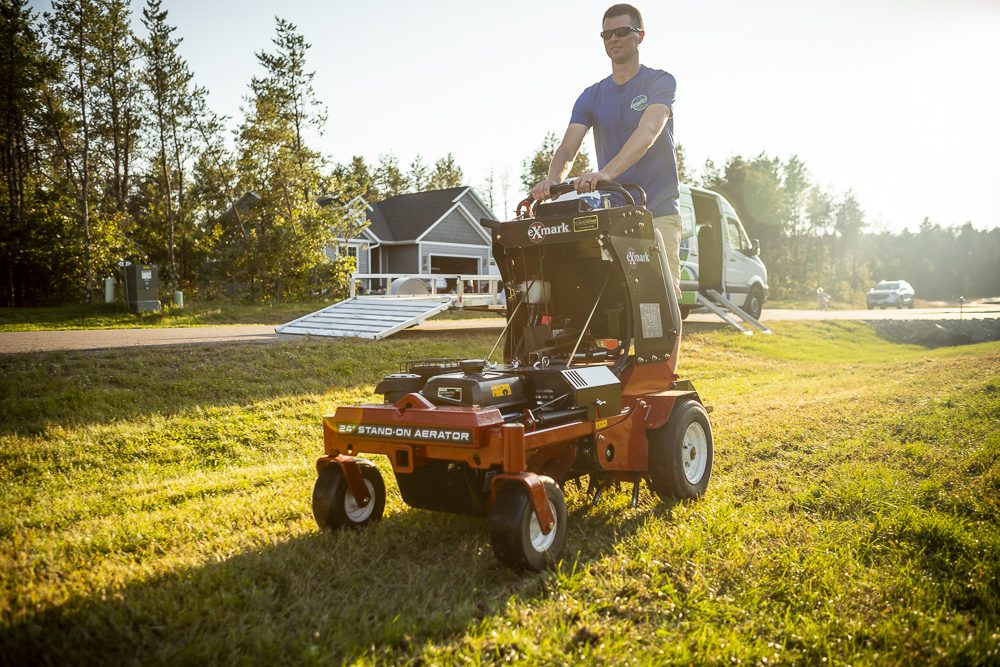
- Core aerate first. The holes catch seed and give it the soil contact and moisture it needs. Aeration and overseeding on the same visit is the most productive combination in lawn care.
- Mow shorter than usual before seeding and bag the clippings so light reaches the soil.
- Rake or dethatch heavy thatch layers, especially under spruce and along bed edges.
- Apply a starter fertilizer with the seed rather than a standard lawn food.
Watering new seed
Keep the top inch of soil consistently moist until germination, which usually means short cycles two or three times a day rather than one long soak. Perennial ryegrass typically emerges in about five to ten days; Kentucky bluegrass takes closer to two or three weeks. Once seedlings are up and mowed once or twice, shift to deeper and less frequent watering so roots chase moisture downward.
One scheduling detail matters here. If you are relying on an in-ground system, coordinate seeding with your fall blowout. Seeding in late September and then winterizing the irrigation system the following week leaves new seed with no water source, so either seed earlier or plan to water by hose after the blowout.
Seed selection for this climate
Blends do better than single species on most properties. Kentucky bluegrass spreads by rhizomes and repairs itself, which is why it is the backbone of a sunny Upper Midwest lawn, but it is slow to establish. Perennial ryegrass germinates fast and holds soil while the bluegrass fills in. Fine fescues handle shade and dry sandy soil, which makes them the right choice under mature trees and on the north side of a house.
What not to do in fall
- Do not apply broadleaf weed control immediately before or after seeding. Read the label interval; most require several weeks and a few mowings.
- Do not use a crabgrass preventer in any area you intend to seed. It stops grass seed as well as crabgrass.
- Do not leave the lawn long going into winter. A final cut around two and a half inches reduces matted growth and snow mold pressure.
- Do not let leaves sit. Matted wet leaves smother seedlings and encourage disease.
Bottom line
- Fall is the most productive window for cool-season lawns: warm soil, cool air, steady moisture, and almost no weed competition.
- Main fertilizer application runs late August through early October, with a late-season feeding before the ground freezes.
- Overseed when soil temperature is roughly 50 to 65 degrees, generally mid-August through mid-September here.
- Aerate before seeding for seed-to-soil contact, and keep the top inch moist until germination.
- Avoid heavy late feeding and a long final cut, both of which increase snow mold risk.
Frequently asked questions
When should I overseed my lawn in Wisconsin or Minnesota?
Mid-August through mid-September, while soil temperature is in the 50 to 65 degree range. That leaves enough growing weather for seedlings to root before the first frost.
Can I fertilize after the grass stops growing?
Yes. A late-season application after top growth stops but before the ground freezes feeds roots and carbohydrate storage rather than blades, and it is one of the most valuable applications of the year.
Do I have to aerate before overseeding?
It is not strictly required, but it is the difference between most of the seed germinating and most of it sitting on thatch. Core aeration immediately before seeding gives the best results.
How long do I need to water new grass seed?
Keep the surface moist until seedlings are up, roughly one to three weeks depending on species, then move to deeper and less frequent watering. Call 888-839-8484 if you want the schedule set up on your system.
University of Minnesota Extension, Fertilizing lawns.
University of Wisconsin Extension, Lawn and turf care resources.


