


Will Sweet Lawn Care Deals Leave a Bitter Taste Later?

Most lawn care offers that look like a bargain are priced on something being left out: fewer visits, lighter product rates, grub control that quits in August, or a first-year rate that resets next spring. The way to judge an offer is to compare what is actually included, visit by visit, instead of comparing the headline number.
Lawn care is a service with thin margins, skilled labor, and expensive inputs. When an offer is dramatically below the rest of the market, the money has to come from somewhere. It is usually one of three places: the number of visits, the rate of product applied, or next year's price.
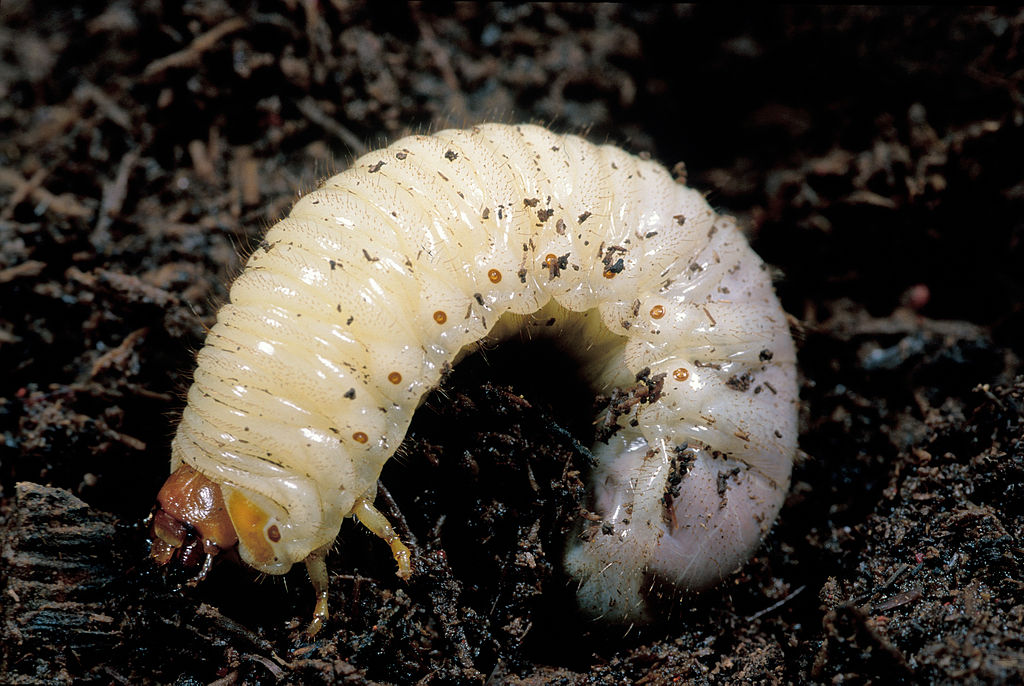
Free grub protection
This is the most common giveaway, and it is the one with real consequences.
The grub control product most companies around Eau Claire and the Minneapolis area use does not hold for a full season. One application is weakened by the time the second wave of grubs is feeding in fall, which means a second application is needed for actual season-long protection. Free grub control that covers the first half of the year leaves you exposed in exactly the weeks when root damage is worst.
The lower-cost grub products also tend to be the ones built on ingredients that are hard on pollinators. That is worth knowing before a free application goes down across your yard.
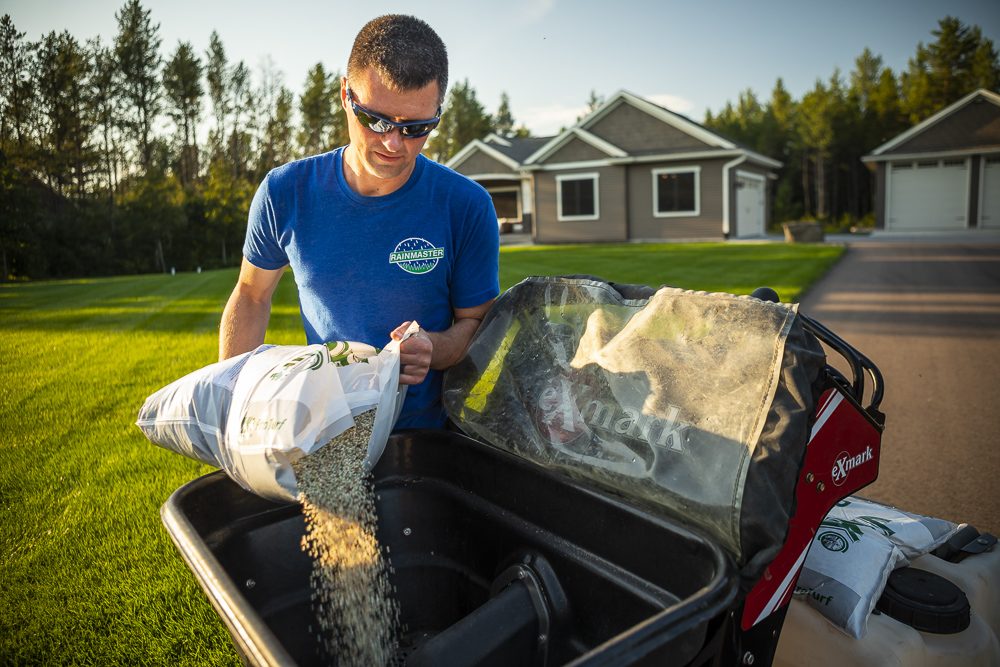
The failure case is expensive. If grubs move in during the fall wave and take out sections of lawn, the fix is seed or sod, and the seeding window here closes by about mid September. A lawn damaged in October stays thin until spring. At RainMaster, Grub Guard goes down in spring during the first visit. It costs more than the common alternatives and it holds for the whole season, including the fall feeding, and it does not contain ingredients known to harm pollinators.
Free applications and free add-ons
Sign up now and get a free fertilizer application, or free overseeding, or a free aeration. It sounds like found money. Ask the obvious question first: if the company is delivering quality products and skilled labor, where is the room to give a service away?
Usually one of these is true:
- The price resets next season. The first year is a promotional rate and the renewal is at full price, often with an increase, and often on automatic renewal.
- The free service is scaled back. A free overseeding at half the seed rate, or a free application at a lighter rate, costs the company very little and does very little for your lawn.
- The upsell is the business model. The deal gets you on the route, and the margin comes from enhancements sold at the door later in the season.
None of that is universal, and some companies run honest promotions. The point is to ask what the second-year price is and get the answer before you sign.
A price that is far below everyone else
A complete season program advertised at a few hundred dollars gets attention, and the math is worth doing. That figure has to cover multiple visits to your property across the season, fertilizer and control products at label rates, a trained and licensed applicator, fuel, equipment, and the cost of coming back between visits when something needs attention.
At the low end, something gives. Typically it is visit count, product rate, or who is doing the work. The real cost of a cheap program is not the money, it is the season. Twelve months of a lawn that does not improve is twelve months you do not get back, and you still have the same lawn to fix afterward.
Compare offers on these points
- Number of visits per season, in writing. Five visits and seven visits are different programs, and the headline price tells you nothing about which you are buying.
- Whether grub control is included, and for how long. Included for the season, or one application with a second sold later.
- Weed control between visits. Does the company come back for breakthrough weeds at no charge, or is that a service call?
- Soil pH testing. If nobody is measuring pH, nobody knows whether the fertilizer you are paying for is even usable by the grass.
- Who applies the product. Lawn pesticide application requires state certification in both Wisconsin and Minnesota. Ask whether your technician is certified and whether you get the same one.
- Renewal terms. Is it automatic, what is the second-year rate, and how do you cancel.
- What is excluded. Aeration, overseeding, lime or balancer, and pest control are sometimes bundled and sometimes not.
Red flags
- A price quoted without anyone measuring the lawn. Square footage drives product cost, so a quote given over the phone with no measurement is a guess.
- A discount that expires today.
- No written scope of what each visit includes.
- Vague answers about active ingredients or application rates.
- Promises of a perfect lawn on a fixed timeline. Soil, shade, drainage, and irrigation all limit what is achievable, and an honest company will tell you what the limiting factor on your property is.
What a fair deal looks like
The best value in lawn care is a program where the scope is written down, the visits happen on schedule, the technician knows your property, and the price next year is something you were told about in advance. That is less exciting than a free application, and it is the version that leaves you with a better lawn in two years.
Our lawn care programs come in three levels, and we would rather walk you through what each one includes and does not include than sell you the cheapest thing on the list. If you want a straight comparison for your property, request a quote and we will measure the lawn and go through the options with you.
Bottom line
- Free grub control usually covers one application, which is weakened before the fall feeding wave when root damage is worst.
- Free applications are often funded by a first-year promotional rate that resets, by lighter product rates, or by later upsells.
- Compare visit count, product coverage, between-visit service, and renewal terms, not the headline price.
- Lawn pesticide application requires state certification in both Wisconsin and Minnesota; ask who is doing the work.
- A quote given without anyone measuring your lawn is a guess, because square footage drives the cost.
Frequently asked questions
Are cheap lawn care programs worth it?
Rarely, and the cost is the season rather than the money. A low price is usually funded by fewer visits or lighter product rates, so you spend a year without improvement and still have the same lawn to fix afterward.
Why do companies offer free grub control?
Because the inexpensive grub products cost them little, and one application does not protect through the fall wave of feeding. The second application, which is the one that covers the rest of the season, is typically sold separately later.
What should I ask before signing a lawn care contract?
How many visits are included, whether grub control covers the full season, what happens if weeds break through between visits, whether soil pH is tested, who applies the product, and what the second-year price and renewal terms are.
Should a lawn care company measure my lawn before quoting?
Yes. Product and labor cost scale with square footage, so a quote given without a measurement is an estimate that can change later or a program that was never sized to your property.
University of Wisconsin Extension, Lawn care and turf management resources.
University of Minnesota Extension, Lawn fertilizer and maintenance guidance.


