


6 Steps to Prepare Your Lawn For Winter in Wisconsin and Minnesota
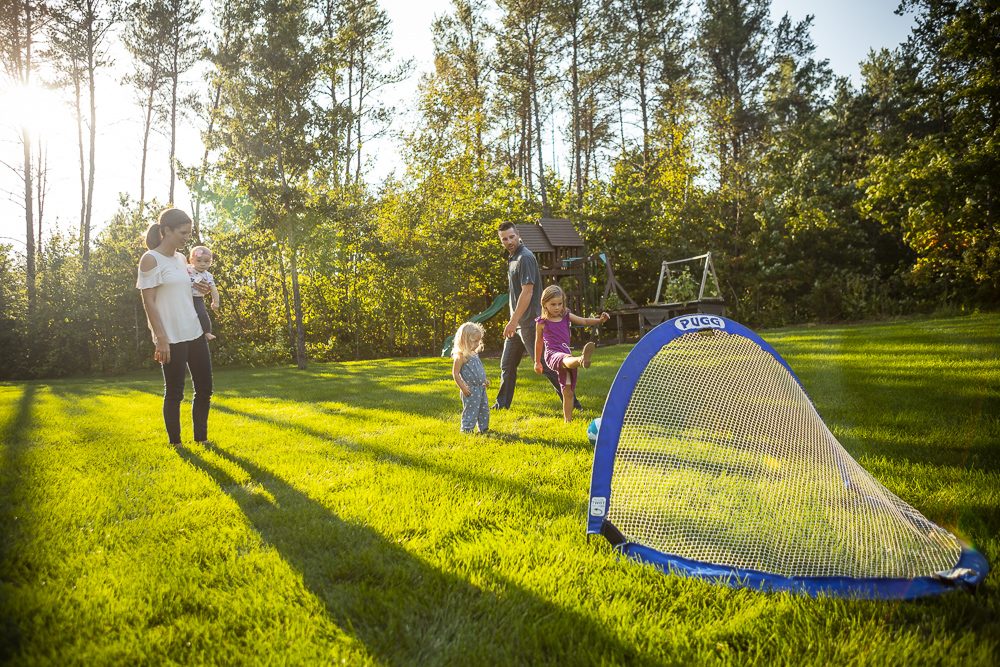
What your lawn looks like in April is mostly decided in October. Fall is when perennial weeds are easiest to kill, when roots store the carbohydrates that carry the plant through winter, and when a few hours of cleanup prevents snow mold and vole damage. These are the six steps that matter in Wisconsin and Minnesota, in the order they should happen.
1. Take one more shot at the weeds
Fall is the most effective time of year to treat perennial broadleaf weeds, including dandelion, clover, creeping charlie, and thistle. As the season cools, those plants move carbohydrates out of the leaves and down into the roots for winter, and a post-emergent herbicide moves with them. The same application in June kills the top growth and leaves the root to regrow.
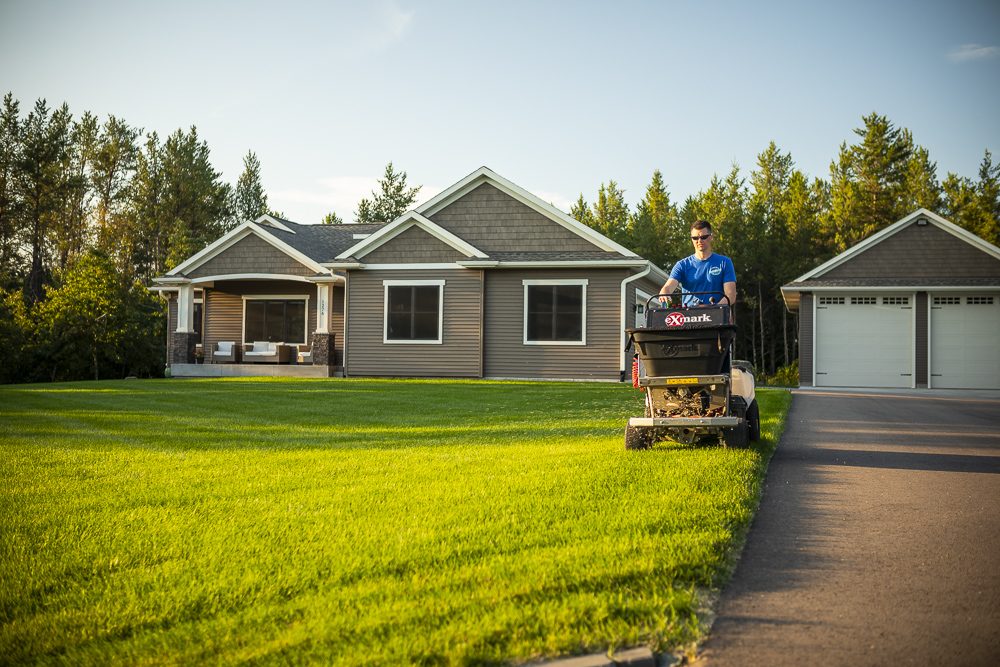
Two conditions have to be met. The weeds have to be actively growing, and air temperatures generally need to be above roughly 50 degrees for the product to work. That makes October the last realistic window here.
A fall pre-emergent application is a different job: it targets the winter annual weeds that germinate in fall, overwinter as small plants, and take off in early spring before anyone is thinking about weed control. It does not touch established dandelion or thistle, which is why most lawns get both treatments rather than one.
2. Feed the roots
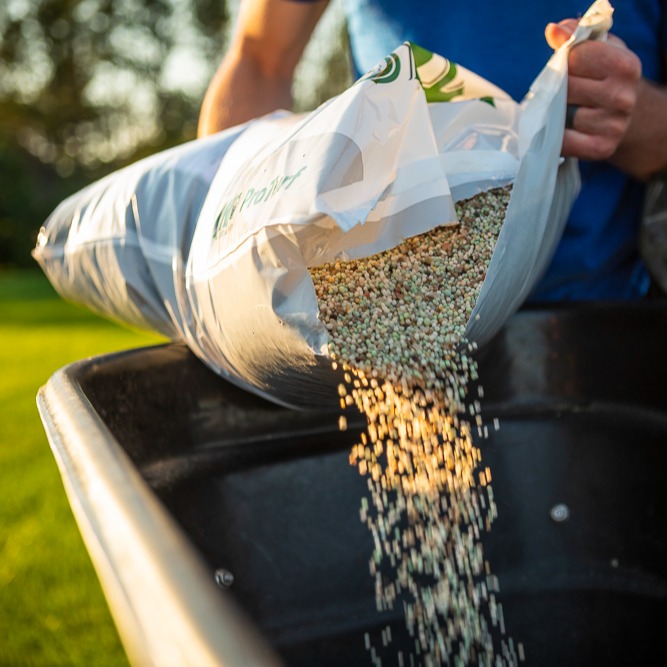
Fall fertilization is the most valuable application of the year for cool-season grass. Top growth slows as days shorten, but roots keep working, and a slow-release granular fertilizer in fall goes into root development and carbohydrate storage rather than blade growth. That is what produces an early, even green-up in spring and a lawn that handles the following summer.
Timing matters at both ends. Apply while the lawn is still actively growing, not onto frozen ground or a lawn already under snow, and do not apply right before heavy rain, which sends nutrients into the storm sewer instead of the soil. Both Wisconsin and Minnesota restrict phosphorus in lawn fertilizer, so a soil test is what justifies any phosphorus application; a standard fall program here is nitrogen and potassium based.
3. Get the leaves and debris off
A mat of wet leaves, grass clippings, and garden debris left on turf under snow does two things, both bad. It holds moisture against the crowns of the grass plants through the winter, which is exactly the condition snow mold needs, and it provides cover for voles, which tunnel under it and chew runways through the lawn.
Thin layers of dry leaves can be mulch-mowed into the lawn, and that returns organic matter to the soil. Heavy layers have to come off. The deadline is the first lasting snow: anything still on the lawn when the snow stays is there until spring.
4. Shut the water down
Cooler temperatures and shorter days cut the lawn water requirement sharply, and most lawns in Wisconsin and Minnesota do not need supplemental water after the first couple of weeks of October. Watering past that point wastes water and keeps the canopy damp, which encourages disease going into winter.
If you have an irrigation system, this is also when it gets winterized. Shutting off the supply is not enough on its own; the water already sitting in the lateral lines and valves is what freezes and splits them. A compressed air blowout before the first sustained hard freeze is what prevents it. Get on the irrigation schedule in late summer rather than waiting for the first cold night.
5. Drop the mowing height for the last cuts
We spend most of the season telling homeowners to mow high, so this one surprises people. Going into winter, long grass mats down under snow, stays wet against the soil, and gives snow mold a place to develop. Taper the height down over the last two or three cuts of the year to finish around two and a half to three inches.
Do not scalp it. Cutting shorter than two and a half inches removes too much of the leaf surface the plant uses to build reserves and exposes the crowns. Keep mowing as long as the grass is growing; the last cut is whenever growth stops, not a date on the calendar.
6. Stake the driveway before the ground freezes
Snow stakes marking where the pavement ends and the lawn begins save a lot of repair work. A plow blade or a snow blower that overshoots the edge tears up turf, and on properties with irrigation it takes out sprinkler heads along the driveway and walk, which are already the most damaged heads on any system.
Put the stakes in while the ground is still soft, and mark more than the driveway: the edges of beds, the ends of retaining walls, and any heads that sit close to pavement. If a contractor handles your snow removal, staking is what tells them where your lawn is when everything is white.
What this adds up to
None of these steps is complicated on its own. The reason spring lawns look so different from one another on the same street is that fall either happened or it did not. A proactive lawn care program puts the fall weed treatment and the fall feeding on a schedule so they land in the right window instead of whenever someone remembers.
If you want fall work handled this year, call 888-839-8484 or request a quote and we will go through what your lawn needs before the snow.
Bottom line
- Fall is the best time of year to treat perennial broadleaf weeds, as long as they are growing and temperatures stay above roughly 50 degrees.
- A slow-release granular fall fertilizer goes into roots and stored carbohydrates, which is what drives spring green-up.
- Get leaves and debris off before lasting snow; matted debris causes snow mold and gives voles cover.
- Most lawns here need no supplemental water after early October, and the irrigation system needs a compressed air blowout before a hard freeze.
- Taper the final cuts to two and a half to three inches, and set snow stakes while the ground is still soft.
Frequently asked questions
When is the last time I can spray weeds in Wisconsin or Minnesota?
Generally October. Weeds must be actively growing and air temperatures need to be above roughly 50 degrees for a post-emergent herbicide to be taken up and moved into the roots.
How short should the last mow of the year be?
Finish around two and a half to three inches, tapering down over the last two or three cuts rather than scalping it in one pass. Shorter than two and a half inches removes too much leaf surface and exposes the crowns.
Should I fertilize my lawn in late fall?
Yes, while the lawn is still actively growing. Avoid applying to frozen ground, to a lawn under snow, or right before heavy rain, which carries nutrients off the property instead of into the soil.
Do I need to do anything about my sprinkler system in the fall?
Yes. Shutting off the supply is not enough. The water left in the lateral lines and valves freezes and splits them, so the system needs a compressed air blowout before the first sustained hard freeze.
University of Minnesota Extension, Fall lawn care and fertilizing lawns.
University of Wisconsin Division of Extension, Lawn care calendar and snow mold resources.


