


Spring Sprinkler System Start Up: 5 Irrigation Tips for WI and MN Homeowners
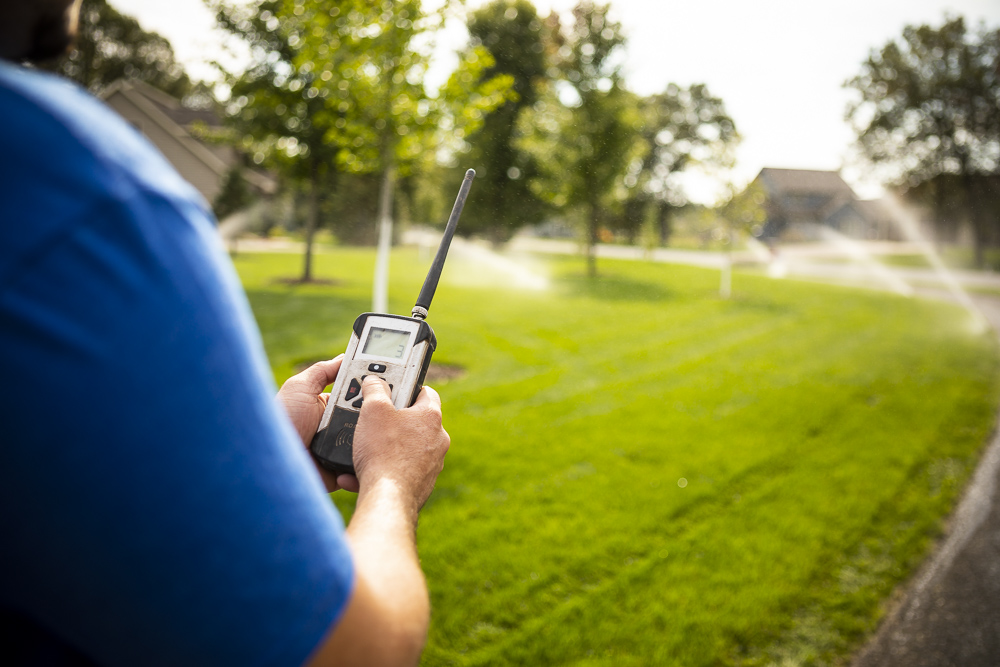
Spring start up is more than turning a valve. A winter of frost heave, settling, and plow traffic moves heads out of position and leaves debris in the lines, and charging a cold system too fast is one of the most common ways homeowners break their own irrigation. These are the five steps that matter, in order.
First, wait for the right week
In Wisconsin and Minnesota, the system goes on after the frost is out of the ground and the risk of a hard freeze has passed, which usually means late April into May depending on the year. The buried portion of the system is protected by the ground; the vulnerable part is the backflow assembly and the pipe above grade at the house. Charging those with water before the last hard freeze is how homeowners end up replacing a backflow device in May.
1. Open the main valve slowly
This is the step most homeowners skip, and it is the one that causes damage. Opening the main supply quickly sends a column of water into empty lines at full pressure. That surge, called water hammer, cracks fittings, blows seals, and can split poly lateral line. Open the valve part way, let the system fill gradually and listen for the sound of flow to level off, and only then open it the rest of the way. On a large system, filling can take several minutes.
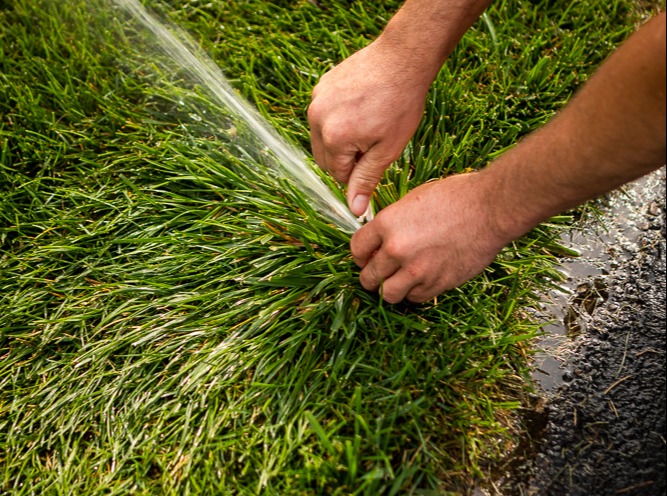
Pulling a nozzle off one head at the far end of each zone while the lines fill lets trapped air escape and flushes out grit before it reaches the rest of the heads. Reinstall the nozzle once the water runs clear.
2. Inspect every sprinkler head
Walk the property and look at every head. A winter in this climate leaves a predictable list of problems:
- Frost heave. Freeze and thaw cycles push heads out of plumb, so they spray the driveway instead of the lawn.
- Settling. Soil settles over the winter and leaves heads sitting too low to clear the turf canopy, or too high where they catch a mower.
- Plow and shovel damage. Heads near the driveway, sidewalk, and street are the ones that get hit. On most properties that curbside row is where the majority of damaged nozzles turn up.
- Debris in the nozzle. Grit that moved through the line clogs a nozzle and narrows the spray pattern without being obvious from the house.
- Leaks and loose fittings. A weeping seal or a fitting that worked loose wastes water quietly and shows up on the bill before it shows up on the lawn.
3. Reprogram the controller
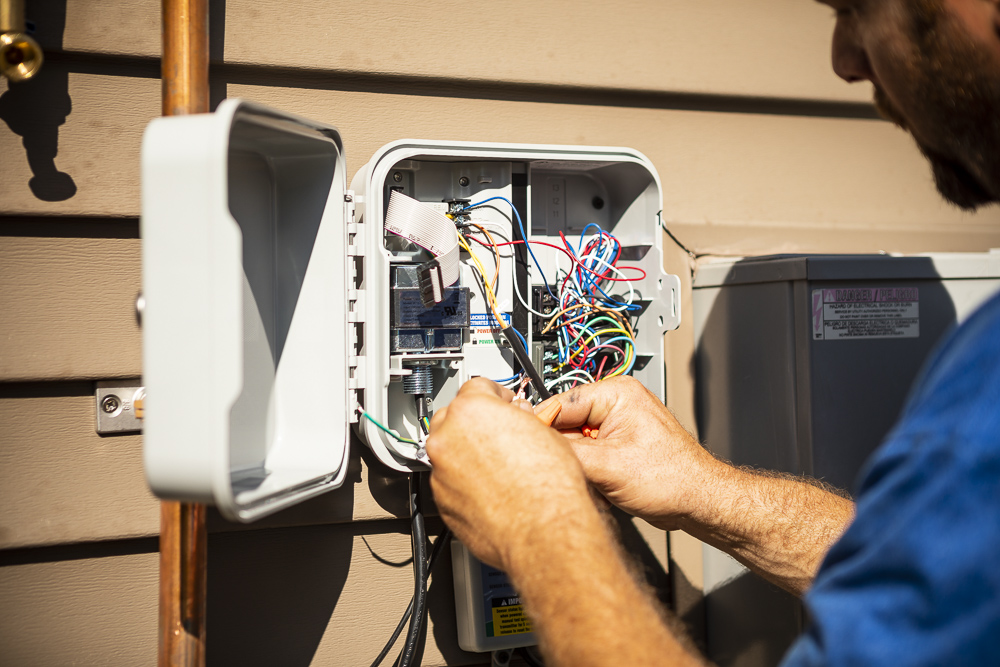
Many homeowners unplug the controller for the winter and it loses its program. Even if it stayed powered, the schedule from last August is wrong for May. Spring here is cool and wet, and a program built for a 90 degree week in July will overwater a lawn that is barely out of dormancy.
Set the controller for the conditions you actually have: run times that total roughly an inch of water per week including rainfall, delivered in a couple of longer cycles rather than a short run every day, starting in the early morning so the canopy dries during the day. Use the seasonal adjust feature to scale the whole program up and down as the season changes instead of rebuilding it each month, and replace the backup battery so a power outage does not wipe the program.
4. Check the rain sensor
If the system has a rain sensor, change the batteries, clear leaves and debris out of the collection cup, and confirm it is not blocked by growth or a new gutter extension. A sensor that fails silently is worse than no sensor, because the system keeps running through rain and the homeowner assumes it is being prevented.
5. Run every zone and watch it operate
Running each zone from the controller and standing there while it runs is the only way to catch what went wrong over the winter:
- A zone that will not turn on, which usually points to a wiring fault or a failed solenoid. Lightning strikes take out controllers and valve solenoids more often than people expect.
- A zone that will not shut off, which means a valve is not seating, often because of debris under the diaphragm.
- A chewed or rodent-damaged lateral line, which shows up as a soft, wet area or a drop in pressure on one zone.
- Coverage gaps and overspray, which are corrected by adjusting arcs and radii so heads reach each other.
Do not forget the backflow device
The backflow preventer keeps irrigation water from getting back into the drinking water supply. Many water utilities in Wisconsin and Minnesota require that the device be tested annually by a certified tester, and the requirements vary by municipality. Spring start up is when that test gets done. Ask your utility what applies at your address if you are not sure.
Why most homeowners hand this off
Spring is short here. A start up on a typical residential system takes a technician under an hour, and the value is less in the on switch than in the walk-through: inspecting components, flushing and clearing nozzles, adjusting coverage, setting the controller for the season, and catching a leak or a failing valve while the repair is still small.
An irrigation maintenance program puts spring activation, a mid-season inspection, and fall winterization on an automatic schedule so nobody has to remember to call. If you want start up handled this year, call 888-839-8484 or request a quote.
Bottom line
- Wait until the frost is out of the ground and hard freezes are done, usually late April into May, before charging the system.
- Open the main valve slowly. Water hammer from a fast fill cracks fittings and splits lateral line.
- Inspect every head for frost heave, settling, plow damage, clogged nozzles, and leaks; the curbside row takes the most abuse.
- Rebuild the controller program for spring conditions, not last August, and replace the backup battery.
- Run every zone and watch it, and confirm whether your utility requires annual backflow testing.
Frequently asked questions
When should I turn my sprinkler system on in Wisconsin or Minnesota?
After the frost is out of the ground and the risk of a hard freeze has passed, typically late April into May. Turning it on earlier puts water in the above-grade pipe and backflow assembly, which is what freezes and splits.
Why does the main valve need to be opened slowly?
Empty lines filling at full pressure create a surge called water hammer that cracks fittings, blows seals, and can split poly pipe. Filling gradually over several minutes avoids it.
Why is one zone weaker than the rest after winter?
The usual causes are debris in the nozzles from water moving through the lines, a leak or chewed lateral line in that zone, or a valve that is not opening fully. Running the zone and watching each head will narrow it down quickly.
Do I need to be home for a spring start up?
Usually not, as long as the technician can reach the controller and the interior shutoff and the gates are unlocked.
Irrigation Association, Irrigation system maintenance and backflow prevention standards.
EPA WaterSense, Outdoor watering tips.


