


Smart Irrigation Month
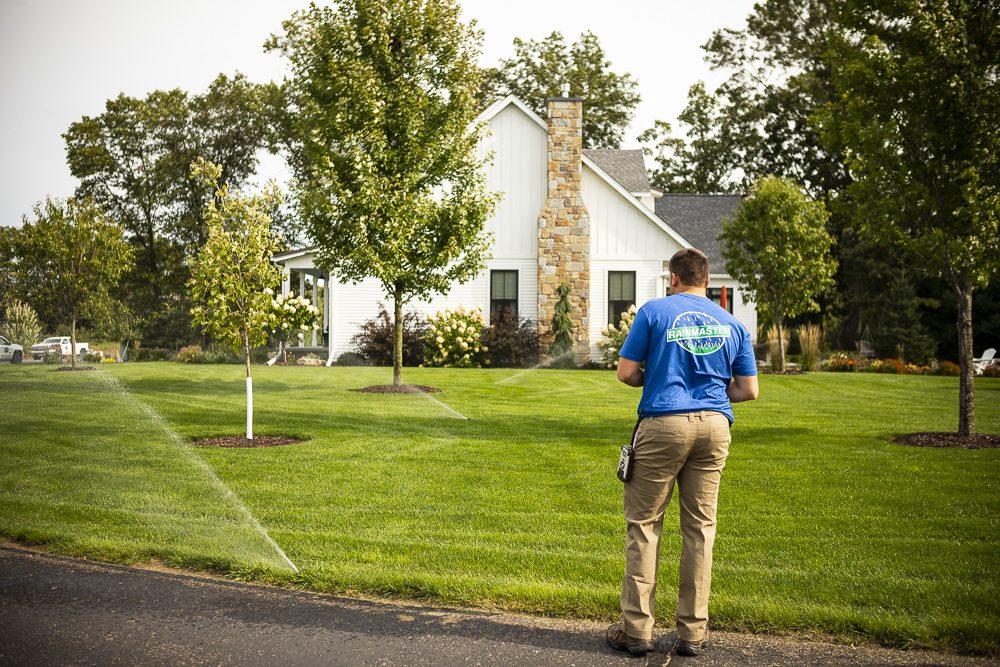
July is Smart Irrigation Month, which lands in the same weeks that outdoor water use peaks across Wisconsin and Minnesota. Most of the waste is avoidable, and the fixes are not complicated: better soil, better plant placement, and a controller that responds to weather instead of a calendar.
Start with the soil
Mulch beds 2 to 4 inches deep. Mulch reduces evaporation, moderates soil temperature swings, improves water penetration, and suppresses the weeds that compete with your plants for moisture. Keep it pulled back a few inches from trunks and stems.
Aerate the lawn at least once a year. Compacted soil sheds water. Core aeration opens channels so irrigation and rainfall reach the root zone instead of running off. In the Upper Midwest, fall is the best window for cool-season turf.
Improve soil at planting. Turn and cultivate the soil in new beds and work in compost. Soil with good organic content holds more moisture and grows plants that need less water to stay strong.
Design the landscape for your lot
Match plants to conditions. Look honestly at sun and shade, damp and dry areas, and how you actually use each part of the yard. Choose grasses and plants suited to that microclimate and to our climate generally; the right plant in the right place needs far less supplemental water.
Group plants by water need. Putting plants with similar moisture requirements together (hydrozoning) means you can water each group correctly instead of overwatering some to satisfy others. Keep planting beds on separate zones from turf, because grass has different requirements entirely.
Put turf where it gets used. Lawn earns its water in play areas and gathering spaces. On steep slopes, where water runs off before it soaks in, ground cover, perimeter plantings, or mulch do the job with a fraction of the input.
Make the system smarter
Install a smart controller. A weather-based or soil-moisture controller adjusts run times using local conditions and skips cycles after rain. For most properties, this is the single largest reduction in outdoor water use available.
Water early. Run zones in the early morning, when wind and evaporation are lowest and foliage has the day to dry.
Water deeply and less often. Short daily cycles encourage shallow roots. Longer, less frequent cycles drive roots down, which is what carries turf through a dry August.
Check coverage annually. A misaligned head or clogged nozzle wastes water every cycle until someone notices.
Bottom line
- Mulch 2 to 4 inches deep and aerate annually so water reaches roots instead of evaporating or running off.
- Group plants by water need and keep beds on separate zones from turf.
- Reserve lawn for areas that get used; use ground cover or mulch on steep slopes.
- A weather-based smart controller is usually the biggest single cut in outdoor water use.
- Water early in the morning, deeply and less often.
Frequently asked questions
When is Smart Irrigation Month?
July, chosen because it is typically the peak month for outdoor water use.
How much water can a smart controller actually save?
Savings depend on the property and the schedule being replaced, but the gain comes from the same two behaviors every time: skipping cycles after rain and matching run times to current weather rather than a fixed calendar.
How often should a lawn in Wisconsin or Minnesota be watered?
Aim for about an inch per week including rainfall, delivered in deep cycles a couple of times a week rather than a little every day.
Does mulch really reduce watering?
Yes. A 2 to 4 inch layer slows evaporation from the soil surface and keeps soil temperatures steadier, both of which reduce how often beds need water.
Irrigation Association, Smart Irrigation Month resources.
University of Wisconsin Extension, Lawn and garden water conservation guidance.


