


How to Revive Your Grass After Winter: 6 Spring Lawn Care Tips
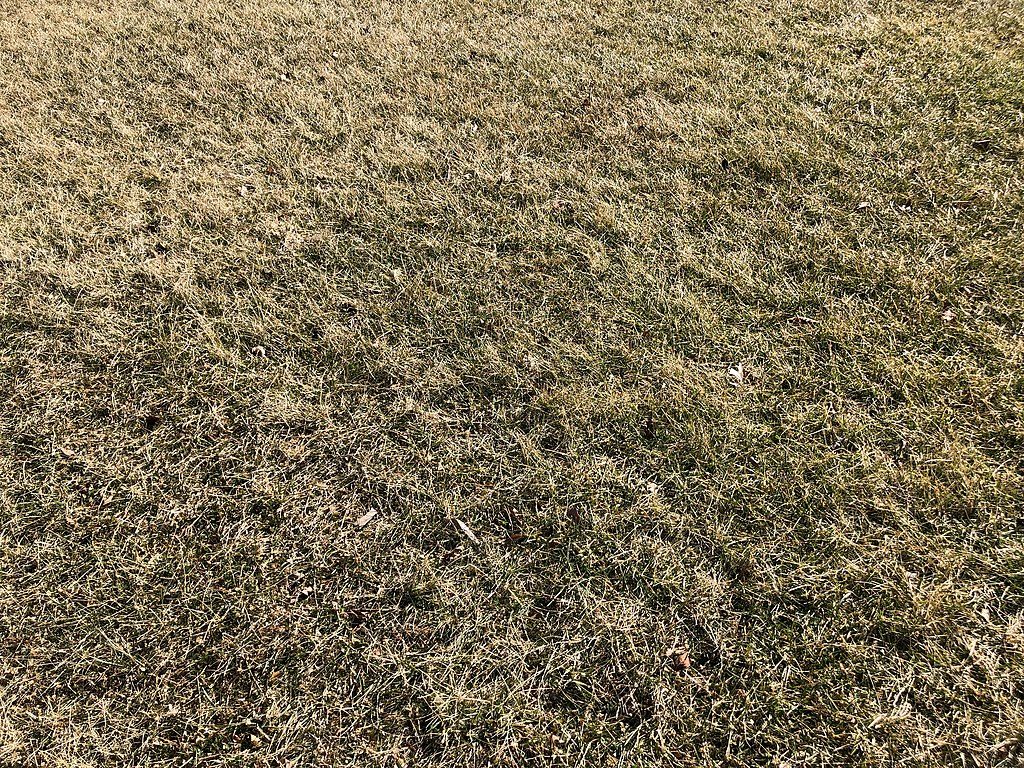
A lawn coming out of a Wisconsin or Minnesota winter usually looks worse than it is. Before you plan a renovation, find out whether the grass is dormant or actually dead, then work through the spring tasks in the order that matters.
First, dormant grass or dead grass
Brown turf in April is normal. Cool-season grasses go dormant for months and do not green up the moment the snow leaves. The question is whether the crowns and roots survived.
The test takes a few seconds. Grab a handful of grass in a brown area and tug. Dormant grass has a live root system and resists the pull. Dead grass lifts out easily with little or no root attached. Check several areas, because a lawn is often dormant in most places and dead in a few specific spots, usually along the driveway from salt, where plowed snow was piled, or in matted areas from snow mold.
Once soil temperatures rise and the lawn gets water, dormant grass greens up on its own. The dead spots are the ones that need a plan.
1. Clean up, gently
Lightly rake the lawn to pull off dead grass, leaves, and whatever debris got missed in fall. Gently is the operative word. Turf coming out of dormancy is tender, and aggressive raking or a power rake uproots live grass that would have recovered.
Where you find matted, straw-colored patches, that is likely snow mold. Keep raking those areas to break up the mat. Getting the blades to stand up restores air circulation down at the crowns, which lets the area dry and the grass resume growing. Most snow mold patches recover without reseeding.
2. Reseed bare spots
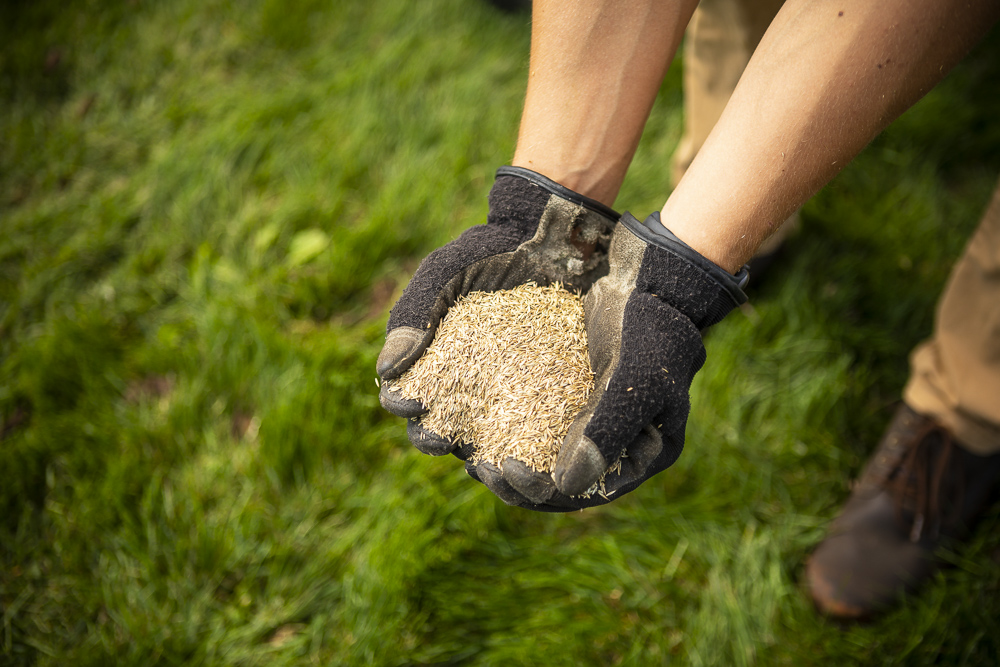
Fall is the better seeding window, and spring seeding is still worth doing if bare spots are bothering you. Expect damage from snow mold, salt along the drive, and plow blades.
Wait until the soil has warmed, which around here means roughly Mother's Day rather than the first warm week in April. Seed into soil that is too cold sits and rots.
There is a conflict to plan around. Crabgrass pre-emergent works by stopping germinating seedlings from establishing roots, and it does not distinguish between crabgrass seedlings and the grass seed you just put down. You cannot apply a standard pre-emergent and seed the same area in the same spring. There are professional-grade products that allow seeding and crabgrass control together, which is worth asking about rather than assuming you have to choose.
3. Attack crabgrass on time
Crabgrass control is a timing exercise. The goal is to stop germinating seeds from becoming plants that set tens of thousands more seeds, which means the product has to be down before and during germination.
Germination is driven by soil temperature, so the start date moves year to year. RainMaster customers in Eau Claire and Blaine get two crabgrass treatments, one in early spring and one in late spring, which covers a germination window that spreads across weeks rather than happening all at once.
4. Get grub control down
Spring is the right time for grub control, and the reason is timing rather than urgency. Grubs feed on grass roots and organic matter in the soil, which kills sections of turf from below. Once the roots are eaten, that grass is gone and needs reseeding.
Preventive grub control works by having the active ingredient present in the root zone before eggs hatch in midsummer, so newly hatched grubs encounter it while they are small. RainMaster applies Grub Guard on the first visit of the spring and it carries through the growing season.
On pollinators: grub control goes on turf rather than on flowering plants, but lawns here commonly contain clover and dandelion in bloom. Mowing blooming weeds off before an application and watering the product into the root zone where the grubs actually are reduces bee exposure substantially, and product selection matters as well.
5. Get the mower ready
Sharpen the blade, air up the tires, change the oil. A dull blade tears the leaf instead of cutting it, which leaves a frayed wound that loses more water and gives disease an entry point.
These are not one-time spring tasks. Check the blade monthly through the mowing season, and raise the deck for the first cut rather than scalping a lawn that just woke up.
6. Feed the lawn and treat weeds
Spring is when fertilizer and weed control come together. The lawn is using stored energy to push new growth and needs nutrition, and spring weeds are easiest to control while they are small and actively growing.
A reasonable target for this region is having the first round done by Memorial Day. Later than that and you are treating larger, tougher weeds in warmer weather, which is harder on the lawn and less effective on the weeds.
From there, the season runs on a schedule rather than on reaction. A lawn care program covers nutrition, weed control, and grub timing across the whole year, and if watering is the limiting factor, irrigation is usually the thing that unlocks everything else. Check our service areas for coverage near you.
Bottom line
- Tug test a brown area: dormant grass resists the pull, dead grass lifts out with no roots.
- Rake matted snow mold areas lightly to restore air circulation. Never power rake turf coming out of dormancy.
- Wait until roughly Mother's Day to seed, and plan around crabgrass pre-emergent, which stops new grass seedlings too.
- Grub control goes down in spring so the product is in place before midsummer egg hatch.
- Target having the first fertilizer and weed control round complete by Memorial Day.
Frequently asked questions
Is my grass dead or just dormant after winter?
Tug a handful in a brown patch. If it resists, the roots are alive and it is dormant. If it pulls out easily with nothing attached, that area is dead and needs seed. Check several spots, since most lawns are a mix.
Can I seed in spring in Wisconsin or Minnesota?
Yes, though fall is better. Wait until the soil warms, around Mother's Day, and coordinate with crabgrass control, since standard pre-emergent will stop your new seedlings from establishing.
Should I power rake my lawn in spring?
Generally no. Turf coming out of dormancy is weak, and a power rake pulls out live grass along with the dead material. A light hand raking does what is needed on snow mold and debris.
When should spring fertilizer and weed control be applied?
Aim to have the first round complete by Memorial Day. Weeds are easier to control while small and actively growing, and the lawn needs nutrition as it comes out of dormancy.
University of Minnesota Extension, Fertilizing lawns.
University of Wisconsin Extension, Crabgrass.


