


Do I Really Need Regular Sprinkler System Maintenance? Answers for Minneapolis & Eau Claire, WI

Spring start-up and fall winterization are the two visits everyone knows about, and they bracket the season without covering it. The months in between are when the system works hardest and when most problems start.
Spring and fall check-ups are not enough
Start-up and shutdown handle the two obvious jobs: pressurizing the system and getting the water out before it freezes. Neither one tells you how the system performed in July.
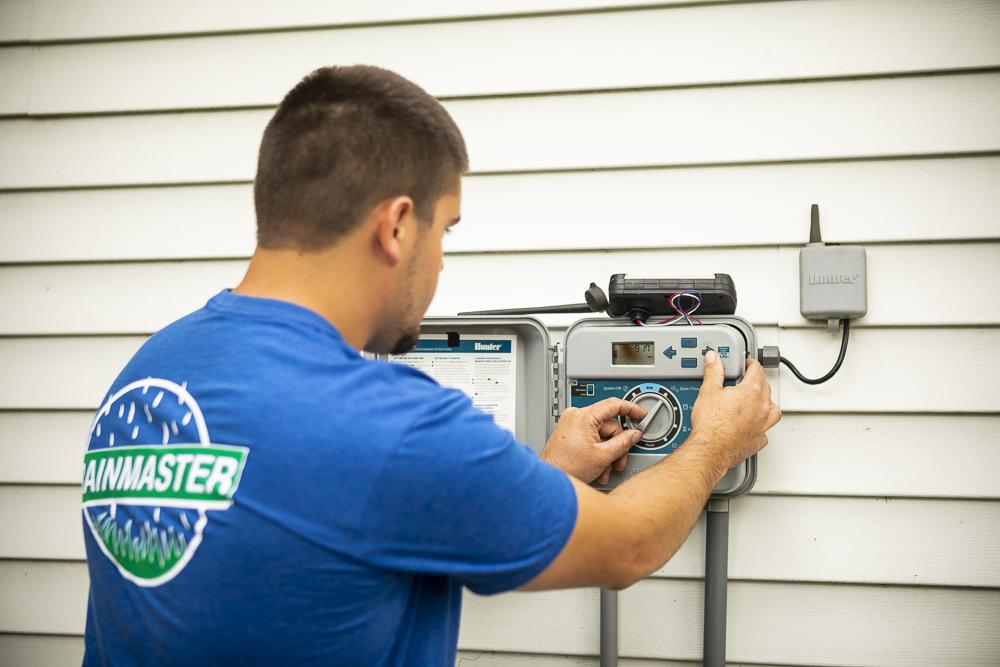
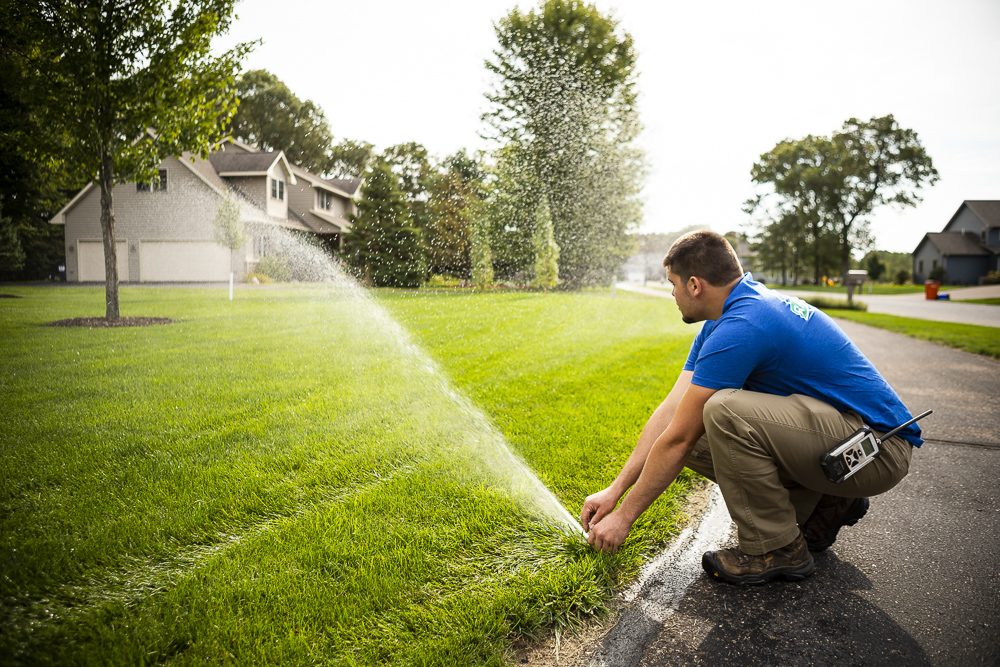
Say it is mid-July. When was the controller last adjusted? Probably at start-up, when it was cool and rainy. Those settings are wrong for the hottest, driest stretch of the year, and reprogramming it is a small hassle, which is exactly why most people never do it. Companies that maintain systems do it every day.
Summer is also the only time a technician can properly evaluate coverage, because shrubs, perennials, and ornamental grasses are at full size. A spray arc that was clear in May is often blocked by August, and you only see that with the system running during full growth.
Avoid service calls, and pay less when you need one
Problems caught during a scheduled visit do not become service calls. And when a repair is needed between visits, a service call is $20 less at RainMaster with a maintenance plan, at $59 rather than $79.
Avoid the wait
Without regular visits, the sequence is: something breaks, you notice brown grass a week later, you call, and you wait for an opening during the busiest part of the season. An emergency visit runs $159. With a plan, a technician is already on the property on a schedule and most issues are found before they turn urgent.
Stop paying for water you are not using
Maintenance visits include the adjustments that keep water on target: heads realigned so they are not spraying the driveway or the siding, nozzles cleaned, heads raised that have settled below the canopy, run times corrected.
The waste you cannot see is the expensive kind. A head mowed over weeks ago can be pouring water into one spot every cycle. A valve that does not fully close weeps continuously. This happens to everyone, including us; our own technicians find issues at our own homes, and we inspect our systems more often than most people do.
Good maintenance companies in Eau Claire and the Twin Cities do not just keep a system running. They make sure it is using only as much water as the property actually needs.
Fewer brown spots
Once a system goes down, brown spots appear quickly in summer heat, and they do not reverse on the same timeline. Expect to look at those spots for up to two weeks after the water comes back while the turf recovers, and longer if the damage went far enough that the area needs seed. Preventing brown spots through efficient, verified watering is dramatically easier than repairing them afterward.
Things happen
Most system damage is accidental and unnoticed at the time.
- You installed a fence, and a post went through a lateral line.
- You put up a tent for a birthday party and drove a stake into a pipe.
- You staked a dog run and clipped a wire.
- Tree roots grew and pinched a line closed.
- Those small shrubs you planted three years ago now block two heads.
- Frost heave over the winter tilted heads so they water the walk.
None of these announce themselves. A technician on a schedule finds them before they get out of control.
It is easier on the budget
A maintenance program spreads discovery across the year. Technicians find repair needs as they develop rather than presenting you with five problems at once during a single annual visit. Smaller repairs, caught earlier, spread out.
Protect the landscaping
If you have invested thousands in plantings, an irrigation failure during a hot stretch puts all of it at risk, and mature plants are far more expensive to replace than to water. With significant money in the ground, a couple hundred dollars a year for maintenance is cheap insurance on the asset.
You get advice you would not otherwise have
Beyond catching problems, a professional technician tells you things worth knowing: that you are watering too much or too little, that newer high-efficiency nozzles would cut run time on a zone, that the slope on the side yard needs cycle and soak, that your beds should be converted to drip. It is an extra set of experienced eyes on your lawn, your water use, and your budget.
What the plans cost
Choose from our irrigation maintenance programs:
- Starting at $239 a year for basic start-up and winterization tasks.
- Our most popular program starts at $304, sitting in between on coverage.
- Peak Performance starts at $434, with a visit every month between spring start-up and fall winterizing, so the system is checked and the settings are adjusted all season.
Proper irrigation is foundational to the health of the lawn, and that means a system that does not let you down in the week it matters most. Ignore maintenance and the repairs generally cost more than the maintenance would have. If coverage failures have already left damage, pair the repair with the lawn care work needed to bring those areas back.
Bottom line
- Spring start-up and fall winterization bracket the season but miss the months when the system works hardest.
- Summer is the only time coverage can be judged accurately, with shrubs and perennials at full growth blocking arcs.
- With a maintenance plan a service call is $59 instead of $79, and you avoid $159 emergency visits.
- The costly waste is invisible: a mowed-off head, a weeping valve, or a controller still on spring settings.
- Plans start at $239 a year, the popular mid-level program at $304, and monthly Peak Performance at $434.
Frequently asked questions
Is a sprinkler maintenance plan worth the money?
It usually pays for itself through water savings and avoided repairs. The arithmetic is straightforward: plans start at $179 a year, an emergency visit is $159, and replacing landscaping killed by a failed zone costs far more than either.
How many times a year should a sprinkler system be serviced?
At least three: spring start-up, a midsummer check, and fall winterization. The midsummer visit is the one most homeowners skip and the one that catches blocked spray patterns, settled heads, and controller settings left on spring programming.
Do I need to winterize my sprinkler system in Wisconsin and Minnesota?
Yes, and it is not optional here. Lines are blown out with compressed air each fall because water left in a lateral, a head, or a backflow device freezes, expands, and splits it, which turns a routine visit into a spring repair bill.
What does a sprinkler maintenance visit include?
Running every zone, checking and realigning heads, cleaning nozzles, raising settled heads, looking for leaks and pressure problems, verifying coverage, and adjusting the controller for the season. The technician should also tell you where the system is wasting water.
U.S. Environmental Protection Agency, Sprinkler Spruce-Up.


