


7 Questions to Ask Yourself Before Booking an Aerator Rental in Minneapolis & Eau Claire

Renting an aerator usually costs less than hiring someone, but not by as much as people expect, and the gap narrows fast once you add a trailer, a wasted Saturday, and the risk of a bent tine finding a sprinkler head. Run through these seven questions before you reserve the machine. If you still want to do it yourself afterward, at least you will go in with your eyes open.
1. What is the real cost difference?
Aerator rental in Minneapolis and Eau Claire is typically less than a hundred dollars for a half day. At RainMaster, professional aeration starts at $100, runs $170 for a typical 10,000 square foot lawn, and $270 for a sprawling 20,000 square foot lawn.
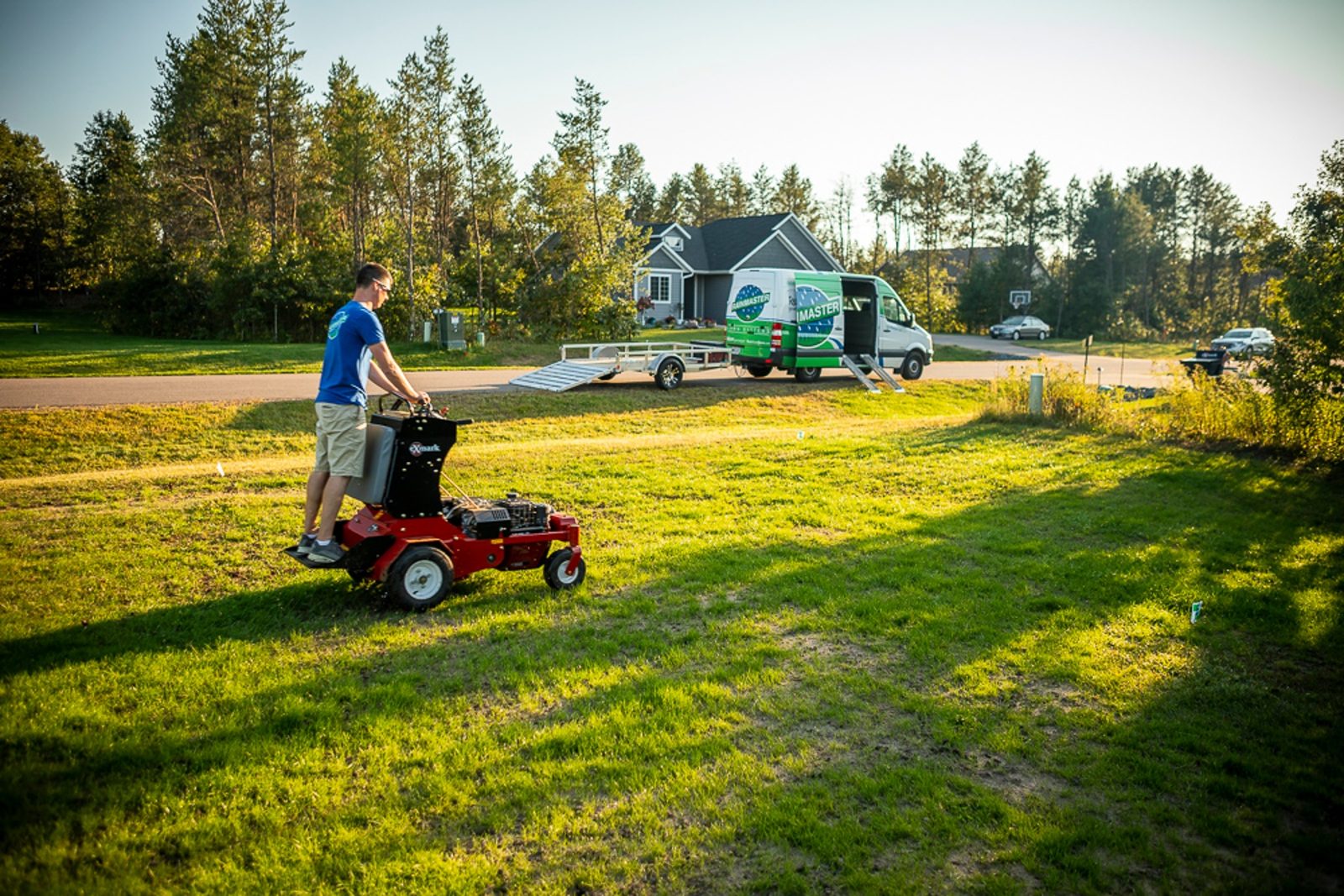
So on a small lot the difference can be close to nothing, and on a larger lot you are weighing a couple hundred dollars against most of a weekend. Then add what the rental price does not include: fuel, a trailer if you need one, your time loading and returning the machine, and anything you break.
2. Are you renting a core aerator or a spike aerator?
This is the question that decides whether the job is worth doing at all. Core aeration, also called plug aeration, pulls finger-sized plugs of soil out of the ground and leaves them on the surface. That is what relieves compaction, because soil is physically removed and the surrounding soil has somewhere to expand into.
Spike aerators, including tow-behind spike rollers and the spiked sandals sold online, just punch holes by pressing soil aside. They compact the walls of the hole and accomplish close to nothing on a compacted lawn. If the rental counter offers you a spiker, you are better off not aerating. Confirm you are getting a core aerator that pulls plugs.
3. How compacted is your lawn?
If you are thinking about aerating, your soil is at least somewhat compacted. It may be badly compacted, and that changes the equation. Much of the Chippewa Valley and the Twin Cities metro sits on heavy clay and on fill left behind by construction, and a lawn like that fights back.
Most walk-behind rental aerators rely on machine weight alone to push the tines in. On hard, dry clay the tines skip across the surface or only penetrate an inch, and you end up making two or three passes for a mediocre result. Professional stand-on units use hydraulic down pressure to drive the tines and pull deep cores, which is the difference between a lawn that was aerated and a lawn that was poked.
Either way, soil moisture matters. Aerate a day or two after a soaking rain or after running the irrigation. Bone dry soil will not core, and saturated soil smears.
4. Do you have a way to haul it?
You cannot put a walk-behind aerator in a trunk. These machines run a few hundred pounds, they are top heavy, and they need a truck or a trailer plus ramps. Loading one alone on a sloped driveway is how people get hurt. If you have to rent a trailer, add that to the cost and the time.
5. What if you get it home and it is broken?
Rental equipment lives a hard life. Tines get bent and dull, cables stretch, and machines that started fine at the counter do not always start in your driveway. If that happens you are hauling it back, waiting for another unit, or losing the day. Inspect the tines before you load it, and start the engine at the rental yard.
6. What about your irrigation heads and buried lines?
Aeration tines go two to three inches deep, which is deep enough to find sprinkler heads, shallow lateral lines, invisible dog fence wire, low-voltage lighting cable, and shallow cable or downspout drains. A punctured head or a cut wire turns a cheap afternoon into a repair call.
Before any pass, flag every head, every valve box, and the run of any private line you know about. On lawns that call for it we flag the irrigation heads first for exactly this reason, and if we damage something, we fix it.
7. Do you want to spend Saturday and Sunday on it?
Walking behind an aerator for a few hours rattles your arms, back, and shoulders, especially if you do not do physical outdoor work regularly. The machine wants to go where it wants to go, and steering one on a slope is genuinely tiring. Most people who rent once do not rent twice.
When should you aerate in Wisconsin and Minnesota?
Timing determines whether the work pays off. For the cool-season grasses grown here, mid-August through mid-September is the best window: soil is still warm, the turf is actively growing into fall, and weed pressure is falling. That is also the ideal time to overseed, and aeration is the single best preparation for it because seed drops into the holes and makes direct contact with soil.
Spring aeration is acceptable when a lawn is badly compacted, but it opens the soil surface right when crabgrass is germinating, and it conflicts with pre-emergent weed control. Avoid aerating in the heat of midsummer when turf is stressed or dormant. Note that the late summer window is also when every rental counter in town is out of machines, so your schedule may not be yours.
What professional aeration includes
- Heads and valve boxes flagged before the machine starts.
- A pattern sized to the lawn, with a second pass where compaction warrants it.
- Deep cores pulled by equipment with hydraulic down pressure, left on the surface to break down over a couple of weeks.
- Overseeding and fertilizer timed to the same visit, which is where most of the lawn improvement actually comes from. See our lawn care programs.
- Nothing in your garage to haul back.
Let the pros do the aerating so your lawn can breathe. Request a quote or call 888-839-8484 and we will size the job for your property.
Bottom line
- Rental runs under $100; RainMaster aeration starts at $100, with $170 for a 10,000 square foot lawn and $270 for 20,000 square feet.
- Only core aeration that pulls plugs relieves compaction; spike aerators and spiked sandals do not.
- Rental walk-behinds rely on weight alone, so they struggle on the heavy clay common in this region; pro stand-on units use hydraulic down pressure.
- Budget for a trailer, fuel, your weekend, and the risk of hitting a sprinkler head, dog fence wire, or lighting cable.
- Mid-August through mid-September is the right window here, and it pairs with overseeding.
Frequently asked questions
Is it cheaper to rent an aerator or hire a lawn care company?
Renting is cheaper on paper, usually under $100 against pro aeration starting at $100 and running $170 for a 10,000 square foot lawn. Once you add hauling, fuel, your time, and repair risk, the difference on most lots is small.
When is the best time to aerate a lawn in Minnesota or Wisconsin?
Mid-August through mid-September. The soil is warm, cool-season grass is growing into fall, and it is the best time to overseed into the holes. Spring is a distant second and conflicts with crabgrass control.
Will aerating damage my sprinkler system?
It can if heads and shallow lines are not marked. Tines reach two to three inches. Flag every head and valve box first, along with dog fence wire and lighting cable.
Should I pick up the plugs after aerating?
No. Leave the cores on the lawn. They break down in a couple of weeks with mowing and rain, and that soil returning to the surface is part of the benefit.
Wisconsin Horticulture, Division of Extension, Lawn Aeration and Topdressing.
University of Minnesota Extension, Seeding and sodding home lawns.


