


7 Questions to Ask When Hiring a Snow Removal Service in Minneapolis
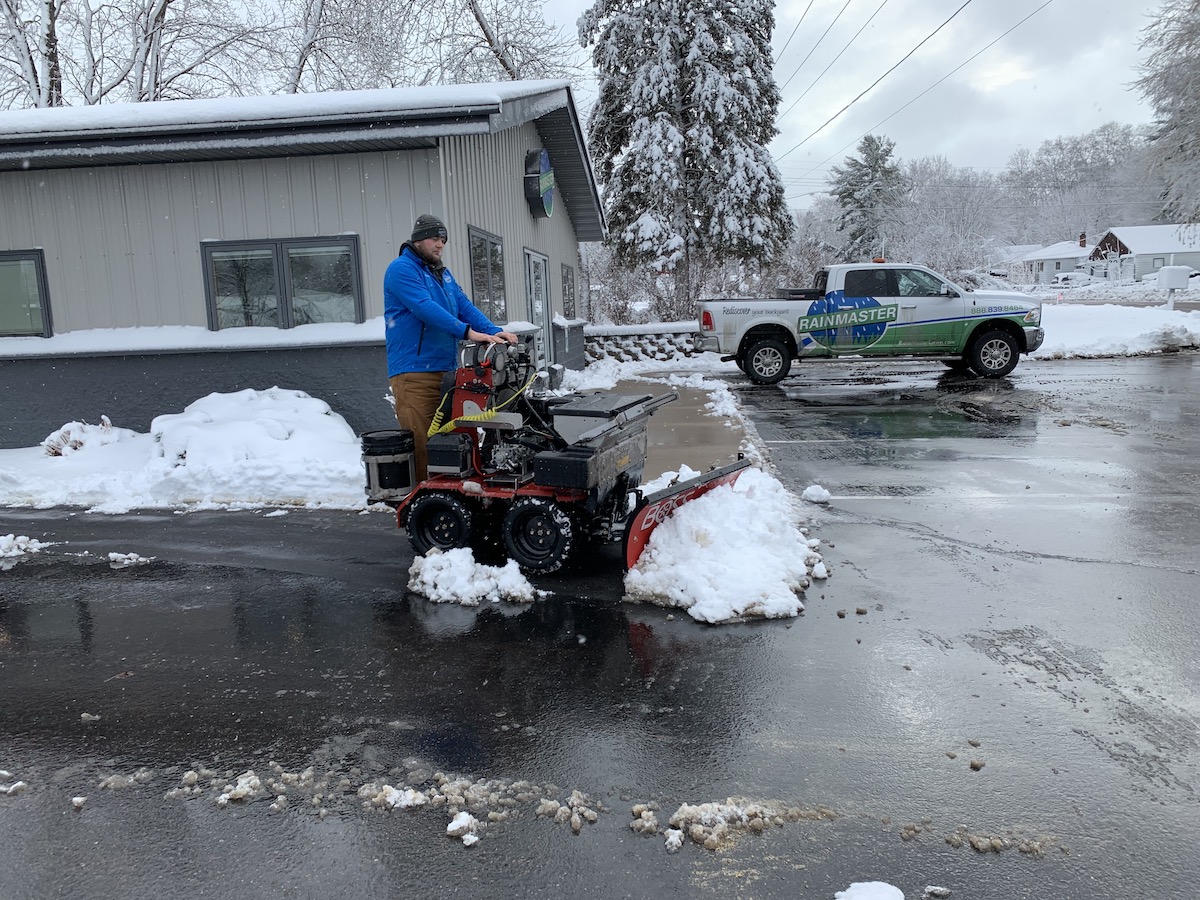
Hiring a commercial snow contractor is a liability decision as much as a maintenance one. These seven questions separate the companies that have a plan for your property from the ones quoting a number off a satellite image.
1. How will you meet my property's specific needs?
If a contractor will quote your property without asking questions, that is the answer to the question. Every commercial site operates differently, and the service plan has to reflect it.
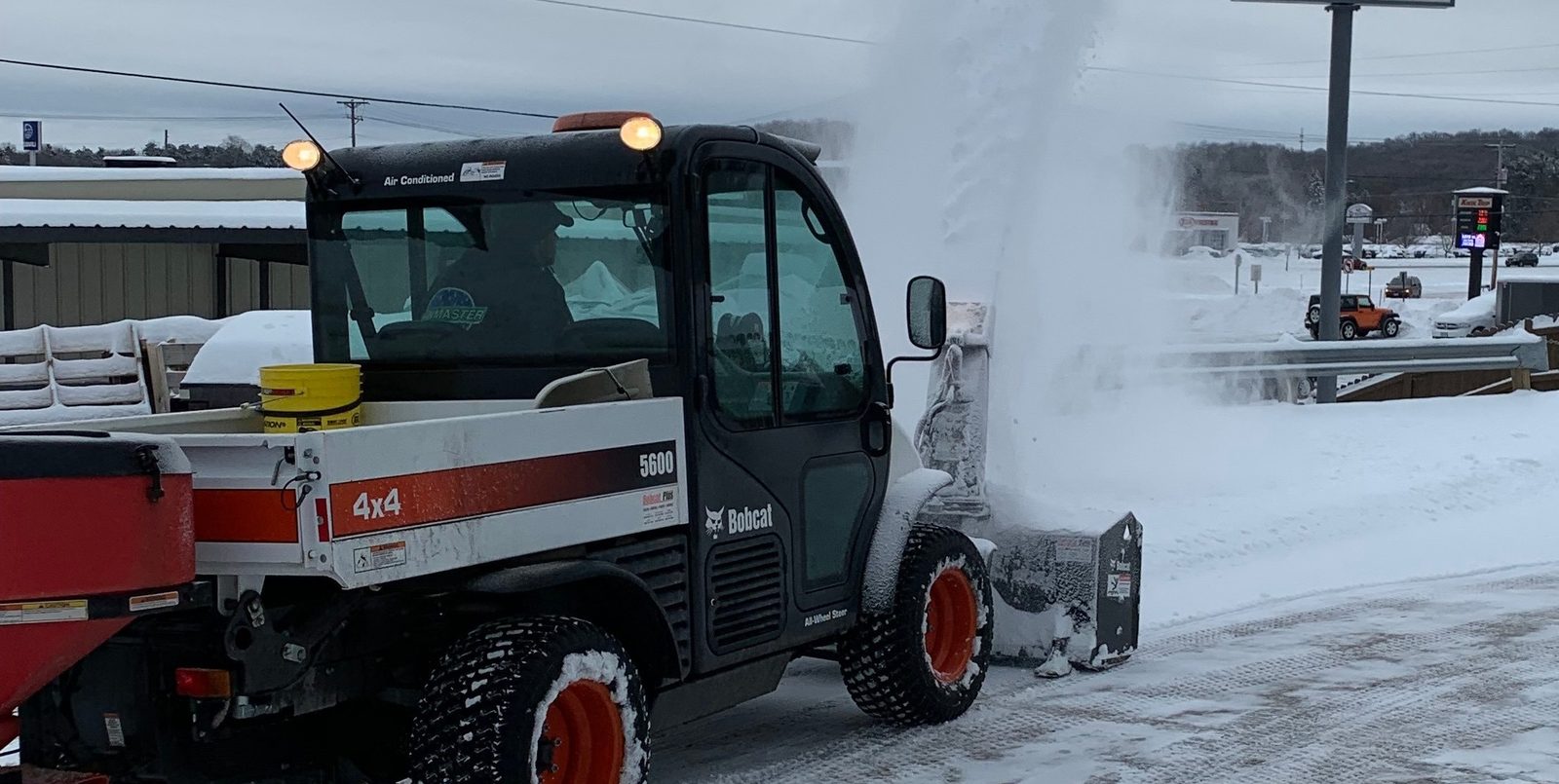
Some businesses close weekends, so Saturday service is not a priority. Some have lots full of cars during business hours and cannot be plowed until after close. Some run shifts around the clock and need clear access at every shift change. A medical building has different open-by expectations than a self-storage facility.
Ask how they will handle your traffic patterns, your open hours, and where snow will be stacked on your site, which matters more than people expect once a lot has been plowed a dozen times.
2. Do you keep records that reduce my liability?
This is the one with real money attached. If someone slips and falls on your property, the exposure includes legal costs, medical costs, potential insurance increases, and workers' compensation if the person is an employee.
The defense is documentation: proof of exactly when the contractor was on site, what they did, and what the weather conditions were at the time. Ask whether they keep that record and whether you can get a copy.
Our crews clock in and out at your property, which establishes they were there. GPS tracking shows when and what was done, and all of it stays in our system where it can be produced if a claim ever comes up.
3. How do I reach you, and will you show up?
Equipment and material do not compensate for bad communication. Ask who you call at 4 a.m., who calls you, and what the notification plan looks like before, during, and after an event.
Ask the harder version too. In a heavy season, some contractors stop showing up, because they bid the work too low and are underwater financially by February. Ask how they price for a bad winter and how long they have been operating. A contractor who has been through several heavy seasons in this market has demonstrated something a new one cannot.
4. What do you use for ice melt, and at what temperatures does it work?
This question may not be on your list, and it should be. Ice melt choice affects your concrete, your landscaping, your interior floors, and local water quality.
Plain rock salt, sodium chloride, is cheapest. It also loses practical effectiveness around 15 to 20 degrees Fahrenheit, pits concrete, burns landscaping where meltwater carries it, and loads chloride into lakes and streams where it does not break down.
We use treated salt, which is rock salt with magnesium or calcium chloride additives. Those additives lower the freezing point of water further than salt alone, which extends the working range into much colder temperatures, and the material we use is rated to about 20 below zero. It is also less corrosive and scatters less, so less of it is needed.
We also use brine, a liquid salt solution sprayed on lots and walkways before an event so snow and ice cannot bond to the pavement. Brine uses a fraction of the salt of granular application. It works immediately on contact, since it is already in solution, where granular salt in very cold weather sits on top of the snow and gets blown around before it dissolves. It also does not track into buildings on boots.
5. Do you clear doors, walks, and steps?
Do not assume this is included. Not every contractor offers sidewalk, entry, and step clearing, and plenty of properties cannot be made safe with a plow alone.
Entrances, pathways, steps, and stairs frequently require hand shoveling, and those are exactly the surfaces where slip and fall claims originate. Confirm in writing which surfaces are covered and at what snow depth service triggers.
6. Explain your pricing
Comparing snow removal bids is genuinely difficult, because contractors price differently. Some charge by the season, some per visit, some by snowfall depth or event. Those are three different risk structures, and the cheapest-looking one is not always the cheapest outcome.
Per-event pricing means a heavy winter costs more than you budgeted. Seasonal pricing means a light winter costs more per inch, and a heavy one is covered. Neither is wrong, but you should know which one you are signing.
We use years of Minnesota snow data to project a range of snowfall for the season, then propose a cost to service your property against that range, with pricing stated up front. We also use a third-party weather service to certify snow totals, so what triggered a service visit is documented rather than disputed.
7. Are you on call around the clock?
Snow does not arrive during business hours. The practical question is whether crews are dispatched on a plan that already exists for your site, or whether someone has to be reached and told what to do.
Our crews are on call 24/7, working the snow and ice plan already built for your property, which is what lets a lot be clear before the first employee arrives rather than after.
What the right answers add up to
The questions are a means to an end: a documented plan for your specific site, proof of service for liability, material appropriate to the temperatures we get here, pricing you can budget against, and someone who answers the phone. See our commercial snow removal services for how we structure a property plan, and request a quote to get yours assessed.
Bottom line
- A contractor who quotes without asking about your hours, traffic, and snow storage does not have a plan for your site.
- Service documentation with timestamps, GPS, and weather conditions is your defense in a slip and fall claim.
- Ask the working temperature of their ice melt. Plain rock salt quits around 15 to 20 degrees.
- Confirm in writing whether doors, walks, and steps are included and at what trigger depth.
- Seasonal, per-visit, and per-event pricing carry different risk. Know which structure you are signing.
Frequently asked questions
What should a commercial snow contract include?
The surfaces covered, the trigger depth that starts service, the response time expectation, where snow will be stacked, whether hand work on walks and steps is included, the ice melt products used, and how service events are documented and billed.
Why does service documentation matter so much?
In a slip and fall claim you have to show what was done and when. Timestamped arrival and departure records, GPS data, and certified weather conditions are what establish that the property was maintained.
Is seasonal or per-event pricing better?
They shift risk differently. Seasonal pricing makes your cost predictable and the contractor carries the heavy-winter risk. Per-event pricing is cheaper in a light winter and more expensive in a bad one. Pick based on how much budget variability you can absorb.
Should I ask what ice melt they use?
Yes. It determines whether surfaces stay clear in a deep cold snap, how much damage your concrete and landscaping take, and how much chloride ends up in local water.
Wisconsin Department of Natural Resources, Chloride and winter salt use guidance.


