


Protect Your Investment With Midsummer Irrigation System Checks
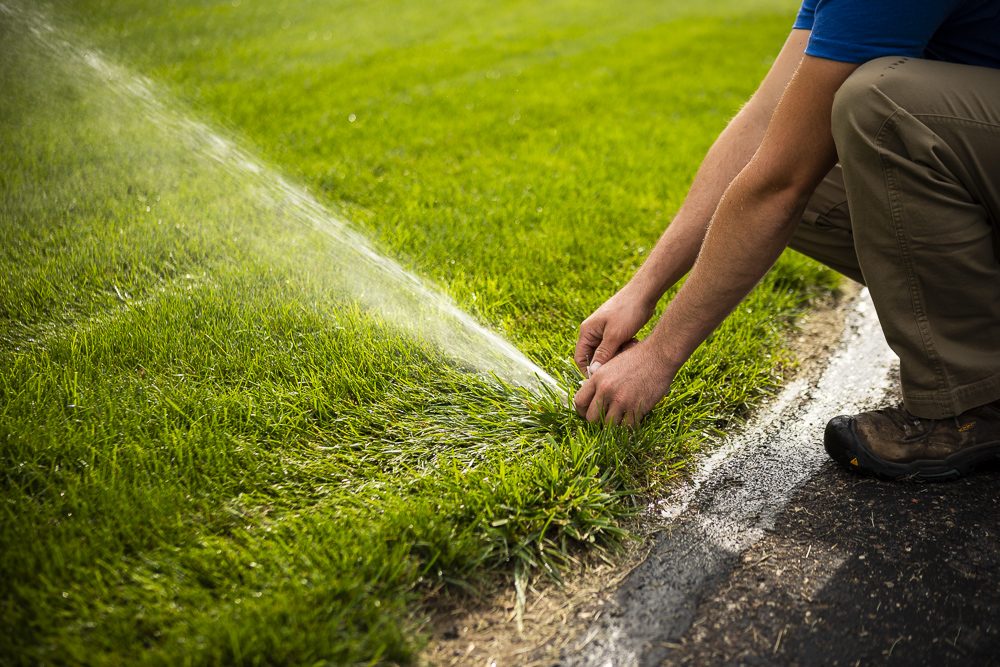
An irrigation system that worked perfectly in May is often watering unevenly by late July. Heads shift, nozzles clog, controllers stay on spring schedules, and the damage shows up as brown patches during the hottest stretch of the year. A midsummer check catches all of it while there is still season left to recover.
What changes between spring startup and midsummer
Three months of mowing, foot traffic, growth, and heat move a system out of adjustment:
- Heads drift. Mower wheels and foot traffic tilt heads, so spray lands on the driveway instead of the turf.
- Nozzles clog. Grit and mineral buildup narrow the spray pattern, leaving dry wedges between heads.
- Growth blocks spray. Perennials and shrubs that were small in May now intercept the water meant for the lawn behind them.
- Schedules fall behind. A controller still running a cool-season spring program delivers nowhere near what turf needs in a 90-degree week.
- Small leaks appear. A cracked fitting or weeping seal wastes water quietly and shows up on the bill before it shows up on the lawn.
What a midsummer checkup covers
Our technician runs every zone and watches it operate, then corrects what the walk-through finds: straightening and raising heads, clearing or replacing nozzles, adjusting arcs and radii for even coverage, trimming back growth that blocks spray, checking the backflow device, and reprogramming the controller for midsummer conditions.
Why timing matters in the Upper Midwest
Cool-season grasses in Wisconsin and Minnesota are under the most stress in mid to late July. Turf that goes into that stretch with uneven coverage thins out, and thin turf is where crabgrass and disease take hold. Fixing coverage in July protects the stand through August and into fall recovery; fixing it in September only cleans up after the damage.
What it protects
The checkup is about more than the lawn. An irrigation system is a buried investment, and the common failures (a head running dry, a valve weeping, a backflow out of spec) cost far more to repair than to catch. Even coverage also means you are not compensating for dry spots by overwatering the entire property.
Bottom line
- Heads shift, nozzles clog, and plant growth blocks spray between spring startup and midsummer.
- A midsummer check restores even coverage before late July heat turns weak spots into brown patches.
- It also catches leaks, failing valves, and backflow issues while repairs are still small.
- Controllers should be reprogrammed for midsummer conditions rather than left on a spring schedule.
Frequently asked questions
When should a midsummer irrigation check be scheduled?
Early to mid July, before the hottest and driest stretch of the season.
How long does it take?
Most residential systems take under an hour, depending on zone count and what needs adjustment.
Do I need one if the lawn looks fine?
Coverage problems usually show up as stress before they show up as damage. A check in July often finds two or three heads out of adjustment on a lawn that still looks healthy.
Is this included in a maintenance plan?
Spring startup, midsummer check, and fall blowout can be bundled so the visits are scheduled automatically each season.


