


Protect Pollinators: Finding Bee-Friendly Grub Control in Minneapolis

You can control grubs without putting bees at risk, but it depends on which product goes down and when it goes down. The pollinator problem with grub control comes from one family of active ingredients, the neonicotinoids, and from spraying lawns while clover and dandelions are in bloom. Both are avoidable.
Grub control and pollinator protection get treated as a tradeoff, and they are not. The lawns we treat in the Twin Cities and the Chippewa Valley need grub prevention, and the bees working those same lawns need to be left alone. Getting both comes down to product selection, timing, and a few application habits.
Yes, grubs have to be controlled
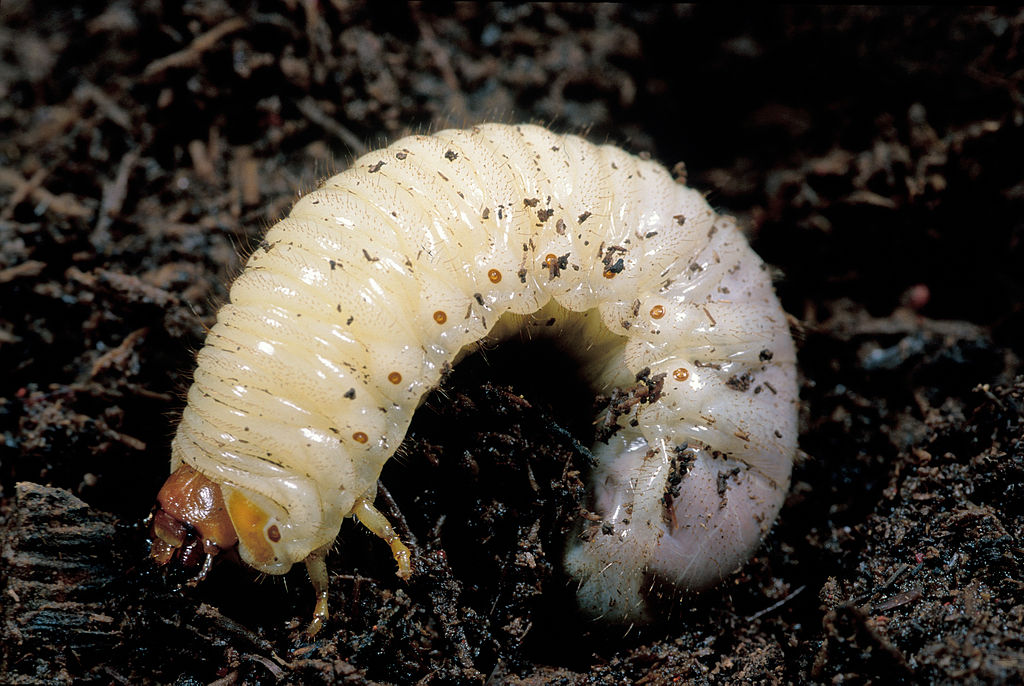
Grubs are the larvae of Japanese beetles, June beetles, and masked chafers. They hatch in the soil in late summer and feed on the roots of cool-season turf, which is what nearly every lawn here is built from: Kentucky bluegrass, perennial ryegrass, and fine fescue. A patch of turf with its roots chewed off cannot take up water, so it browns out even when the rest of the lawn is fine.
Three signs are worth knowing:
- Turf that peels back like loose carpet. Grab a brown patch and pull. If it lifts with no root resistance, look in the top inch of soil for white, C-shaped larvae.
- Animals digging up your sod. Skunks, raccoons, and crows tearing open a lawn in September are not after the grass. They are after what is under it.
- Brown areas that stay brown after rain. Drought stress recovers when it rains. Root loss does not.
Where the pollinator problem comes from
Many low-cost grub products are built on neonicotinoid active ingredients. These are systemic, meaning the plant takes them up and moves them through its tissue, including into pollen and nectar. Applied to a lawn that is full of blooming white clover and dandelions, which describes most Minneapolis lawns in late spring, that puts the material directly in front of foraging bees.
There is a second path. Insect-eating birds that feed on treated insects pick up the same material, which is why the concern extends past hives to the rest of the yard.
What pollinator-safe grub prevention looks like
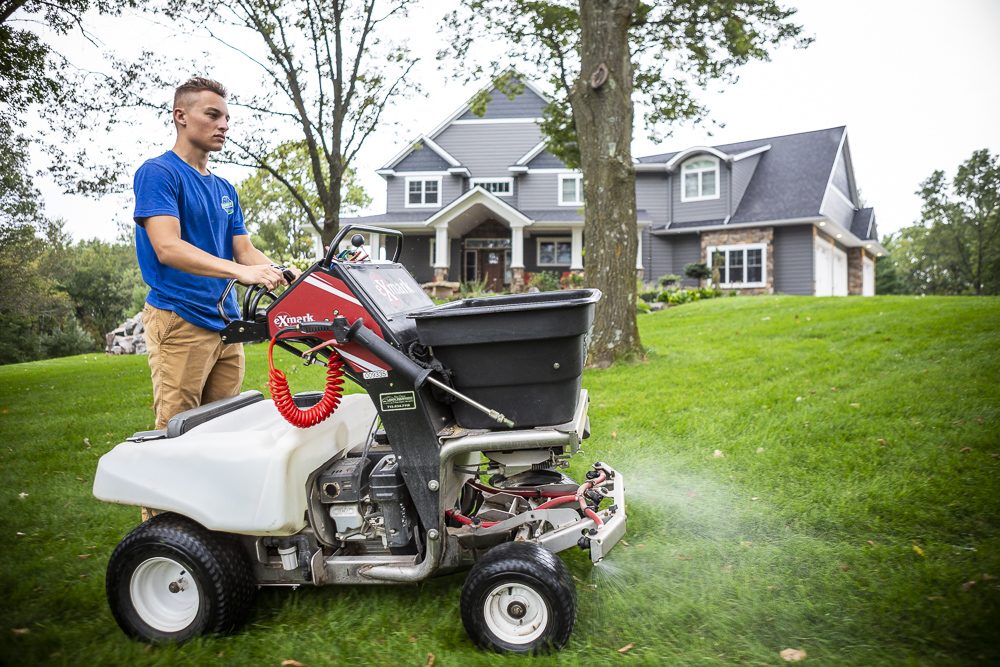
At RainMaster we apply Grub Guard during the first visit of the season. It does not contain ingredients known to harm pollinators, and it holds through the full growing season, including the second wave of feeding in fall. That last part matters more than people expect. Cheaper products are often faded by September, which is exactly when late-season grubs are doing the most root damage.
The application habits matter as much as the product
- Mow blooming weeds off first. Clipping clover and dandelion flowers before an application removes the thing that brings bees onto the turf in the first place.
- Keep material on turf. Flowering beds, borders, and anything in bloom should stay out of the treated area and out of drift range.
- Water it in. Irrigating after an application moves the active ingredient down to the root zone where grubs feed and off the surface where insects are working. This is good for control and good for pollinators at the same time.
- Sweep hard surfaces. Granules left on a driveway or sidewalk wash straight into a storm drain during the next rain.
Timing: prevention beats rescue
Adult beetles fly and mate through July, and they prefer to lay eggs in moist, actively watered turf. Eggs hatch from late July into August, and the new grubs feed close to the surface through late summer and early fall. A preventive product needs to already be in the soil when that hatch happens.
Treating after damage appears is a different, more expensive job. By then the roots are gone, and the repair is seeding or sod, not a product application. In the Upper Midwest the best seeding window is roughly late August into mid September, so damage noticed in October usually means living with thin turf until spring. Prevention in spring is the cheaper decision every time.
Build a lawn that resists grubs
Dense turf with deep roots tolerates a grub population that would wreck a thin, shallow-rooted lawn. Three things drive that:
- Mow high. Three to three and a half inches on cool-season grass. Taller blades support deeper roots and shade the soil surface.
- Water deeply and less often. About an inch per week including rainfall, in a couple of long cycles rather than a short daily run. Lawns watered lightly every day in July are both shallow rooted and the most attractive egg-laying site on the block.
- Feed in fall and aerate. Cool-season grass puts its energy into roots in fall. Core aeration plus fall fertilization is the combination that rebuilds a root system, and it pairs well with overseeding on thin areas. Our lawn care program is built around that calendar.
What to ask before you hire
- What active ingredient does your grub product use?
- Does one application cover the fall feeding wave, or is a second application needed?
- Is grub control included in the program or sold as an add-on later?
- Will blooming weeds be mowed off before the application?
- Is the application watered in, and do I need to run irrigation afterward?
Any company should be able to answer those in a sentence each. If the answers are vague, that tells you something.
Bottom line
- Grubs feed on cool-season turf roots from late summer into fall; damaged sod lifts with no root resistance.
- The pollinator risk comes from neonicotinoid active ingredients, which move into pollen and nectar of blooming lawn weeds.
- Grub Guard, applied on the first spring visit, controls grubs without ingredients known to harm pollinators and lasts through the fall wave.
- Mow blooming clover and dandelions off before any application, keep material on turf, and water it in.
- Mowing high, watering deeply, and fall aeration and feeding build turf that shrugs off grub pressure.
Frequently asked questions
Is grub control safe for bees?
It depends entirely on the product. Grub products built on neonicotinoid active ingredients are systemic and can reach pollen and nectar. Products without those ingredients, applied to turf with the blooms mowed off and then watered in, control grubs without that exposure path.
When should grub control be applied in Minneapolis?
In spring or early summer, before eggs hatch in late July and August. A preventive application needs to be in the soil ahead of the hatch. Treating after damage shows up in September means repairing turf, not preventing damage.
How do I know if I have grubs or just drought damage?
Pull on a brown patch. Drought-stressed turf stays anchored and greens up after a soaking rain. Grub-damaged turf lifts free because the roots are gone, and you will usually find white, C-shaped larvae in the top inch of soil.
Will one grub application last all season?
Some products will and many will not. Several of the lower-cost options have weakened by the time grubs feed again in fall, which is when the heaviest root damage happens. Ask specifically whether the application covers the fall wave.
University of Minnesota Extension, Yard and garden insect management guidance.
University of Wisconsin Extension, Lawn insect and turf health resources.


