


Pro Tips for Sprinkler Run Times: Irrigation Schedule for Minneapolis Lawns
There is no single correct sprinkler run time, and anyone who gives you one number without asking about your soil and your sprinkler heads is guessing. What you can set reliably is the target, the time of day, and the frequency. Here is how to work out the rest for a Minneapolis lawn.
How long should sprinklers run in Minneapolis?
Depending on the yard, a zone might need five minutes or sixty. The target is what stays constant: about one inch of water per week for an established cool-season lawn, including rainfall. How long it takes to deliver that inch depends on several things.
Soil type
Sandy soil accepts water quickly and holds little of it, so it needs longer run times and more of them. Clay accepts water slowly and holds a lot, so it needs shorter runs and longer gaps, or the water runs off instead of soaking in. On a sandy yard a zone might run 40 minutes to an hour; on heavy clay the same coverage might call for 15 minutes. Most Twin Cities yards fall somewhere between, and many have both within one property.
Head type
Rotor heads rotate as they water and apply water slowly, so a rotor zone commonly needs around 30 minutes. Fixed spray heads put out water much faster and a spray zone may only need 10 minutes to deliver the same depth. Running both at the same time setting overwaters one and underwaters the other, which is why zones are separated by head type in a well-designed system.
Everything else
Slope sheds water and needs shorter, repeated cycles. Shade needs substantially less than full sun. Beds with shrubs and perennials have different needs than turf and should be on their own zones. A zone that waters a south-facing strip against a brick wall is not comparable to one watering the back lawn.
The practical way to calibrate: set out a few straight-sided containers across a zone, run it for 15 minutes, and measure the depth collected. That tells you the zone's actual application rate and how long it needs to hit your target. It also exposes uneven coverage, which no amount of run time fixes.
What is the best time to water a lawn in Minneapolis?
Finish watering as close to sunrise as possible. If the sun comes up at 6 a.m., the last zone should be shutting down around then. Three reasons:
- Wind. It generally picks up through the day, and wind pushes spray off target and increases evaporation loss.
- Evaporation. Water applied in daytime heat evaporates before it infiltrates, so you pay for water the roots never see.
- Leaf wetness. Watering in the evening or overnight leaves the canopy wet for hours in the dark, and that is the condition most lawn fungal diseases need to infect.
One claim worth retiring: water droplets on grass blades do not act as magnifying glasses and burn the lawn. That does not happen. The real reasons to avoid midday watering are evaporation and wind, and the real reason to avoid evening watering is prolonged leaf wetness and disease.
Pro tips for a Minneapolis irrigation schedule
Use common sense about the weather
Water more in hot, dry stretches and less in cool, wet ones. Spring usually needs less than midsummer, but not always; the Twin Cities have had spring droughts that needed summer-level watering. Watch the lawn and the forecast rather than running a fixed program all season.
Update the controller as the season turns
The most common mistake we see is a controller set once at spring startup and never touched. That program was built for cool, wet May weather. By mid-July, with 90-degree days and two weeks without rain, the same program is badly under-watering, and the homeowner is left wondering why the lawn is going off color. Adjust it at least monthly, or have it adjusted on a maintenance visit.
Do not water every day
An established lawn should not be watered daily. Letting the soil dry down between cycles forces roots to grow deeper looking for moisture, and deeper roots are what carry turf through a sudden dry spell or a disease pressure period. Water daily and the roots have no reason to leave the top inch of soil, which leaves the lawn fragile.
New grass is the exception. Seedlings have no root depth at all and the surface has to stay moist, which means several light cycles a day for the first four to six weeks.
Let a smart controller carry the load
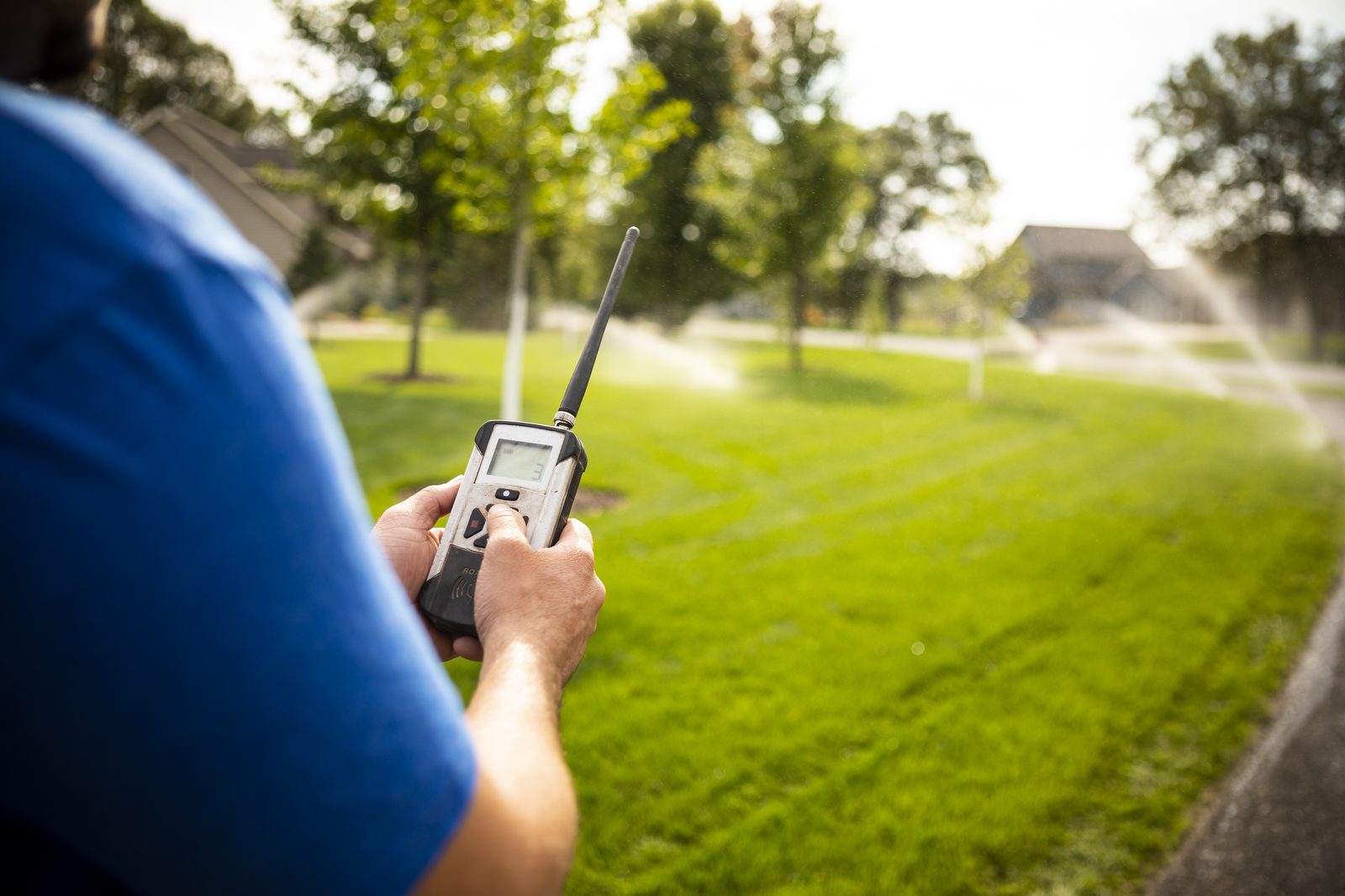
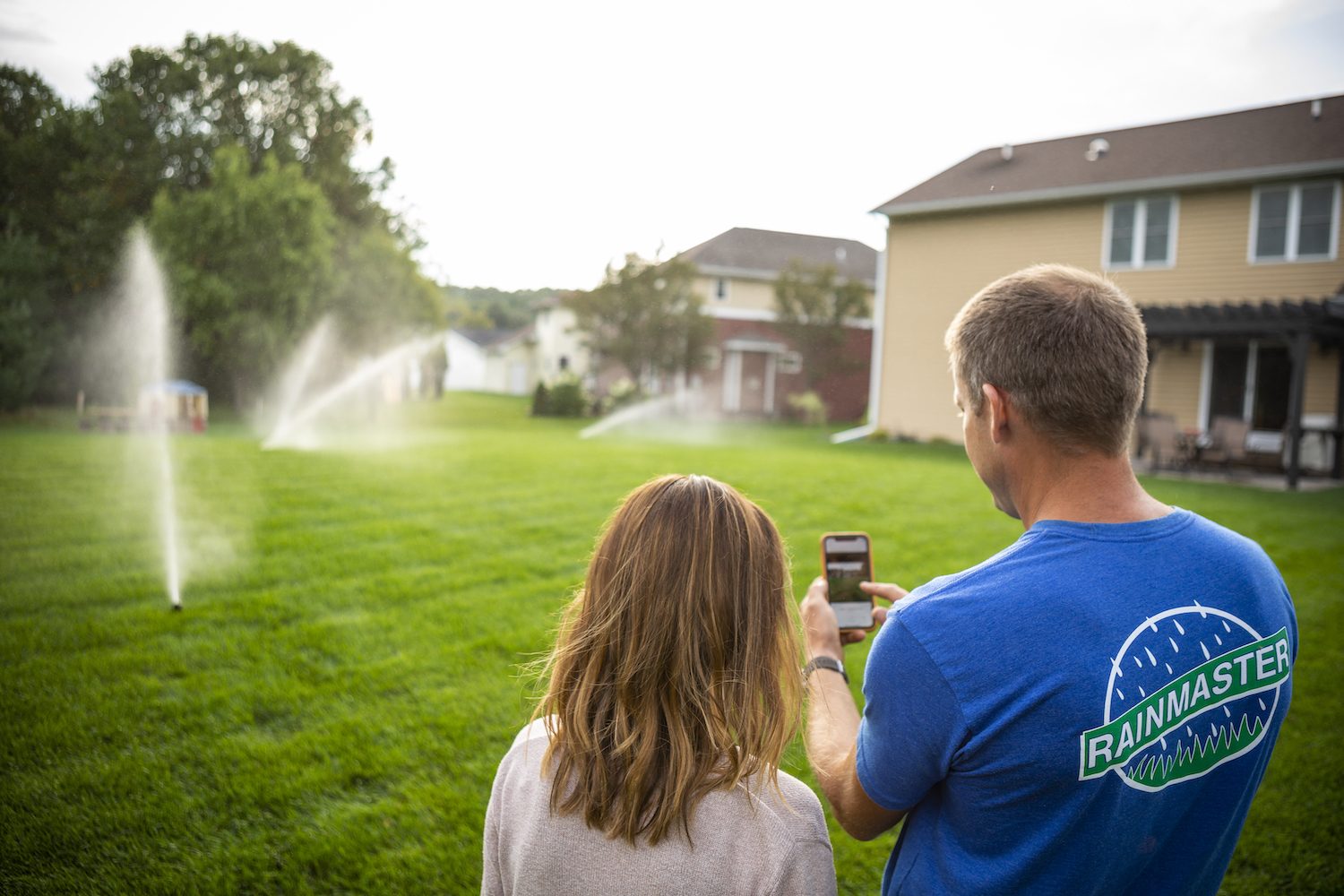
A smart controller does the adjusting that most homeowners will not. It skips a cycle when rain has fallen or is forecast, skips when wind would blow the water off target, and skips when temperatures are too low for the lawn to use the water. It also factors in soil type, slope, plant material, and evapotranspiration, which is the combined loss of water from soil and plants, so the schedule tracks actual demand rather than the calendar.
The water savings usually show up on the bill, and the lawn is generally healthier because it stops being overwatered. For most yards a smart controller is the highest-value upgrade available on an existing system.
Irrigation programs from RainMaster
RainMaster offers three levels of irrigation service designed to keep a system working correctly from spring through fall: Peak Performance, Optimum Operation, and Efficient Essentials. Every visit is planned around performance, reduced water use, and a healthier landscape rather than a quick look at the controller.
On Peak Performance, we come out monthly and adjust the settings for the season and the weather, which removes the one task homeowners most reliably forget. In business since 1999, we serve the Chippewa Valley and the Twin Cities; see locations for coverage.
Bottom line
- Target about one inch of water per week including rain, then calibrate run time per zone with a catch-can test rather than guessing.
- Sandy soil needs longer, more frequent runs; clay needs shorter runs with longer gaps. Rotor zones often need around 30 minutes, spray zones around 10.
- Finish watering at sunrise. Avoid midday for evaporation and wind, and avoid evenings because overnight leaf wetness drives disease.
- Water droplets do not magnify sunlight and burn grass. That is a myth.
- Do not water an established lawn daily. New seed is the exception and needs several light cycles a day for four to six weeks.
Frequently asked questions
How long should I run my sprinklers in Minneapolis?
Long enough to deliver about an inch per week including rainfall, which varies by zone. On sandy soil that can be 40 to 60 minutes per zone; on clay it can be 15. Rotor zones typically need around 30 minutes and spray zones around 10. Run a catch-can test to find your actual rate.
What time of day should I water my lawn?
Finish as close to sunrise as you can. Early morning avoids wind drift and evaporation and lets the canopy dry during the day, which is what keeps fungal disease pressure down.
Should I water every day?
Not an established lawn. Longer, less frequent cycles push roots deeper and make the turf more resilient. Daily watering keeps roots shallow. New seed is the exception and needs light watering several times a day until it establishes.
Is a smart irrigation controller worth it?
For most yards, yes. It skips cycles for rain, wind, and cold, and it adjusts to soil, slope, plant type, and evapotranspiration, so the lawn gets what it needs without the seasonal reprogramming most homeowners never get around to.
U.S. Environmental Protection Agency WaterSense, Watering Tips.
Irrigation Association, Irrigation industry standards and best practices.


