


Power Seeding or Aeration & Overseeding: Which is Best for Eau Claire Lawns?
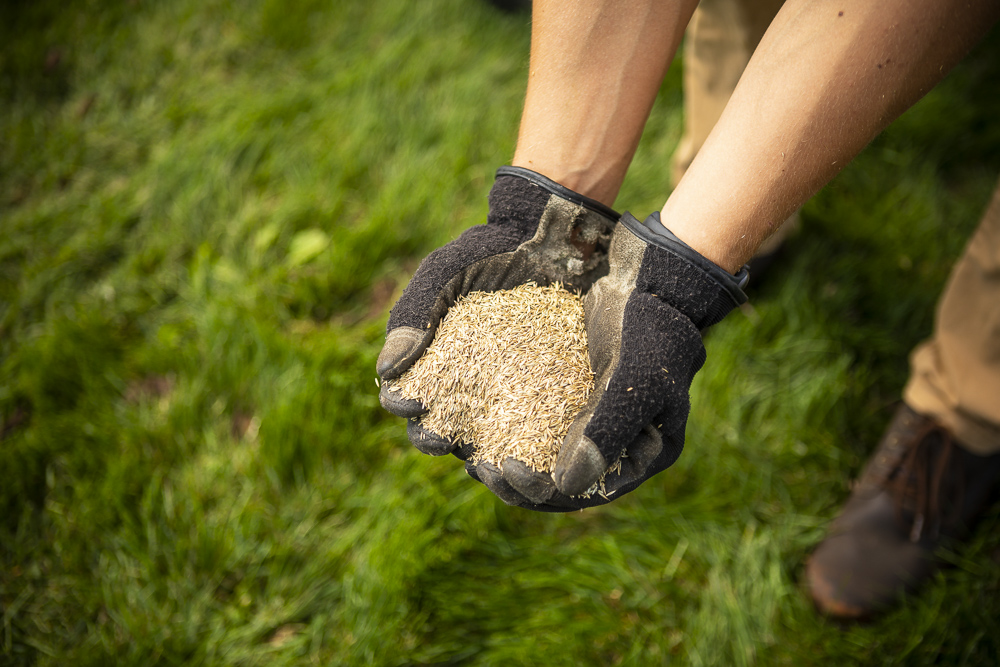
Walking the yard scattering handfuls of seed is not a seeding method. The two real options are power seeding, which slices seed into the soil, and core aeration paired with overseeding. For most established lawns in Eau Claire, the second one wins, and here is why.
What power seeding is
Power seeding, also called slit seeding or slice seeding, uses a machine with blades that cut evenly spaced slices into the soil and drop seed into each cut at the same time. It puts seed in direct contact with soil, which is the whole requirement for germination.

What core aeration and overseeding is
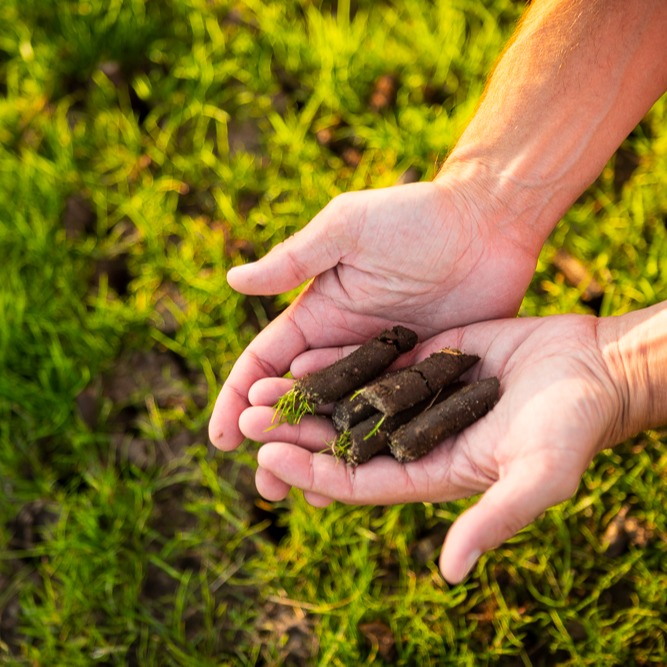
Core aeration uses a machine that pulls small plugs of soil out of the lawn, which relieves compaction and opens channels for water, oxygen, and nutrients to reach the root zone. Once the lawn is full of holes, overseeding drops new seed into those openings, where it gets the same close soil contact a slit seeder provides.
Which one is better for Eau Claire lawns
Jake Jacobson, lawn care operations manager at RainMaster Lawn Systems, says core aeration and seeding is the right answer for most lawns here, and it is our preferred process.
"It's the simplest way to accomplish the results we're looking for," Jacobson says. "It's quick and effective." The combination reduces soil compaction, lets roots expand, introduces professional-grade seed, and shows results within about a month, "creating a more healthy, lush, and uniform lawn."
"With our grass seed mix, the lawn will see results of new grass growth within seven to 28 days," he says.
Damage to the existing stand is the other consideration. "Aeration and seeding also does the least amount of damage to a lawn," Jacobson says. "The only residue it leaves behind is the aeration cores." Those cores stay where they are. They break down on their own and return organic matter and nutrients to the lawn, so there is no cleanup.
"A power seeding is a more aggressive form of introducing new seed to a lawn," he says. "This form of seeding will tear away at the existing grass much more and leave behind much more residue."
When power seeding makes sense
Jacobson recommends power seeding on turf that is maintained short, like a golf course, and on newly established areas where there is little or no existing turf to damage. You can slice seed into an existing lawn, but expect a mess and some injury to the stand.
Power seeding is also less effective in heavily compacted soil, because it does not relieve compaction the way core aeration does. The blade cuts a slit, the seed drops in, and then the seedling runs into the same tight soil that thinned the lawn in the first place.
Can you just throw seed on top of dead grass
You can, but you will waste most of the seed. Seed needs firm contact with soil to take up water and root. Seed sitting on thatch or dead grass dries out between waterings and never establishes.
If you are seeding a small area by hand, prepare it: rake out dead and matted grass down to bare soil, loosen the top layer, spread seed, scratch it in, and tamp it down so you can feel the contact. Add a starter fertilizer, then keep it consistently moist. For anything larger than a few patches, aeration gives the seed a far better chance, because it loosens the soil, gets air down to the root zone, and creates thousands of ready-made openings for seed to settle into.
Seed selection for this area
No seeding method overcomes cheap seed. Bargain bags from the home improvement store frequently contain weed seed and undesirable grasses, and that is what you are planting into your lawn.
Each cool-season species has a different strength. Fine fescues tolerate shade. Kentucky bluegrass performs in full sun and spreads to fill in on its own. Perennial ryegrass handles heavy foot traffic and germinates fast. A blend gives you some of each, and a mixed stand is also more resistant to disease, because a pathogen that favors one species does not take out the whole lawn.
Matching the blend to the site is the part that gets skipped. A shady yard gets a heavier fescue proportion and little or no bluegrass. A sunny yard gets more bluegrass. Ryegrass is not our first choice for general overseeding, but it earns its place where you need coverage fast, like an erosion-prone slope or a yard with dogs running the same path. Ryegrass can germinate in about a week, while bluegrass commonly takes two to four.
Aeration does more than plant seed
Slice seeding puts seed in the ground. Core aeration does that and improves the soil at the same time, which is the longer-term win:
- It loosens compacted and clay soil, so roots, water, oxygen, and nutrients can move.
- It makes fertilizer work harder, because the product reaches the root zone instead of sitting on a tight surface.
- It helps thatch break down, by mixing soil and its microbes into the thatch layer.
- It reduces weeds over time, since a dense, deeply rooted lawn crowds weeds out.
When to aerate and overseed here
Spring looks like seeding season, but in Eau Claire fall is better, for several concrete reasons. Air temperatures have cooled while soil is still warm, which is ideal for cool-season germination. Seeding in fall means you are not fighting spring crabgrass pre-emergent, which blocks grass seed as effectively as it blocks weed seed. Fall rain is more reliable, so you water less. Fewer weed seeds are moving through the air to settle into fresh aeration holes. And there is less mowing and foot traffic over tender seedlings. Late August through mid September is the core window.
How long until it works
New grass starts sprouting within a few weeks. Thicker turf takes longer. Expect several months to a year before the stand is genuinely denser, and that is normal, not a failed seeding. What you get at the end is turf that resists weeds and disease better and does not dry out as fast. Pairing the seeding with an ongoing lawn care program is what holds the gain.
Bottom line
- For established Eau Claire lawns, core aeration plus overseeding beats power seeding on results and on damage to existing turf.
- Power seeding fits short-mown turf and new areas with little existing grass, and performs poorly in compacted soil.
- Leave the aeration cores in place. They break down and return nutrients.
- Match the seed blend to sun and shade, and skip bargain seed, which often carries weed seed.
- Late August through mid September is the best seeding window here, and seeding conflicts with spring pre-emergent.
Frequently asked questions
Do I need to rake up the soil plugs after aeration?
No. The cores break down within a few weeks and return soil, organic matter, and microbes to the surface, which helps thatch decompose. Raking them off removes a benefit you already paid for.
How fast will I see new grass?
With a quality mix, new growth typically appears within seven to 28 days. Noticeably thicker turf takes several months to a year as the new plants mature and fill in.
Can I aerate and overseed in spring instead of fall?
You can, but it is a compromise. Spring seeding competes with crabgrass germination, cannot be paired with pre-emergent, and gives seedlings only a short run before summer heat. Fall gives warm soil, cool air, and reliable moisture.
What about my sprinkler heads and invisible fence?
Flag them before anyone aerates. On our higher-level aeration service we flag irrigation heads ourselves, and if we have access to the controller we adjust the watering schedule for new seed.
University of Wisconsin Division of Extension, Lawn aeration and topdressing.
University of Minnesota Extension, Seeding and sodding home lawns.


