


Outdoor Services Budgeting: Planning Costs for Lawn Care, Irrigation & Pest Control

A healthy yard is a handful of services on a calendar, each with its own cost and its own narrow window. Here are real numbers for lawn care, irrigation, and pest control in the Twin Cities and the Chippewa Valley, and the timing that decides whether the money accomplishes anything.
Timing is most of the job
Before the numbers, the constraint. Nearly every outdoor service has a window, and outside it the same work produces nothing.
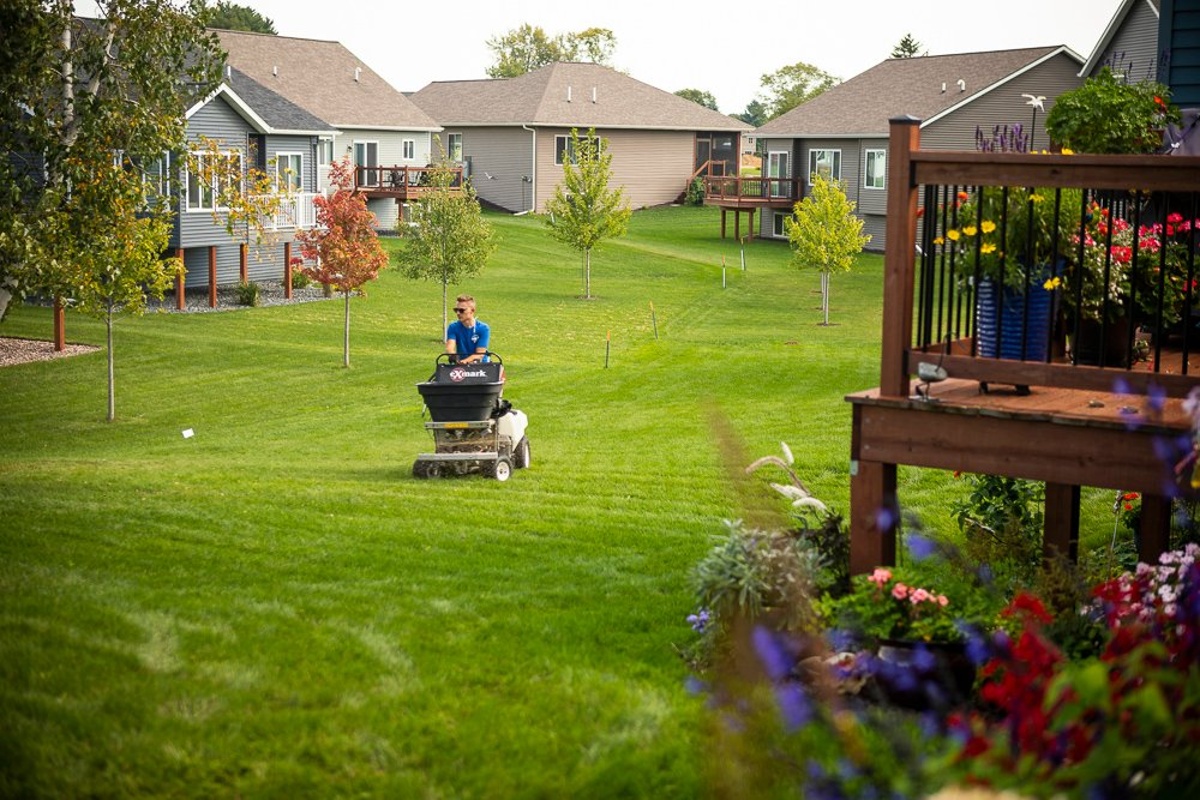
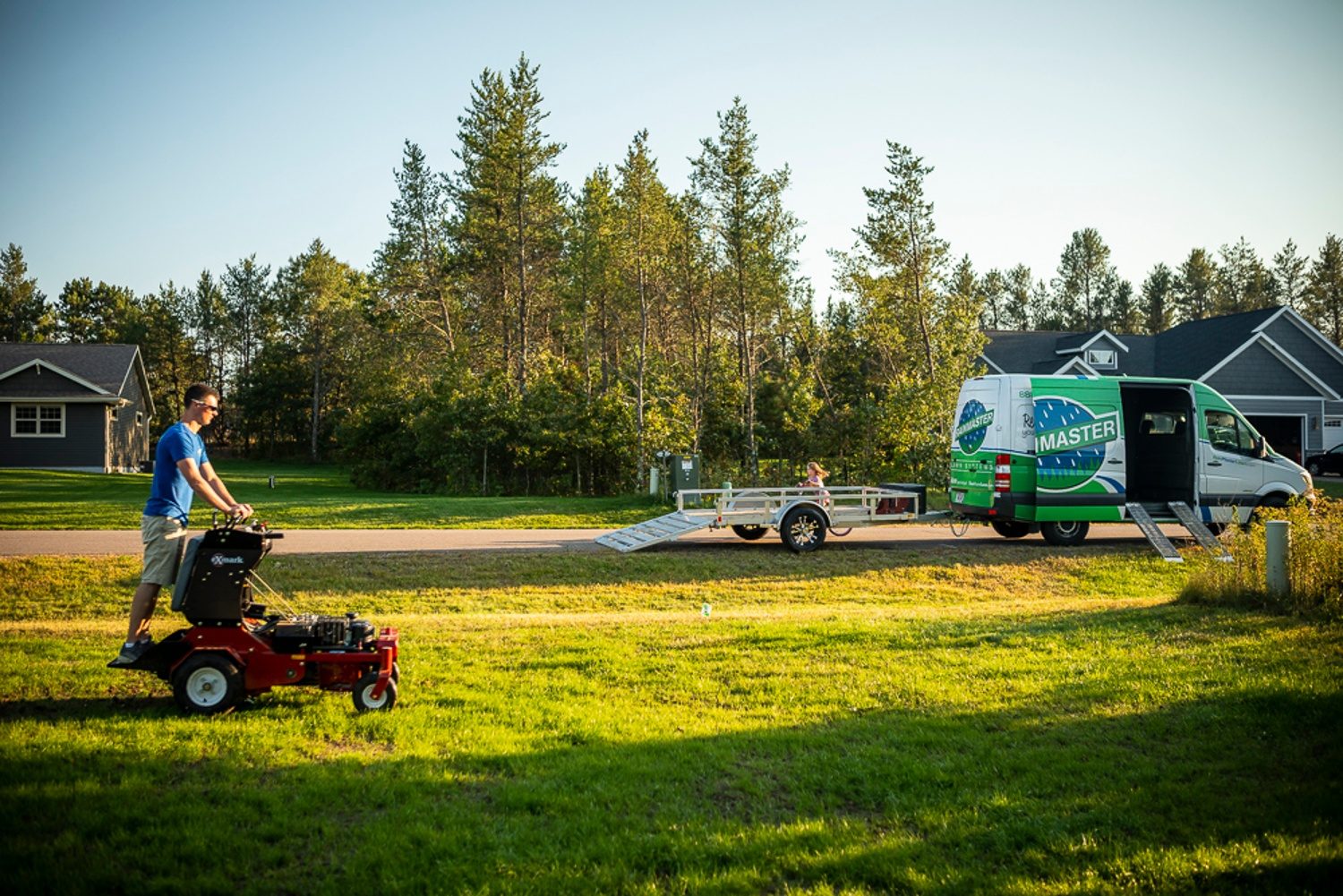
- Crabgrass pre-emergent has to go down before the seed germinates, which is driven by soil temperature and usually falls in April to early May here. Applied in June, it does nothing, because the crabgrass is already up.
- Preventive grub control has to be in the root zone and still active when eggs hatch in summer. It does not kill eggs; it kills the newly hatched larvae before they can damage roots. Applied in late August, after the larvae are large and feeding, it will not save the turf.
- The first fertilizer and weed control round should be complete by Memorial Day, with three more applications through the summer and a final feeding in fall while roots are still active.
- Irrigation winterization has to happen before the first hard freeze. There is no making that one up later.
- Aeration and overseeding work best from late summer into early fall, when soil is warm, nights are cooling, and weed competition is dropping.
That is a calendar with five or six hard dates driven by soil temperature and insect life cycles rather than your schedule. It is the main practical argument for hiring the work out, since the service arrives in the right week whether or not that week was convenient.
Budgeting for lawn care
Start with a comprehensive program rather than individual services. A program covers fertility, weed control, grub prevention, and soil health as one system, which is how they actually work.
Programs in Minneapolis and Eau Claire vary with lawn size, services included, and how much repair the lawn needs. Plan on roughly $400 to $1,000 a year for a 5,000 square foot lawn.
We publish three tiers. Healthy Habitat is the basic plan with what a better lawn needs. Terrific Turf is the mid level option, built to grow a thick green lawn and handle most problems. Luscious Lawn is the proactive high end program for the fastest results on a lawn that needs significant work.
The basic plan will improve most lawns. The upper tiers do more because they add soil work: aeration, pH correction, grub prevention, and seed. Those address the limiting factors, which on a lot of properties here are compaction and pH rather than a shortage of fertilizer.
Budgeting for irrigation maintenance
A maintenance plan covers the services a system needs each year: spring startup, a mid season tune-up, and fall winterization. Expect $225 to $450 a year in Eau Claire and Minneapolis depending on the level of service.
Spring startup happens between mid April and the end of May depending on the weather. Most systems need adjustments coming out of winter. A technician inspects components, pressurizes and tests every zone, reprograms the controller for current conditions, and corrects what moved over the winter.
A summer tune-up matters more than people expect. Spring and fall visits alone leave the system unchecked through the stretch when it runs hardest and when failures are most expensive, since a dry zone in July browns out in days. A mid season visit means heads checked, zones tested, and the controller updated for hot weather demand.
Winterization clears water from pipes, valves, heads, and the backflow device before the first deep freeze. Water left in the system freezes, expands, and cracks components.
What else you get is early detection. A technician on the property regularly finds the small items that turn into expensive ones, which is the whole economic argument for maintenance over emergency repair.
Irrigation repairs are part of the budget
Components wear out. Some years the controller just needs reprogramming. Other years a head needs replacing, a valve fails, or a zone will not shut off.
Plan on a few hundred dollars a year for repairs on an established system. For reference, sprinkler head replacement runs about $80 to $90 per head, and valve replacement runs around $500. Landscape changes add work too, since a new bed or a relocated walk means heads moved, added, or re-nozzled.
There is savings on the other side of the ledger. Routine visits regularly turn up waste the homeowner never saw, from heads watering pavement to a controller still running a spring schedule in August. Those corrections often offset the cost of the visit on the water bill alone.
Do not forget pest control
A yard you cannot sit in is a poor return on a lawn program. Mosquito control belongs in the budget alongside the rest.
Our mosquito control service starts at $579 for a season based on yard size, with six treatments spaced roughly every three weeks from spring through fall. Technicians treat the shaded, damp harborage where mosquitoes rest and breed rather than broadcasting across open lawn, which is also what makes the barrier effective between visits.
The same treatment helps with ticks, and it is worth being accurate about why. Ticks do not jump, fly, or drop out of trees. They climb low vegetation and wait with their front legs extended for a host to brush past, a behavior called questing. That means tick pressure concentrates in tall grass, leaf litter, and the brushy edge where the yard meets woods, which is exactly where a barrier treatment goes. Keeping the lawn mowed, clearing leaf litter, and maintaining a buffer along wooded edges all reduce tick habitat without any product at all.
Putting a year together
For a typical 5,000 square foot lawn with a sprinkler system, a realistic annual range is roughly $400 to $1,000 for the lawn program, $225 to $450 for irrigation maintenance, a few hundred set aside for repairs, and from $579 for seasonal mosquito control if you want the yard usable in July. The precise number depends on your property, and a quote based on measured square footage beats any range.
Bottom line
- Budget roughly $400 to $1,000 a year for a lawn program on 5,000 square feet, and $225 to $450 a year for irrigation maintenance.
- Set aside a few hundred dollars annually for irrigation repairs. Heads run about $80 to $90 each and valve replacement around $500.
- Mosquito control starts at $579 for a season with six treatments spaced about every three weeks, spring through fall.
- Every service has a window. Pre-emergent before germination, grub prevention before egg hatch, winterization before the first hard freeze.
- Preventive grub control does not kill eggs. It must still be active in the root zone when larvae hatch.
Frequently asked questions
What should I budget for lawn care and irrigation in a year?
For a 5,000 square foot lawn with a sprinkler system, plan on $400 to $1,000 for the lawn program, $225 to $450 for irrigation maintenance, and a few hundred dollars for repairs as components wear out.
How much does it cost to replace a sprinkler head or valve?
Sprinkler head replacement runs about $80 to $90 per head. Valve replacement runs around $500. Both are normal maintenance items on an aging system rather than emergencies.
Is a summer irrigation tune-up really necessary?
It is the visit that protects the most turf. Spring and fall visits leave the system unmonitored through the period it runs hardest, and a failure in July browns out an area within days.
Does mosquito spraying help with ticks?
Yes, because the treatment targets the same low, shaded vegetation ticks use. Ticks do not drop from trees; they climb low plants and wait for a host to brush past. Mowing, clearing leaf litter, and keeping a buffer at wooded edges reduce tick habitat too.
University of Minnesota Extension, Ticks and Their Control.
University of Wisconsin Division of Extension, Lawn Fertilization.


