


Does Organic Lawn Care Work? A Look at Types of Lawn Care Programs
Fewer inputs reaching groundwater and a thick green weed-free lawn are both reasonable things to want, and they pull against each other. Knowing where organic programs deliver and where they fall short is the only way to pick one without being disappointed.
What organic lawn care actually means
A genuinely organic program uses no synthetic fertilizers and no synthetic weed or insect control products. The nutrition comes from materials like compost, manure, and processed biosolids, and the weed strategy is almost entirely cultural: build turf dense enough that weeds cannot establish.
One of the best known products in this category comes from Wisconsin. Milorganite is manufactured by the Milwaukee Metropolitan Sewerage District from heat-dried microbes that have digested organic matter in Milwaukee's wastewater. The cleaned water goes back to Lake Michigan and the microbes are kiln-dried into fertilizer pellets.
Organic versus organic-based: the distinction that matters
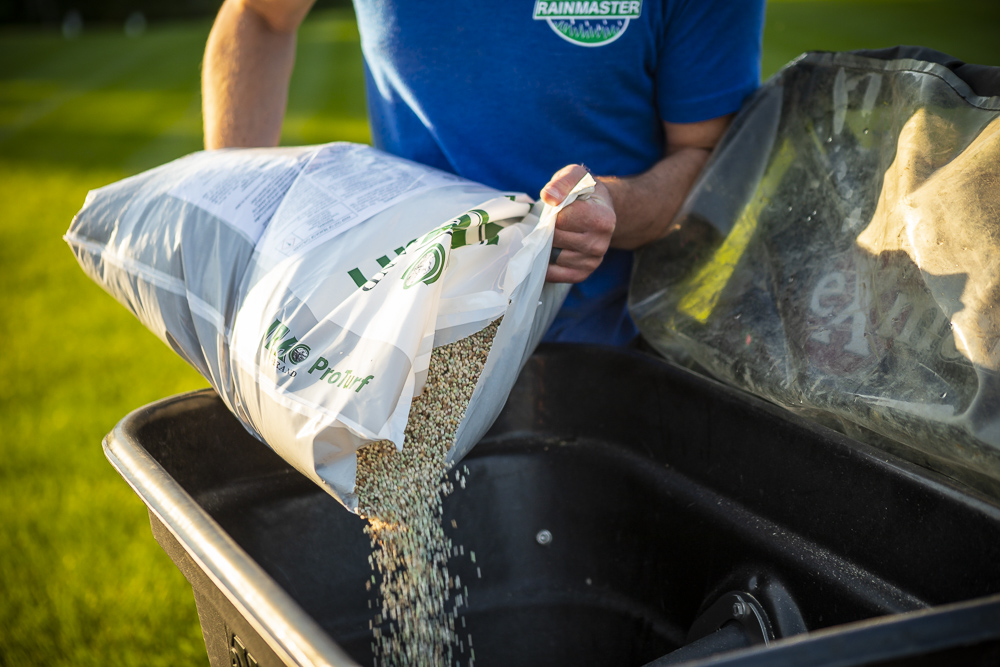
RainMaster programs use an organic-based fertilizer. That starts with organic matter, which is good for soil structure and microbial activity, and adds nutrients the lawn needs in known amounts: nitrogen, potassium, and iron. Adding those lets the formula be adjusted for the lawn's actual need and lets the release rate be controlled.
Organic-based is not organic. Some companies lean on the word organic in marketing and are slow to explain that the program still includes synthetic control products. A quick test: if the company sprays for weeds or applies an insect control material, you are almost certainly not on an organic program. Ask directly, and ask for product labels.
Results, and the patience they require
Organic fertilizers have to be broken down by soil microbes before the nitrogen is available to the plant. That is slower by design, and it is slower still in spring and fall here, when soil temperatures are low and microbial activity is limited. Synthetic nitrogen is plant-available much sooner, so you see color response in days rather than weeks.
Over several years, a well-run organic program can build good soil and a decent stand of grass. Over one season, it will usually look thinner and less uniform than a conventional program on the same lawn. If your expectation is a transformation in the first summer, organic is not the right choice.
Weed control is where organic runs out of road
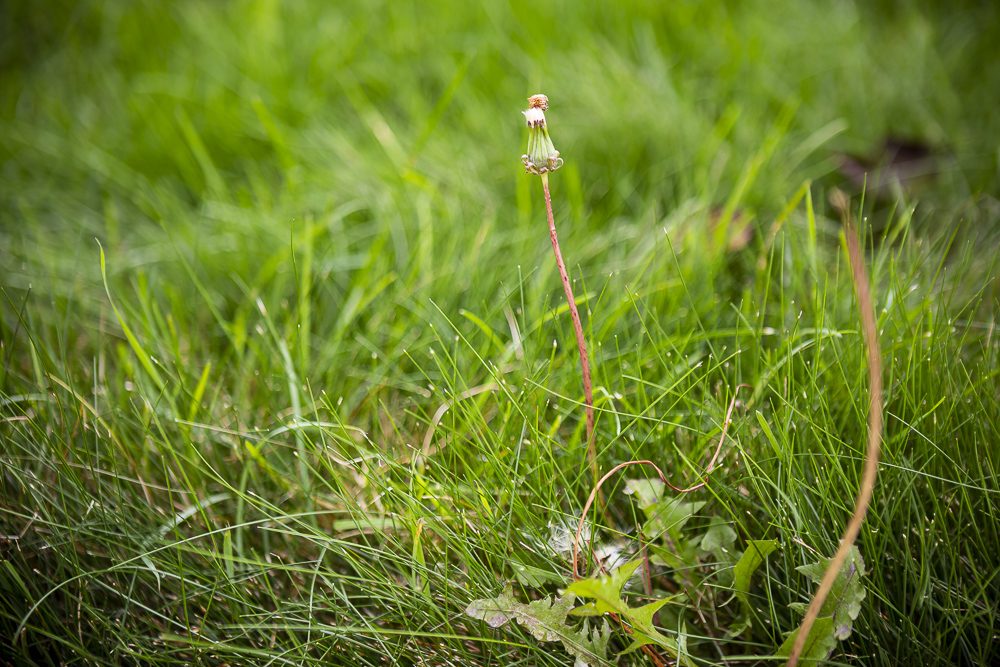
There are organic-labeled weed products. Corn gluten meal has a mild pre-emergent effect on some small-seeded weeds, and iron-based and acetic acid products burn off top growth on contact. What none of them do is kill established perennial weeds, because the roots survive and the plant regrows. Creeping Charlie, Canada thistle, and quackgrass will not be removed by any organic product currently on the market.
The cultural tools do work and are worth doing on any program: mow high, water deeply and less often, aerate, and overseed once or twice a year. A dense stand of grass is the single best weed control there is. It is just not enough on its own if the lawn already has a mature weed population.
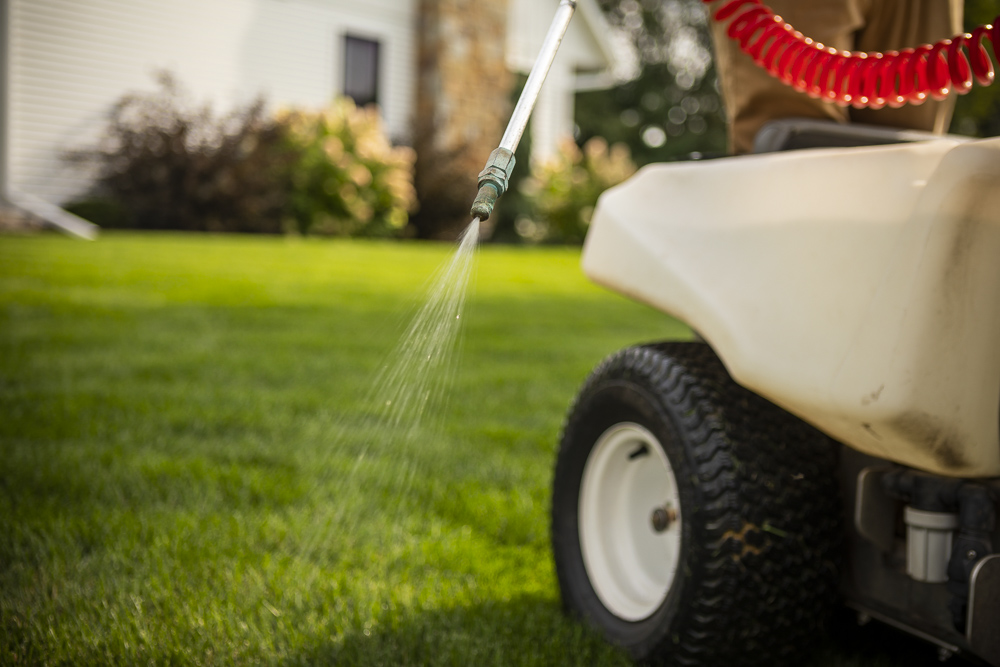
For comparison, customers on a professional program typically start to see weeds curl and die seven to fourteen days after treatment. Every product works at a different rate, and stubborn weeds can take a month or multiple treatments spread over the season.
Why a true organic program costs more
Organic fertilizers carry a much lower nutrient analysis than synthetics, so you need several times the material to deliver the same amount of nitrogen. That means hundreds of pounds of product for a single treatment on an average lawn instead of tens of pounds.
All of that material has to be transported, stored, and spread. A truck holds a fixed volume, so crews reload several times a day, which means more trips, more fuel, and more labor hours. If a company quotes an organic program at close to conventional pricing, ask how much material they are actually applying per thousand square feet. The economics do not work otherwise.
The extra truck trips are also worth weighing if the reason you want organic is environmental. There are real tradeoffs in both directions, and an honest conversation beats a slogan.
What a strong conventional program includes
If you decide an organic program is not the fit, here is what to expect from a good one:
- Granular fertilizer on a season-long schedule. First round of fertilizer and weed control down by Memorial Day, applications continuing through summer, and a fall feeding to build roots going into winter.
- Weed control at multiple points in the year. Different weeds are active in different months, which is why the comprehensive lawn care programs include five visits rather than one or two.
- Two crabgrass pre-emergent applications, early spring and late spring, because one application stops being effective after roughly six weeks.
- Preventive grub control. Bee-Safe Grub Guard goes down at the first spring visit so the material is in the root zone before eggs hatch and larvae begin feeding. The product does not kill eggs; the timing is what makes it work.
- Soil pH testing, because nutrients are only available to grass within a workable pH range, and fertilizer on badly out-of-range soil is wasted money.
- Trained technicians who diagnose problems early, which is most of the value of a program and the part no bag from a store can provide.
How to decide
Choose organic if you accept visible weeds, you are measuring progress in years, and you are willing to pay more for materials. Choose a conventional or organic-based program if you want a dense, uniform lawn within a season or two. Either way, the cultural practices carry most of the load: mowing height, watering depth, aeration, and overseeding.
Bottom line
- A genuinely organic program uses no synthetic fertilizer or control products and relies on compost-type nutrition plus cultural practices.
- Organic-based is different: it starts with organic matter and adds nutrients, and it is usually paired with synthetic weed and insect control.
- Organic nitrogen has to be broken down by soil microbes first, so color and density come in years rather than weeks.
- Organic-labeled weed products burn top growth or suppress some seedlings; none remove established perennial weeds like Creeping Charlie or quackgrass.
- A real organic program costs significantly more because it takes several times the material, plus the transport and labor to apply it.
Frequently asked questions
Is there an organic weed killer that works?
There are organic-labeled products, mostly corn gluten meal, iron-based materials, and acetic acid formulations. They can suppress some seedlings or burn off top growth, but they do not kill the roots of established perennial weeds, so the plants regrow.
How long before an organic program makes my lawn look good?
Plan on multiple seasons. Nutrient release depends on soil microbial activity, which is slow in the cool months at both ends of our growing season, and weed density falls only as the turf thickens.
Is organic-based fertilizer the same as organic?
No. Organic-based means organic matter plus added nutrients, and it is normally used alongside conventional weed and insect control. Ask whether any synthetic products are applied, and ask to see the labels.
How fast do weeds die on a conventional program?
Most begin to curl and brown seven to fourteen days after treatment. Tougher perennials can take a month, and some need repeat applications across the season.
University of Wisconsin Division of Extension, Lawn Fertilization.
University of Minnesota Extension, Fertilizing Lawns.


