


Necrotic Ring Spot vs. Fairy Ring: How to Identify & Treat 2 Lawn Diseases
A circular patch in the lawn narrows things down fast, because only a handful of problems make rings. Two of the most common here are necrotic ring spot and fairy ring, and while both look like rings from the porch, they behave differently, start differently, and respond to different things.
First, a look at necrotic ring spot
Necrotic ring spot is a root and crown disease, which is why it is so stubborn. Infection happens during cool, wet weather, and then the symptoms appear later when the plant is pushed by heat and drought and its damaged roots cannot keep up. That is the pattern to watch for: a cool wet spring followed by a hot dry July, and suddenly rings appear in a lawn that looked fine in May.
Compaction makes it worse. A dense, compacted soil that needs aeration limits rooting depth, and shallow-rooted turf has nothing in reserve when the heat arrives. If the lawn in question has never been aerated, that is a factor.
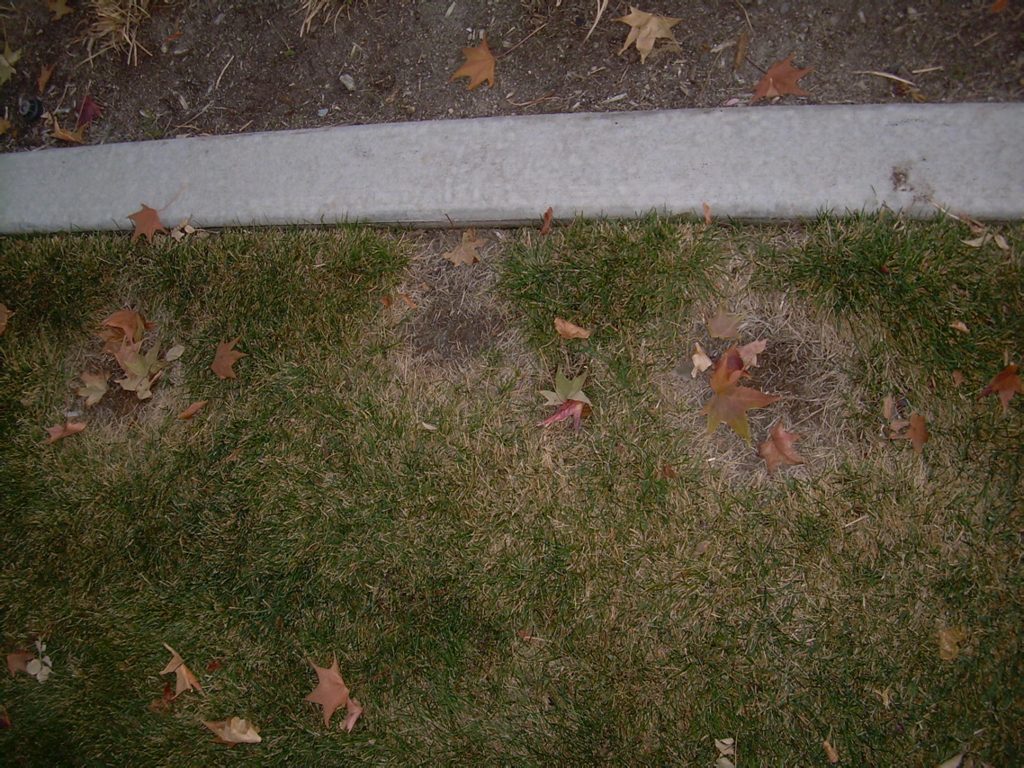
What you see is circular straw-colored patches, usually less than 12 inches across, sometimes with a ring of apparently healthy or even vigorous grass in the middle. It is most common in lawns that were sodded, especially newer sod, but it shows up in seeded lawns too.
Next up: what the heck is fairy ring
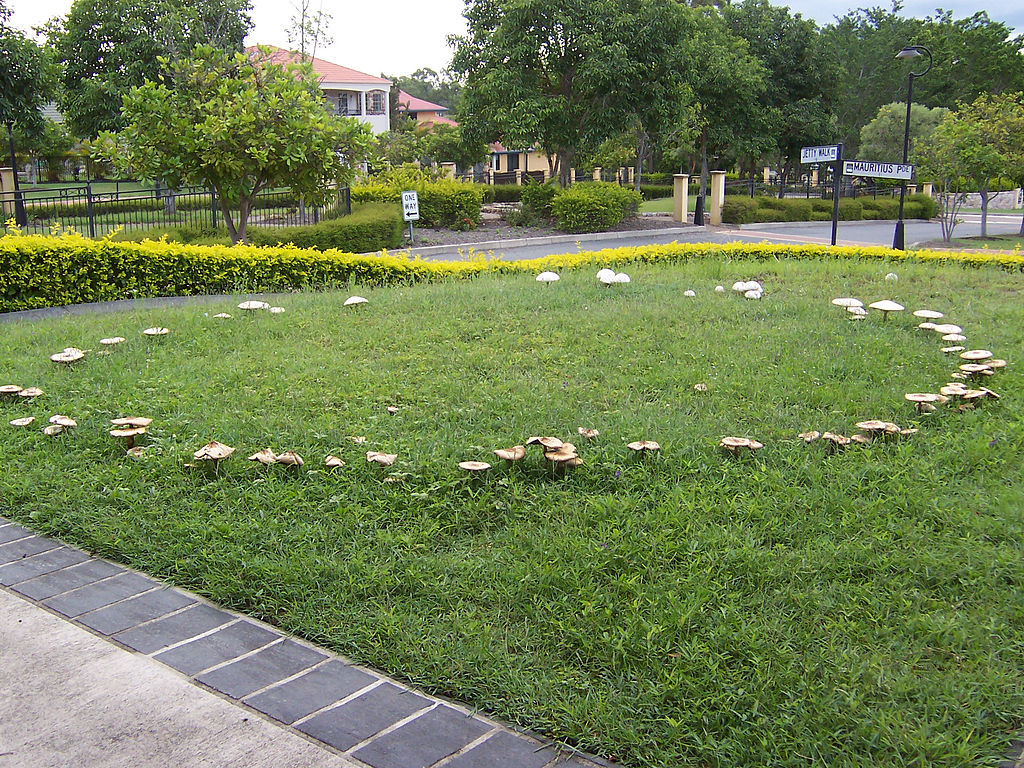
Medieval lore said these appeared where a band of fairies danced. The actual cause is less charming: soil fungi feeding on buried organic matter, often an old tree stump, construction debris, or buried roots. The fungus grows outward from a point in a roughly circular front, which is what produces the shape.
Telling the two apart is mostly about scale and character:
- Size. Necrotic ring spot patches are usually under 12 inches. Fairy rings are much larger, commonly 3 feet across and sometimes as wide as 20 feet.
- Color and texture. A fairy ring has a distinctly different color or texture from the grass inside or outside it. Look for a band of grass that is denser, greener, and growing faster than its surroundings, or a band that is browner and drier.
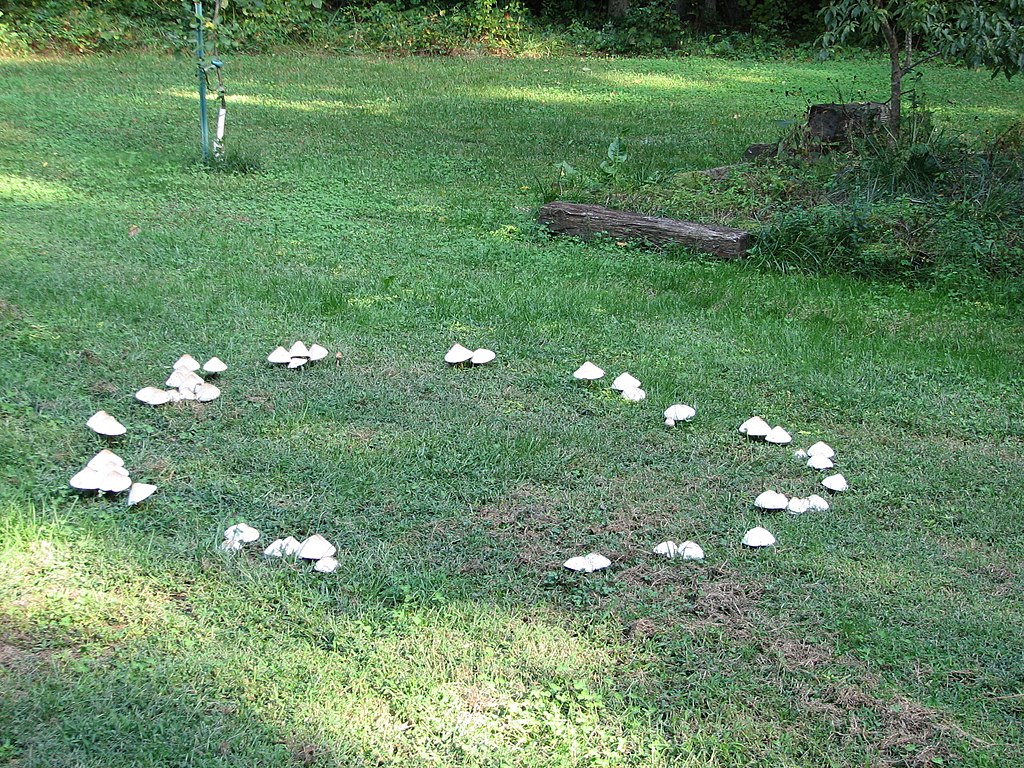
- Mushrooms. During wet weather, rings of mushrooms can appear at the edge of the discolored band. Necrotic ring spot does not do this.
- Behavior over time. Fairy rings expand outward year after year from the same center. Necrotic ring spot patches tend to recur in the same general area and can merge into irregular shapes.
The greener band on a fairy ring is not a mystery either. As the fungus breaks down organic matter it releases nitrogen, and the grass right behind the front gets fed. The browner, drier version happens when the fungal mass makes the soil hard for water to penetrate.
How to treat necrotic ring spot and fairy ring
Neither one is a cheap fungicide fix. An application runs several hundred dollars and typically takes more than one to get control, and with necrotic ring spot the product has to reach the root zone to do anything at all, which is why timing and watering it in matter so much.
The good news is that lawn fungus often clears up on its own with patience, and grass usually fills back in once the fungus is no longer active. For fairy ring specifically, the most effective homeowner response is not chemical at all. Masking the ring with nitrogen so the surrounding lawn matches the greener band works surprisingly well. Core aerating through a dry, hard ring and watering it deeply with a wetting agent helps water get back into that soil. Mushrooms can be mowed or knocked over, and they are harmless to the turf.
Preventing necrotic ring spot and fairy ring
Prevention is the same short list that prevents most turf disease in Wisconsin and Minnesota lawns: proper mowing, watering, and fertilizing. A healthy lawn handles drought, insects, and summer disease far better than a stressed one.
- Fertilize in spring and fall so the lawn goes into summer with reserves and comes out of it able to recover.
- Aerate annually. Reducing compaction and improving drainage does more against necrotic ring spot than anything you can spray, because it addresses the rooting depth problem directly.
- Do not water too often. Deep and infrequent, not short and daily. A constantly wet lawn is an invitation.
- Keep the grass at 3 to 4 inches and avoid mowing during wet weather, which spreads fungal material around the yard.
- Water early in the day so the canopy dries fully before evening.
When it keeps coming back
If you get the same ring problem every year, a preventive disease control program is worth considering. More often we treat these when they appear, for homeowners who do not want to wait them out.
Set expectations accordingly. It can take a month or longer to see results, and it always takes multiple treatments. Both of these diseases are driven by environmental conditions, so the treatment buys time while the conditions get fixed. Aeration, better drainage, a real nutrition plan, and an irrigation schedule that waters deeply in the early morning are what end the cycle. A proactive lawn care program is how those get done on the right schedule instead of in reaction to the next outbreak.
Bottom line
- Necrotic ring spot is a root and crown disease: infection in cool wet weather, symptoms when heat and drought arrive. Patches are usually under 12 inches.
- Fairy ring comes from soil fungi feeding on buried organic matter, runs 3 to 20 feet across, and can produce mushroom rings in wet weather.
- Fairy ring's greener band is nitrogen released by decomposition; masking it with fertilizer is often the best response.
- Fungicide costs several hundred dollars per application, takes multiple applications, and can take a month or more to show results.
- Annual core aeration, spring and fall fertilization, mowing at 3 to 4 inches, and deep early morning watering prevent most recurrence.
Frequently asked questions
How can I tell necrotic ring spot from fairy ring quickly?
Measure it. Necrotic ring spot patches are usually under 12 inches across and straw colored. Fairy rings run 3 feet to 20 feet and show a band of grass with clearly different color or texture, sometimes with mushrooms at the edge.
Are the mushrooms in a fairy ring dangerous?
They do not harm the lawn. Some species are toxic if eaten, so knock them over or mow them off if you have children or pets in the yard. Removing the mushrooms does not remove the ring, which lives in the soil.
Why does necrotic ring spot keep showing up in the same place?
Because the fungus persists in the root zone and the conditions that favor it, compaction and shallow rooting, persist too. Annual core aeration and consistent nutrition are what change that, not a single fungicide application.
Should I dig out a fairy ring?
Rarely worth it. Fully removing the source means excavating the soil and the buried organic matter below the ring, often a foot or more deep, and then reseeding. Masking the ring with nitrogen and improving water penetration gets most of the result for a fraction of the effort.
University of Wisconsin Division of Extension, Fairy Ring.
University of Wisconsin Division of Extension, Lawn Aeration.


