


10 Most Frequently Asked Questions About Irrigation & Sprinkler Systems in Minneapolis & Eau Claire, WI
These are the ten questions we field most often about irrigation and sprinkler systems in the Twin Cities and the Chippewa Valley, from why winterization is not optional to how long an installation actually takes. Short answers, with the reasoning behind them.
1. Why do I need to shut down my irrigation system for winter?
Because water expands when it freezes, and the pipes, valves, and sprinkler bodies holding it do not. Winterization has to clear water out of the lines, valves, and heads before the first deep freeze, not after it. The backflow device needs draining too, since freezing water damages the internal components and can crack the body outright. A missed winterization is one of the most expensive repairs in irrigation, and it is entirely preventable.
2. Why do I need a mid-season check?
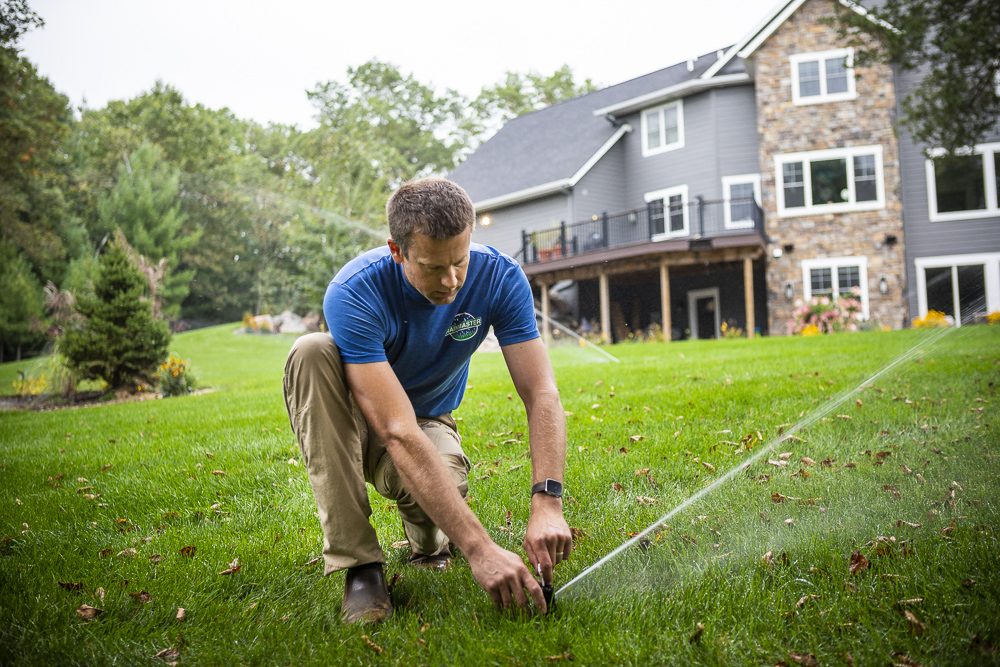
Spring activation and fall winterization bracket the season but miss the part in the middle, when the system does nearly all of its work through the hottest and driest weeks.
Plenty goes wrong in that window. Heads get mowed off. Other projects in the yard puncture lines without anyone noticing. Plants that were small in April grow into spray patterns and block them. A midsummer visit catches all of it under load, and it is the only point in the season when coverage can be evaluated accurately, because shrubs and perennials are at full size.
3. How hard is it to install a system in an existing lawn?
Not hard with the right equipment, and we do it constantly. Bare dirt on a new build is marginally easier, but an established lawn is a routine installation.
4. How long does installation take?
About a day for a typical residential system.
5. What will my lawn look like when you leave?
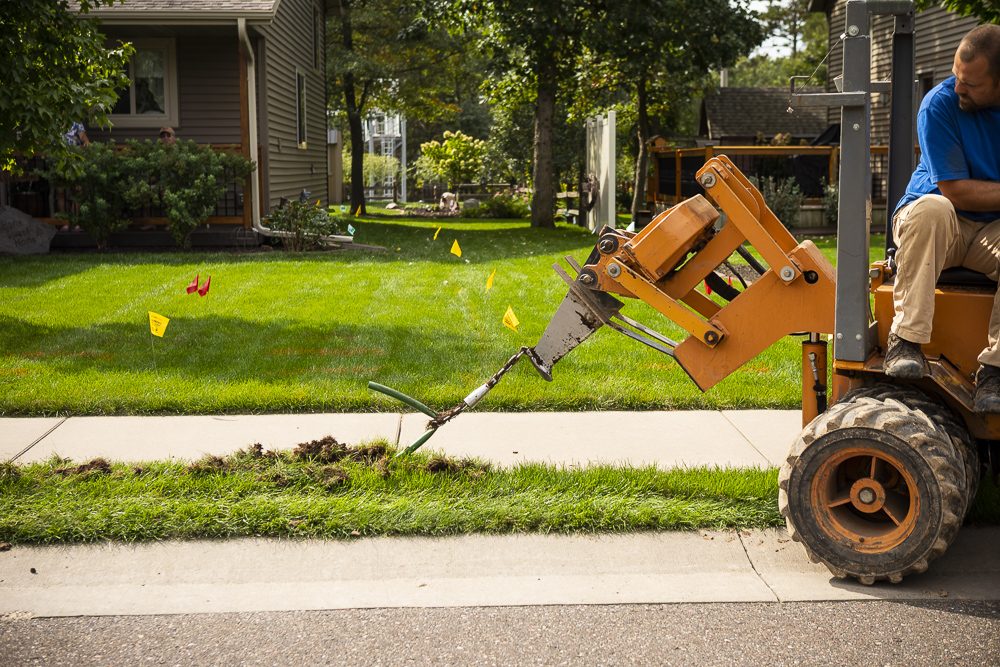
In most cases you will have trouble telling we were there. Rather than open trenches, we pull pipe underground: a thin slit is cut and a machine drags the pipe through below the surface. That avoids the soil displacement and long-term settling that trenching causes. We clean up afterward and reseed anything disturbed, which not every company does because it costs more.
6. How soon can you install my new system?
Plan ahead. Depending on the time of year, the installation schedule typically runs several weeks to several months out. Spring is the busiest stretch, so a system you want running in June should be scheduled well before June.
7. How often should I change my controller settings?
Monthly, at a minimum. Watering needs in May, July, and September are not close to the same, and a controller programmed once at startup is wrong for most of the season. As spring turns to summer, sunrise moves earlier, temperatures climb, and run times need to follow.
Controllers are also not pleasant to program. If you would rather not do it, our Peak Performance plan includes a monthly visit where we adjust it for you. A smart controller is the other option, since it adjusts automatically to weather and skips cycles for rain, wind, and cold.
8. How often should I water my yard?
The target is about one inch of water per week including rainfall. How long that takes depends on the yard.
Soil type is the biggest variable. Sandy soil takes water in quickly and holds little, so it needs longer and more frequent runs, perhaps 40 minutes to an hour per zone. Heavy clay takes water slowly and holds a lot, so the same coverage might need only 15 minutes; run clay for an hour and you get runoff and standing water.
Slope, shade, grass type, and head type all shift the number too. Rotor heads apply water slowly and often need around 30 minutes; fixed spray heads apply it much faster and may need only 10. The reliable way to find your number is a catch-can test: set straight-sided containers across a zone, run it 15 minutes, and measure.
9. Is it better to water several short cycles or one longer one?
Longer and less often, for an established lawn. Letting soil dry down between cycles forces roots to grow deeper after moisture, and deeper roots carry turf through heat and drought. Watering a little every day gives the roots no reason to leave the top inch of soil, which leaves the lawn fragile when conditions turn.
One exception: new seed. Seedlings have no root depth and the surface has to stay moist, which means several light cycles a day for the first four to six weeks.
10. When is the best time to water?
Finish as close to sunrise as possible. If the sun comes up at 6 a.m., the last zone should be shutting down about then. Early morning avoids the wind that picks up later in the day and pushes spray off target, and it avoids the daytime evaporation that takes water before it infiltrates. It also lets the canopy dry during the day, which keeps fungal disease pressure down. Evening and overnight watering leaves the leaf wet for hours in the dark, which is the condition most lawn pathogens need.
What the maintenance programs cost
Our irrigation maintenance programs start at $239 a year for basic spring start-up and fall winterization. The most popular program sits in the middle at $304. The Peak Performance plan starts at $434 and includes a visit every month between spring start-up and fall winterization, so settings get adjusted through the season and problems are resolved as they appear rather than at the next scheduled stop.
RainMaster has served the Twin Cities and Eau Claire since 1999. Call 888-839-8484 or request a quote.
Bottom line
- Winterization must clear water from lines, valves, heads, and the backflow device before the first deep freeze.
- A typical residential installation takes about a day, uses pulled pipe rather than trenching, and schedules several weeks to months out.
- Adjust the controller at least monthly, or let a smart controller or a monthly service visit handle it.
- Target an inch a week including rain. Sandy soil needs 40 to 60 minutes per zone, clay closer to 15; rotors about 30 minutes, sprays about 10.
- Water deeply and less often, finishing at sunrise. New seed is the exception and needs several light cycles a day.
Frequently asked questions
How long does it take to install a sprinkler system?
About a day for a typical residential system, including in an established lawn. Scheduling is the longer part, usually several weeks to several months out depending on the season.
Will installing an irrigation system tear up my lawn?
Not significantly when pipe is pulled rather than trenched. A thin slit is cut and the pipe is dragged through underground, then disturbed areas are cleaned up and reseeded.
How often should I adjust my irrigation controller?
At least once a month. Watering needs differ substantially between May, July, and September, and a program set at spring startup is wrong by midsummer. A smart controller or a monthly maintenance visit removes the chore.
What happens if I skip winterizing my sprinkler system?
Water trapped in pipes, valves, heads, or the backflow device expands when it freezes and breaks what holds it. Cracked backflow bodies and split lines are common and expensive, and completely avoidable.
U.S. Environmental Protection Agency WaterSense, Watering Tips.
Irrigation Association, Irrigation industry standards and best practices.


