


Your Month By Month Lawn Care Calendar for Eau Claire, WI or Minneapolis Home
Lawn care in the Upper Midwest is a timing problem more than an effort problem. This is the month-by-month version for Eau Claire and the Twin Cities, with the understanding that soil temperature, not the calendar, has the final say in spring.
January
Nothing happens outside, and that is exactly when to plan. Good lawn care and irrigation companies fill their spring schedules in winter, and the early spring crabgrass window is narrow. If you want a specific service for next season, reserve it now rather than in April.
This is also the right month to review what went wrong last year. Thin shaded areas, a corner that always has nutsedge, a zone that never covered properly: write those down so they get addressed rather than forgotten.
February
Still nothing. If you want one productive task, service the mower now instead of in a May rush: sharpen or replace the blade, change the oil, replace the filter and plug, and check the tires.
March
Watch the soil rather than the air. A 70 degree afternoon in March does not mean the ground has thawed, and soil temperatures in the high 30s are common while it feels like spring. Nothing you apply now will do anything until the soil reaches roughly 50 degrees. Late in the month, start checking whether a screwdriver pushes easily into the lawn.
April
The busiest month of the year, and the first real work:
- Clean up. Rake lightly to clear dead grass, leaves, and winter debris. Go gently; turf coming out of dormancy pulls out easily.
- Crabgrass pre-emergent. This is the timing that matters most. The barrier has to be in place before soil temperatures reach the mid 50s and seed germinates. RainMaster makes two applications, early spring and late spring, because one holds for only about six weeks.
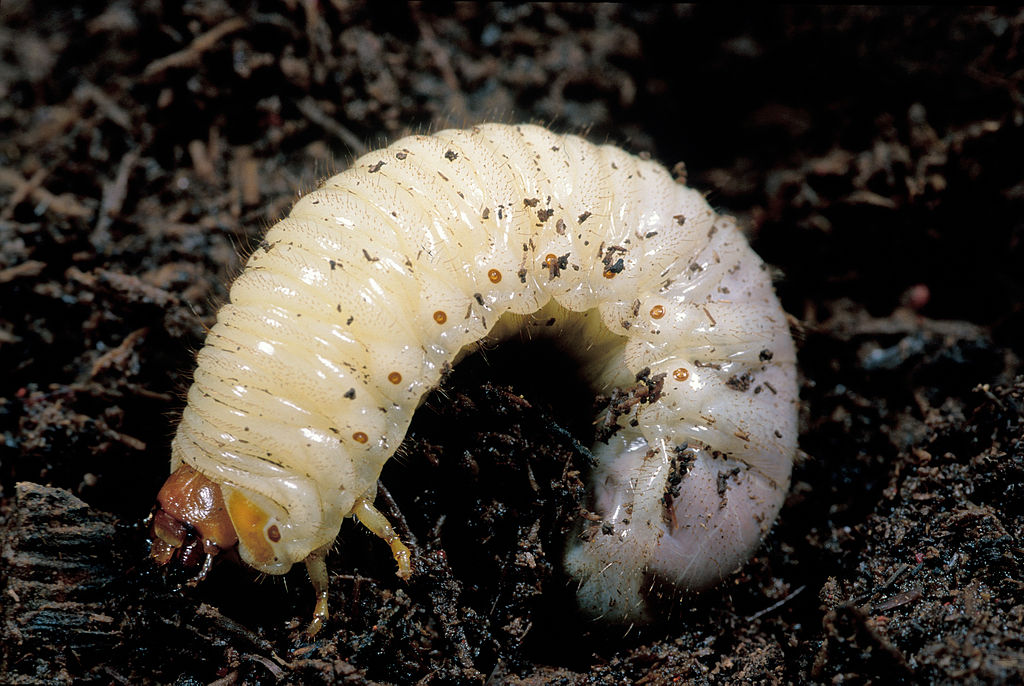
- Grub prevention. Bee-Safe Grub Guard goes down at the first spring visit so the material is in the root zone before eggs hatch and young larvae begin feeding. Preventive products do not kill eggs, which is why being early is what makes them work. One application carries through the growing season.
- Assess winter damage. Look for snow mold, salt damage along drives and walks, and plow scrapes. Note them for repair in May.
May
- Start mowing properly. Remove no more than one third of the height per cut, and leave the lawn at three to four inches.
- Fertilizer and weed control. The first full round should be done by Memorial Day.
- Seed bare spots. Not before Mother's Day. Spring seeding competes with weed pressure and conflicts with crabgrass pre-emergent, which prevents grass seed from establishing as well, so keep spring seeding limited to repairs.
- Irrigation startup. Every zone run and watched, every head checked and adjusted, controller programmed for cool, wet spring conditions.
June
Mowing is in full swing and the lawn should be responding to the spring work.
- Mow high and start raising the deck as summer comes on. Around three inches in June is a good target.
- Watch for early insect and disease activity. Problems caught in June are much cheaper than the same problems in August.
- Shift watering to deep and infrequent cycles finished by sunrise, roughly an inch per week including rainfall.
July
The hardest month on a lawn here: heat, dry stretches, and humidity that drives disease.
- Raise the mowing height to three and a half to four inches. Taller grass shades the soil and holds moisture.
- Test soil pH. Nutrients are only available to roots within a workable pH range, so fertilizer on out-of-range soil is wasted. RainMaster includes pH testing in all three program levels.
- Keep feeding, at summer rates. Heat-stressed turf does not want a heavy nitrogen push.
- Sharpen the blade again. Half a season of mowing dulls it, and torn leaf tips invite disease.
- Check the controller. Spring settings running in a 90 degree stretch is the most common watering mistake there is.
August
Technically summer, but the fall program starts now.
- Hold the mowing height between three and four inches.
- Aeration and seeding start at the end of the month. Core aeration pulls plugs of soil out of the lawn so air, water, and nutrients reach the root zone, and the open holes give overseeded grass real soil contact.
- Late August through mid September is the best seeding window here. Soil is still warm enough for fast germination and air temperatures have come down.
September
The best month of the year for lawn work: cool air, warm soil, and more reliable moisture.
- Fall fertilizer. Top growth is slowing but roots are still active and storing energy for spring. This is the application that decides how the lawn looks next May.
- Fall weed control. Broadleaf weeds move material to their roots this time of year, which makes fall the most effective window of the season.
- Aerate and overseed if you have not. Weed competition is lower than in spring, and fall seeding does not conflict with next spring's crabgrass pre-emergent.
- If thatch is over half an inch, aeration helps with that too.
October
- Keep mowing as long as it grows. Resist the urge to scalp it for winter; mowing below about two and a half inches just stresses the lawn.
- Aeration is still viable in most years early in the month.
- Start on leaves. A thick mat smothers grass and creates matted conditions snow mold likes. Mulch-mow light layers back into the lawn; remove heavy accumulations.
- Schedule winterization. Water has to be out of the pipes, valves, and heads before the first hard freeze.
November
Stay on the leaves until the trees are bare. Then consider dormant seeding: apply grass seed late enough that it will not germinate, let it sit through winter under snow, and it sprouts as soon as spring conditions allow. It is a way to get seed down without waiting until May, and it works well on thin areas you did not get to in September.
December
Nothing to do outside. If snow management is a concern for a commercial property, snow removal contracts and response plans should already be in place by now. Otherwise, start planning for next season, which puts you back at January.
Bottom line
- Spring work is driven by soil temperature. Grass wakes around 50 to 55 degrees; crabgrass germinates in the mid 50s to 60.
- First full round of fertilizer and weed control by Memorial Day; crabgrass pre-emergent before that, in two applications.
- Late August through mid September is the best aeration and seeding window of the year.
- September fall fertilizer and fall weed control do more for next spring's lawn than anything you do in May.
- Get irrigation winterized before the first hard freeze, and consider dormant seeding in November for thin areas.
Frequently asked questions
When should I do the first lawn treatment of the year?
When soil temperature is rising toward the mid 50s, usually April here, not on the first warm weekend. Crabgrass pre-emergent is the first treatment that matters and it has to be down before seed germinates.
Is spring or fall better for seeding?
Fall, by a wide margin. Late August through mid September gives warm soil, cooler air, less weed competition, and no conflict with crabgrass pre-emergent. Keep spring seeding to patching bare spots.
How short should the last mow of the year be?
Not short. Stay at or above about two and a half inches. Scalping for winter does not prevent snow mold and it stresses the lawn going into the hardest months.
Does dormant seeding actually work?
It does on thin areas, with a lower and less predictable establishment rate than September seeding. Seed goes down late enough not to germinate, overwinters, and sprouts when spring conditions allow.
University of Minnesota Extension, Fertilizing Lawns.
University of Minnesota Extension, Seeding and Sodding Home Lawns.


