


Moles, Voles & Grubs: 3 Common Lawn Pests & How to Chase Them Away

Moles, voles, and grubs damage a lawn in three completely different ways, and the fix for one does nothing for the others. Telling them apart takes about five minutes in the yard. Here is what each one leaves behind, what it is actually feeding on, and which of the three you can get ahead of before the damage starts.
Moles: tunnels and mounds, not chewed grass
Moles are not rodents. They belong to a group of insect eating mammals related to shrews, which is why poison baits shaped like grain or gummy worms usually fail on them. They have poor eyesight, almost no interest in your plants, and enormous paddle shaped front feet built for one thing, which is digging.
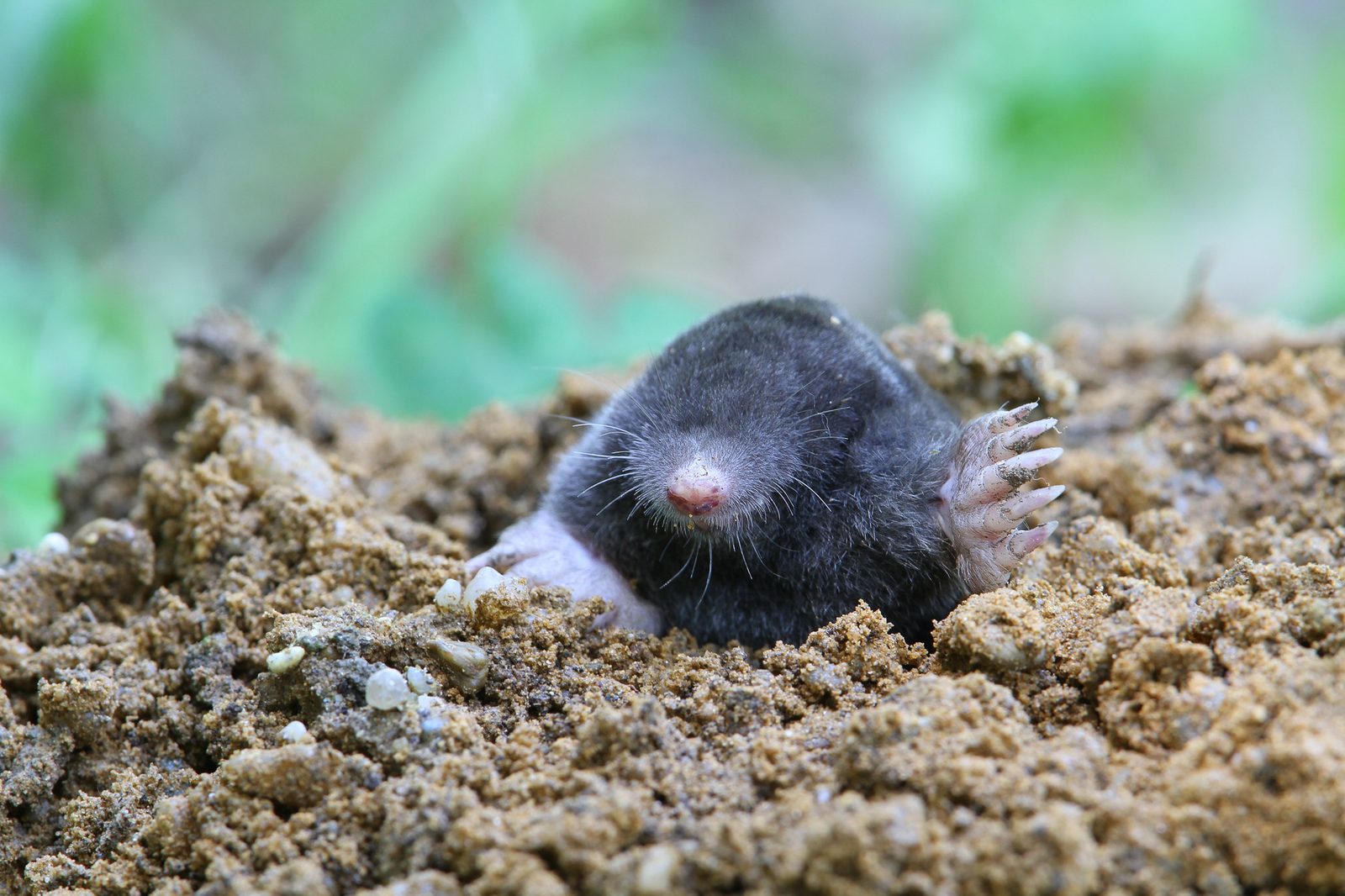
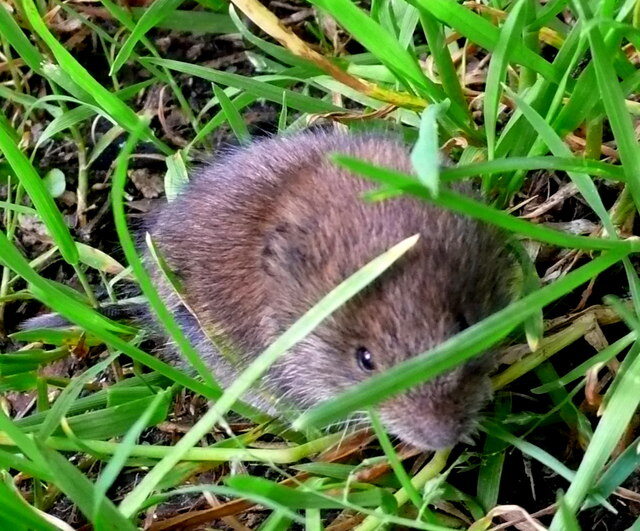
You will likely never see the mole. You will see the work. Raised ridges crisscrossing the lawn are surface feeding tunnels, pushed up as the mole works a few inches below grade hunting for food. The cone shaped mounds of loose soil are spoil from the deeper tunnels that connect to the nest.
Moles do not eat grass and do not kill turf directly. What they do is wreck the surface and sever roots as they go, which leaves strips of grass that dry out and die above an active tunnel. Where they push up enough bare soil, those spots need seed. They also create a real tripping and ankle twisting hazard, since the ground over a fresh tunnel gives way underfoot.
Why moles show up in the first place
Food. A mole diet is mostly earthworms, with grubs and other soil insects mixed in. Earthworms are the main course, not the side. That is worth knowing because it explains something homeowners find frustrating: wiping out the grubs in a lawn does not guarantee the moles leave. A moist, healthy, earthworm rich soil is excellent mole habitat all by itself. Removing grubs lowers the food supply and makes the yard less attractive, but it is not a mole eviction notice.
How to get rid of moles
Everyone has a theory, from castor oil down the tunnels to coffee grounds to poison baits. Castor oil based granular repellents do work for some properties. Once watered in, they make the treated soil unpleasant and moles often move on within a day or two. They also need reapplication, and they push the mole somewhere rather than removing it.
For a persistent mole problem, the most reliable answer is a company that specializes in live trapping. It is a skill, it takes knowing how to read which tunnels are active, and it is the approach we use ourselves when we have a mole on a property.
Voles: smaller signs, different damage
Voles are rodents, closer to a stocky short tailed mouse than to a mole. They dig, but not the way a mole does, so the signs are easier to miss. Look for short shallow burrow openings about the diameter of a quarter and narrow surface runways through the turf where the grass has been clipped close, often appearing after snowmelt.
Unlike moles, voles are plant eaters. In spring they sometimes graze the tops of grass, and that usually grows back without intervention. The damage worth worrying about is on woody plants, where voles gnaw bark and roots at the base of young trees and shrubs, sometimes girdling them under the cover of snow. In Eau Claire and the north metro around Blaine, where snow cover can sit for months and give voles a protected runway all winter, that bark damage is the part worth preventing. The turf grazing is usually a nuisance rather than a lawn emergency. Repellents and live trapping are the same tools used for moles, and protecting the base of young trees with hardware cloth before winter prevents the expensive damage.
Grubs: the one that actually kills turf
Grubs are the smallest of the three and the only one that destroys lawn on its own. They are the larvae of beetles, mainly Japanese beetles, June beetles, and chafers. They are white, C shaped, soft bodied, and have three pairs of legs near the head. They live in the top few inches of soil and feed on grass roots.
That is what makes them dangerous. The grass above an active infestation is being cut off from its root system without any visible warning until it wilts and dies in patches.
Signs of grub damage
- Animals digging in the lawn. Raccoons, skunks, and birds tearing up the turf are hunting grubs, and they often find them before you do.
- Turf that peels up like loose carpet. Grab a handful of affected grass and pull. If it lifts with no root resistance, grubs have eaten the anchor.
- A spongy feel underfoot. Walking on a heavily infested area feels soft because the root mat is gone.
- Irregular brown patches in late summer. Grub damage usually shows up from August into fall, which is when the larvae are largest and feeding hardest.
What preventive grub control actually does
Here is where a lot of advice gets the biology wrong. Preventive grub control does not kill eggs. The adult beetles fly and lay eggs in the lawn in early to mid summer. The products used preventively are applied ahead of that and stay active in the root zone, so when the eggs hatch, the newly hatched larvae pick up a lethal dose while they are tiny and before they can do meaningful root damage. The point is not killing eggs. The point is having the material already in place and still active at hatch.
That is why timing and longevity both matter, and why a product that has broken down by the time the larvae hatch leaves a lawn exposed. At RainMaster we apply Grub Guard early in the season during the first visit, with a material chosen to stay active through the growing season so it is still working when the larvae arrive. It is also selected to be easier on pollinators than the cheapest options on the market.
Curative treatment is a different product and a different timing question. Once large grubs are actively feeding in late summer, a preventive application will not fix it, and the damaged turf will need seed. Prevention is far cheaper than repair.
Putting the three together
If the lawn has ridges and mounds, you have a mole and the answer is trapping or repellent. If you have clipped runways and chewed bark, you have voles. If turf peels up by the handful in August, you have grubs, and that is the one worth preventing every year rather than reacting to. Controlling grubs also removes part of the local food supply, which makes the yard slightly less inviting to moles, though it will not clear them out on its own.
Bottom line
- Moles are insect eaters related to shrews, not rodents, and their diet is mostly earthworms. Grub control alone will not evict them.
- Mole signs are raised surface ridges and cone shaped soil mounds. Voles leave quarter sized burrow holes, clipped surface runways, and gnawed bark on young trees.
- Grubs are the only one of the three that kills turf, by eating the root system from below. Damage shows up from August into fall.
- Test for grubs by pulling on a brown patch. If it peels up like loose carpet with no roots, grubs are the cause.
- Preventive grub control does not kill eggs. It stays active in the root zone so newly hatched larvae are killed before they can damage roots.
Frequently asked questions
Will getting rid of grubs make the moles leave?
Not reliably. Earthworms are the main part of a mole diet, so a moist, healthy soil supports moles even with no grubs in it. Grub control reduces the food supply and helps, but persistent moles usually need trapping.
When is the best time to treat for grubs in Wisconsin and Minnesota?
Preventive material goes down ahead of egg hatch, in spring to early summer, and needs to still be active in the root zone when the larvae hatch. By the time you see damage in late August, prevention has passed and the conversation shifts to a curative product and reseeding.
Do mole repellents actually work?
Castor oil based granules watered into the soil do push moles off some properties, often within a day or two. They need reapplication and they relocate the animal rather than removing it. For a recurring problem, live trapping is more dependable.
How do I tell vole damage from mole damage?
Moles push soil up: raised ridges and volcano shaped mounds, with no chewing. Voles clip: narrow runways through the grass, small burrow openings, and gnawed bark at the base of shrubs and young trees, often revealed at snowmelt.
University of Wisconsin Division of Extension, Japanese Beetle.
University of Wisconsin Division of Extension, Earthworms in the Lawn.


