


How to Make Your Lawn Thicker: Pro Tips for Better Grass in WI & MN

Grass does not thicken on its own. Density comes from a handful of things done consistently: feeding on schedule, relieving compaction, seeding into the right window, mowing tall, and watering deeply instead of often.
Feed it on a schedule
A thin lawn is often a hungry lawn. Nitrogen drives the tillering and rhizome growth that fills a stand in, and it has to arrive across the season rather than in one spring dose.
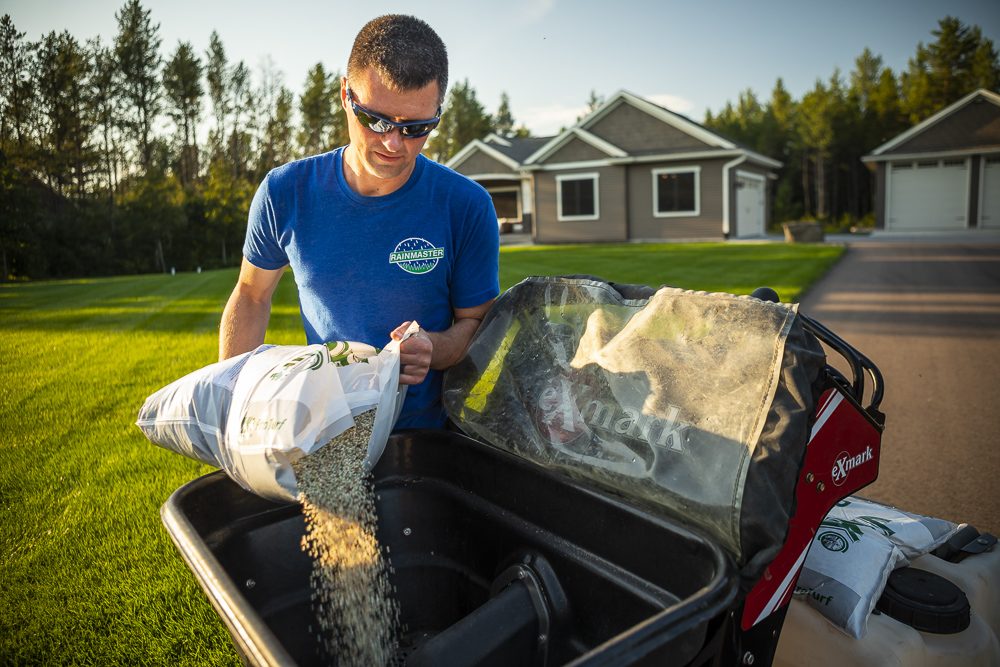
The working schedule here: first round of fertilizer and weed control down by Memorial Day, three more applications through the summer, and a fall application that matters more than people expect. In September and October top growth slows but roots stay active, storing energy that decides how dense the lawn comes out of winter.
Use granular fertilizer. It costs more than liquid and it releases slowly as the prills break down, which gives steady feeding rather than a surge and a crash. Blends that include organic matter also improve soil structure over time, which pays off in root depth.
Aerate, then overseed
If you are doing everything right and the lawn is still thin, compaction is the first suspect. Tight soil means roots cannot take up water or nutrients efficiently, and the stand thins from below.
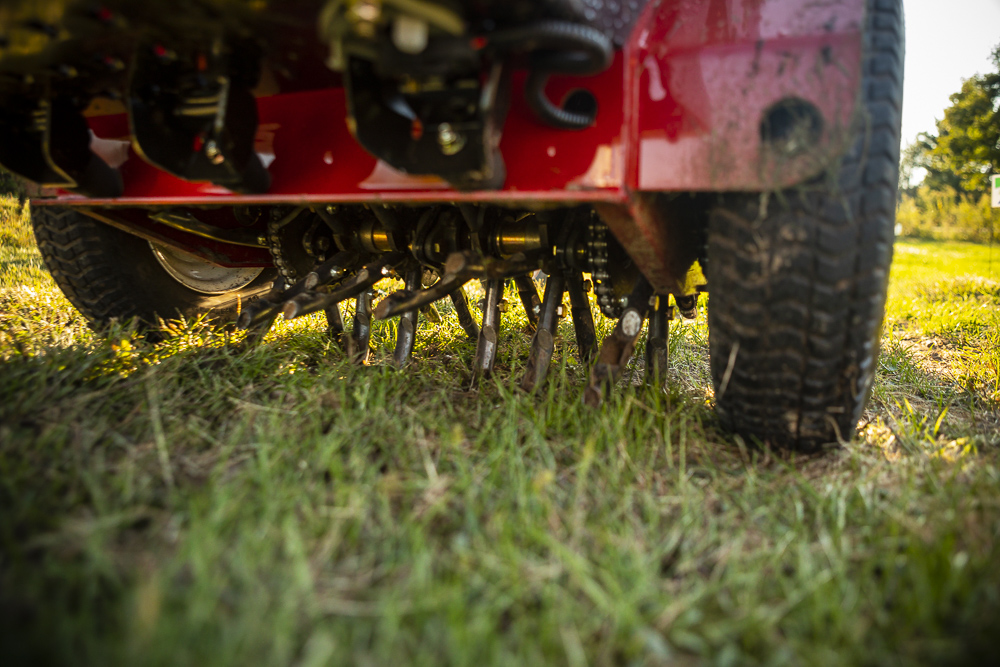
Core aeration pulls plugs of soil out of the lawn and leaves open channels for air, water, and fertilizer to reach the root zone. It also speeds the breakdown of thatch, the layer of dead stems and roots between the green canopy and the soil surface. Thatch over half an inch starts holding water at the surface and keeping it away from roots.
Overseeding right after aeration is the single most effective thickening move available, because the holes give seed genuine soil contact instead of letting it sit on top of thatch. The window in Wisconsin and Minnesota is late August through mid September: soil is still warm enough for fast germination, air temperatures have come down, and fall moisture is more reliable. Seeding in spring competes with weed pressure and conflicts with crabgrass pre-emergent, which also prevents grass seed from establishing.
Buy good seed. Cheap bags can contain weed seed and coarse species you will be unhappy with for years. Pay for the premium blend.
Test the soil pH
Fertilizer only works if the nutrients are chemically available to the roots, and availability depends on pH. Soil that is too acidic or too alkaline locks up nutrients, so the lawn stays thin no matter how much you apply.
Testing is cheap and the amendments are straightforward once you know the number. RainMaster includes pH testing in all three lawn care program levels, and pH balancer in the top two.
Control weeds so the grass has room
Sometimes what looks like a thick lawn from the porch is mostly weeds. Weeds occupy ground your grass could be filling, and they compete for the same water and nutrients.
Two tools, two timings. Pre-emergent control targets seeds as they germinate and is the only approach that works on crabgrass; it has to go down in early spring before soil temperatures reach germination range. Post-emergent control handles what is already growing. Both matter, because weeds in Wisconsin and Minnesota are active at different points in the year and many of the worst spring weeds germinate the previous fall. That is why a complete lawn care program runs preventive and curative treatments from early spring through late fall rather than one spray in May.
Mow tall and mow sharp
Mowing height is the cheapest density lever you have. Every cut removes leaf surface the plant uses for photosynthesis, and a plant with less leaf area puts less energy into new shoots and roots. Never take more than one third of the blade in a pass, and hold three to four inches through the season, with the taller end in July and August.
Taller grass also shades the soil, which keeps weed seeds from germinating and keeps root-zone temperatures down. Short grass heats the soil and does the reverse.
Keep the blade sharp. A dull blade tears the leaf tip rather than cutting it, and a ragged edge loses more water and heals slower. Sharpen at least once a season.
Water for root depth
Watering habits decide where the roots live, and root depth decides density under stress.
- Do not water every day. Daily watering keeps the top inch wet and gives roots no reason to go deeper. Longer cycles on fewer days push them down, and deep roots carry a lawn through a dry July without thinning.
- Finish by sunrise. Wind rises through the day and carries droplets off target, sun evaporates water before it infiltrates, and evening watering leaves the canopy wet overnight, which feeds fungal disease.
- Reprogram the controller through the season. Settings that were right for cool, wet May are wrong in a 90 degree stretch in late July, and wrong again in September. A controller set once in spring and ignored is one of the most common causes of a thin, stressed lawn.
If parts of the lawn are consistently thinner than others, have the coverage checked rather than adding run time everywhere. An irrigation inspection finds misaligned heads, worn nozzles, and leaking valves that no amount of fertilizer will overcome.
Be proactive, not reactive
Density is lost in weeks and rebuilt in months. Grubs, disease, compaction, and weed pressure all thin a stand before most homeowners notice anything, and the lawns that stay thick are the ones where someone is looking at them regularly. Five visits a season means five chances to catch something early.
Bottom line
- Feed across the season with granular fertilizer, including a fall application, not one spring dose.
- Core aerate and overseed in the late August to mid September window for the biggest density gain.
- Test soil pH. Out-of-range soil makes fertilizer ineffective no matter how much you apply.
- Mow at three to four inches with a sharp blade, and never remove more than a third of the blade.
- Water deeply on fewer days, finish by sunrise, and reprogram the controller as the season changes.
Frequently asked questions
What is the fastest way to thicken a thin lawn?
Core aeration followed immediately by overseeding with quality seed, done in the late August to mid September window, and then kept moist while the seed establishes. Nothing else produces as much new grass as fast.
Can I seed and apply crabgrass pre-emergent at the same time?
No. Pre-emergent prevents grass seed from establishing along with the crabgrass. That is one of the main reasons fall is the better seeding window here.
How tall should I actually mow?
Three to four inches, leaning taller in the heat of July and August. Do not drop below about two and a half inches at any point, including the last cut of the year.
Will more fertilizer make the lawn thicker faster?
Not past a point, and excess nitrogen causes problems: soft growth, more disease pressure, and risk of fertilizer burn. Correct timing and correct rate beat heavy application.
University of Wisconsin Division of Extension, Lawn Aeration and Topdressing.
University of Minnesota Extension, Seeding and Sodding Home Lawns.


