


Liquid vs. Granular Fertilizer: Which is Best for Your Lawn in Wisconsin?

Liquid and granular fertilizer deliver the same nutrients on completely different timelines, and that one difference drives everything else: how often you apply, how evenly it lands, and how long the color lasts.
The basic difference
Liquid fertilizer is a concentrate mixed with water and sprayed onto the lawn. The nutrients are already dissolved, so the plant takes them up quickly, largely through the leaf surface and the top layer of soil.
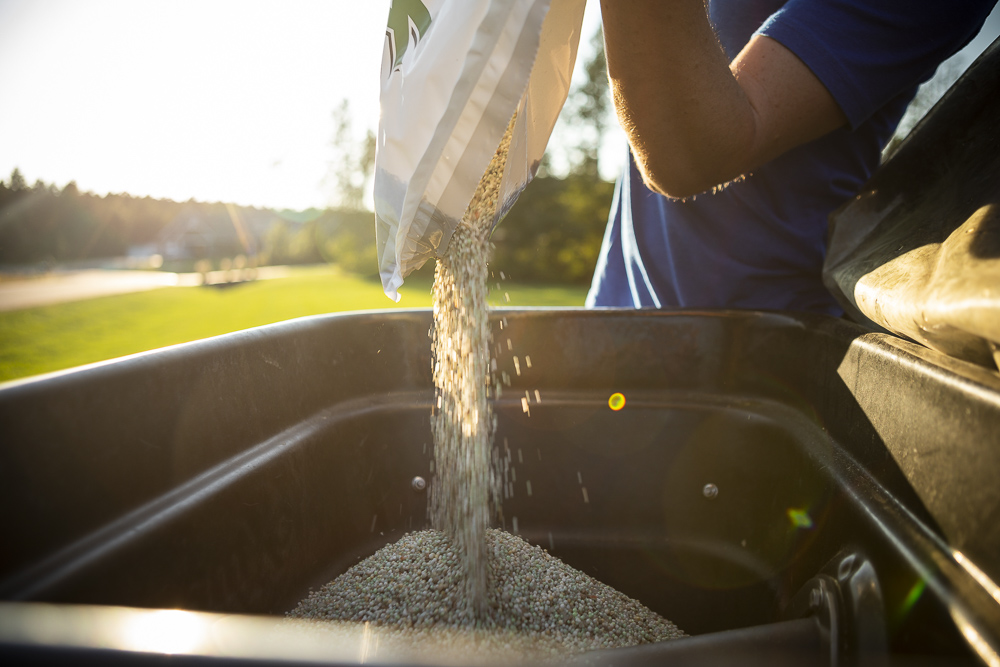
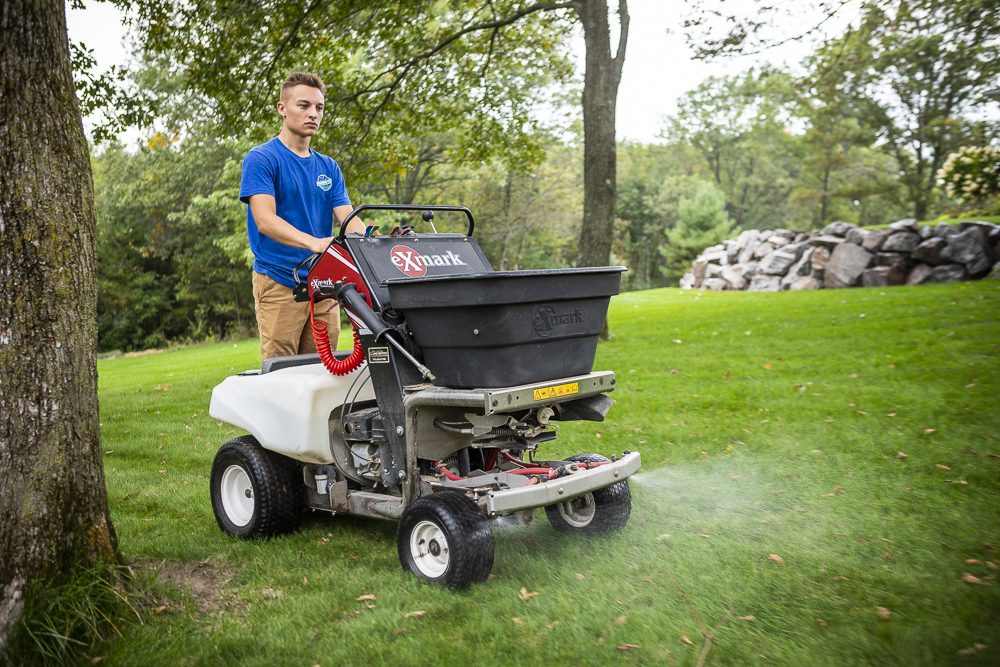
Granular fertilizer is solid pellets spread over the lawn and watered in. The pellets dissolve gradually with rain and irrigation and release nutrients into the soil over weeks.
Same basic nutrients, different delivery. Liquid gives a quick dose. Granular feeds slowly and steadily. That distinction explains nearly every practical difference below.
If you are applying it yourself: liquid
Liquid is the easier application. A hose-end sprayer, a pump sprayer, or a backpack sprayer is all the equipment you need, and there is no heavy bag to lift or spreader to calibrate.
The tradeoffs:
- More frequent applications. A quick-release feeding is used up relatively fast, so you are back out there more often. More dates to remember, more weekends spent on it.
- Wind ruins accuracy. Spray drifts. A gusty day either blows material onto an area you already covered, which risks over-application and burn, or carries it off the lawn entirely and leaves the turf short.
- You cannot see where you have been. With granules you can see pellets in the grass and track your passes. With liquid you are working from memory, and stripes and missed strips are common.
- Burn risk on hot days. A liquid feeding applied in high heat can scorch leaf tissue.
If you are applying it yourself: granular
Granular is the better product and the harder chore.
The slow release is the advantage. Nutrients enter the soil gradually each time it rains or you water, which gives the lawn steady nutrition over weeks instead of a spike and a fade. Color holds longer, growth is more even, and there is less flush growth that you then have to mow twice a week.
The work is real though. You need a spreader, which runs at least $30 and usually more for one that applies evenly. Even with a spreader, getting granular down uniformly is a skill: you have to calibrate it to the specific product, keep a consistent walking pace, and overlap passes correctly. An uncalibrated spreader produces either green stripes or a burned strip where it paused. And you will sweat, because you are hoisting a heavy bag, walking every foot of the yard, and then watering it in to activate it.
Which is better for a Wisconsin lawn
For lawn health, granular. It costs more than the common liquid products, and the slow breakdown delivers consistent benefit between applications rather than a brief flush. Good granular products also carry organic nutrients that produce the deep green color homeowners are actually after.
The climate argument reinforces it. Cool-season lawns here go through a hot, often dry July when they are under stress and nitrogen pushed into them can do harm, followed by a fall when they do their strongest root growth. Slow-release granular nutrition matches that pattern. It feeds through the periods when the plant can use it rather than forcing growth at the wrong moment, and it supports the fall root development that determines how the lawn comes through winter.
RainMaster uses premium professional-grade granular formulations. Not every lawn fertilizer service in Eau Claire or Minneapolis does.
Where liquid does make sense is weed control, which is the reverse of fertilizer. Herbicide has to coat and stick to the leaf of a weed to work, so it belongs in a sprayer. That is why a professional visit often involves both: granules for the soil, liquid for the weeds.
The part people underestimate
Either way, applying your own fertilizer is not the most enjoyable use of a Saturday, and the real cost is not the price difference between the two forms. It is the judgment calls.
Which formulation does your lawn actually need, given its soil, its pH, the time of year, and what it has already received? How much, at what rate, with what spreader setting? Applied incorrectly, these products damage turf rather than help it, and fertilizer burn is permanent for that season. Retail products also tend not to produce the density homeowners expect, because a thick lawn comes from the whole program rather than from nutrition alone.
Handing it off removes the equipment, the bags stacked in the garage, the spilled granules on the floor, and the guessing. At RainMaster you choose from three lawn care programs, from a basic plan with the elements you need for a better lawn, to a popular mid-level option built to grow thick green turf and handle most challenges, to a high-end proactive program for the fastest results on a lawn that needs significant help. Organic-based granular fertilizer tops all three.
Bottom line
- Liquid fertilizer is quick release and easy to apply; granular is slow release and better for the lawn.
- Liquid requires more frequent applications, drifts in wind, and is hard to track across the yard.
- Granular needs a calibrated spreader and real effort, and an uncalibrated spreader stripes or burns the lawn.
- Slow-release granular fits the cool-season cycle here, feeding through stress periods and supporting fall root growth.
- Use granular for fertilizer and liquid for weed control, since herbicide has to stick to the weed leaf.
Frequently asked questions
Is granular or liquid fertilizer better for a lawn?
Granular, for lawn health. It releases slowly so the lawn is fed steadily between applications instead of getting a quick flush that fades, and quality granular products carry organic nutrients that produce lasting color.
How often do you have to apply liquid fertilizer?
More often than granular, because quick-release nutrients are used up relatively fast. That means more applications to schedule across the season and more chances for wind, heat, or a missed strip to affect the result.
Why does my lawn have green stripes after fertilizing?
Uneven application, almost always from an uncalibrated spreader or inconsistent overlap between passes. Calibrate the spreader to the specific product, keep a steady pace, and overlap each pass the way the product label specifies.
Can liquid fertilizer burn my grass?
Yes, especially applied in high heat or over an area twice because of wind drift. Granular can burn too if the rate is too high or if it is spilled. Either way, fertilizer burn is excess nitrogen and salt in the soil and the damaged turf does not recover that season.
University of Wisconsin Division of Extension, Lawn Fertilization.


