


Why Does Lawn Soil pH Matter in Eau Claire, WI & Minneapolis (and What Happens if I Don't Fix it?)
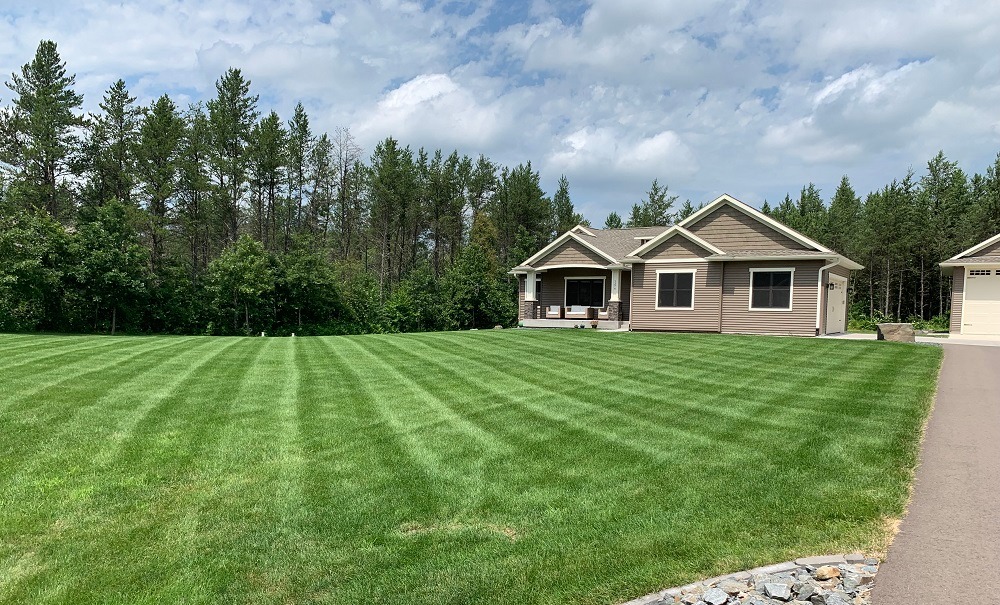
Soil pH controls whether your grass can actually take up the nutrients in the soil. Most grasses do best between 6.0 and 7.0, and when the pH sits outside that range the nutrients are present but locked up, which is why a lawn can look pale and thin no matter how much fertilizer goes down.
What lawn soil pH is
Soil pH is a measure of the acidity or alkalinity of your lawn's soil, on a scale from 0 to 14. Extreme acidity is at the low end, extreme alkalinity at the high end, and 7 at the midpoint is neutral, neither acidic nor alkaline.
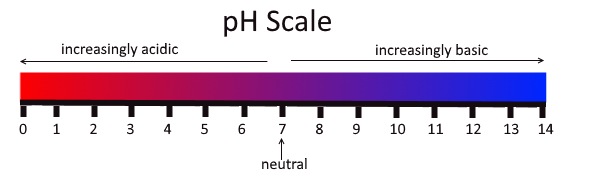
Most grasses thrive in a range between 6.0 and 7.0. That is the target. Slightly acidic to neutral.
Why it matters more than the next bag of fertilizer
The important nutrients for grass are available to the plant when the pH is in that mid-level range. When pH drifts out of it, the chemistry changes and nutrients bind to soil particles instead of staying available to roots. Your grass will not get what it needs no matter how much you fertilize, because the problem is not supply, it is access.
This is the part that costs homeowners money. If pH is the limiting factor, every application after that is partly wasted. Nitrogen will still green the lawn up somewhat, but the broader nutrition the plant needs to build density and root mass is not getting in. The symptoms look like a fertility problem: pale color, thin stand, slow recovery from stress, weeds moving into the gaps. The cause is underneath it.
What happens if you do not fix it
- Fertilizer applications return less and less for the same cost.
- The stand stays thin, and thin turf is where crabgrass, clover, and other weeds establish.
- Shallow, weak root systems mean worse drought tolerance in July and slower recovery in fall.
- Disease pressure rises, because stressed grass is what fungal pathogens need to take hold.
Testing: the only way to know
You cannot read pH off the top of a lawn. Our lawn care technicians insert a meter into the soil to check the level. It takes a few minutes and it tells you whether the amendment conversation is even necessary.
Lawn soil pH varies from city to city, and even from lawn to lawn in the same neighborhood. Lawn soil in Eau Claire, Wisconsin tends to be acidic, while soil in Minneapolis often leans toward alkaline. Those are tendencies, not guarantees. Fill soil brought in during construction, a limestone foundation, runoff off a concrete driveway, years of a particular fertilizer, and the original parent material under the development all push an individual yard off the neighborhood pattern. That is why the test happens on your property rather than being assumed from your zip code.
Correcting the pH
If pH is too low, the lawn needs lime
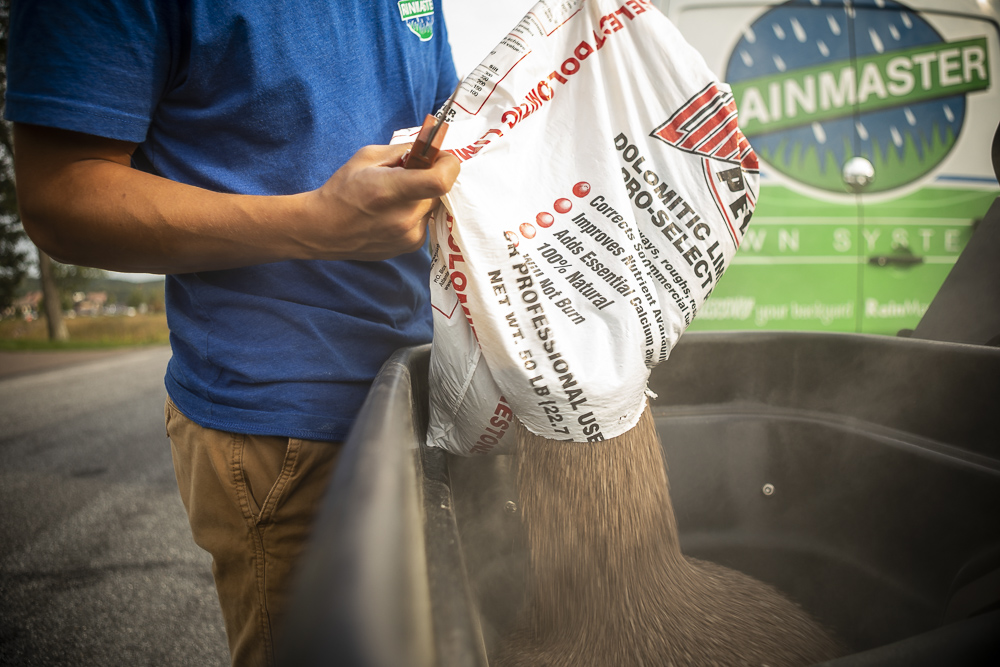
Lime is a soil amendment made from ground limestone rock, which contains calcium carbonate and magnesium carbonate. Applied to the soil, those compounds raise pH, making the soil less acidic and more alkaline. This is the common correction on acidic lawns in the Eau Claire area.
Two things to understand about lime. It works slowly, over months rather than weeks, as it reacts with soil moisture, so it is applied with the expectation of change over a season or more. And it is applied by rate based on the test, not by guesswork. Overliming creates the opposite problem and is harder to reverse than the one you started with.
If pH is too high, the lawn may need gypsum
Gypsum is a mineral containing hydrated calcium sulfate. It is the amendment used on the alkaline end, where it supplies calcium and sulfur and improves the structure of tight, high-pH soils so water and roots move through them better.
Whether it is lime for lawns or gypsum for lawns, we call both treatments "balancer," because both work to balance the pH level of your lawn.
Timing and follow-up
Fall is a practical window for amendments in the Upper Midwest. The lawn is in its strongest growth period, freeze and thaw cycles over winter help work the material into the soil profile, and core aeration just before an application gives it a path down to the root zone instead of leaving it sitting on thatch. Then you retest. Soil chemistry moves gradually, and a correction is confirmed by the next test, not by assumption.
How pH fits into a lawn care program
At RainMaster we consider lawn soil pH important enough that pH testing is included in all three levels of our lawn care programs, and pH balancer is included in the top two levels. The logic is simple: you are paying for fertilizer so your grass can grow green and healthy, so the soil needs to be in a condition where it can use it.
If your lawn has been fed consistently and still looks disappointing, pH is one of the first things worth ruling out. Call 888-839-8484 or request a quote and we will test it and go through the options with you.
Bottom line
- Most grasses need a soil pH between 6.0 and 7.0 to take up the nutrients already in the soil.
- When pH is off, fertilizer is largely wasted, and the symptoms look like a fertility problem.
- Eau Claire soils tend to run acidic and Minneapolis soils tend to run alkaline, but pH varies lawn to lawn, so test rather than assume.
- Lime raises pH on acidic soils; gypsum is the amendment used on alkaline soils. RainMaster calls both "balancer."
- Amendments work over months, are applied by rate from a test, and are best timed in fall after aeration.
Frequently asked questions
What is the ideal soil pH for a lawn?
Between 6.0 and 7.0 for the cool-season grasses grown in Wisconsin and Minnesota. That range is where the nutrients grass needs are most available to the roots.
How do I know if my lawn needs lime?
Only by testing. Lime is the correction for acidic soil, so applying it to a lawn that is already neutral or alkaline makes the problem worse. A technician can check the pH with a meter during a visit.
How long does it take for lime to change soil pH?
Months, not weeks. Lime reacts slowly with soil moisture, which is why it is applied at a rate set by the test and then confirmed with a follow-up test rather than reapplied on a guess.
Why does my fertilizer not seem to work?
Soil pH outside the 6.0 to 7.0 range is one of the most common reasons. The nutrients are in the soil but chemically unavailable to the plant, so the lawn stays pale and thin despite regular feeding.
University of Minnesota Extension, Soil testing and lawn fertilizing guidance.
University of Wisconsin Extension, Soil and lawn care resources.


