


Lawn Rust: How to Identify, Treat & Prevent This Common Lawn Fungus
If your shoes come back orange after a walk across the yard, the cause is almost certainly lawn rust, a fungal disease that shows up in late summer and fall on slow growing, under fertilized turf. It looks alarming and it is messy, but it rarely kills grass, and the conditions that cause it are correctable.
What lawn rust is
Lawn rust is a fungal disease caused by fungi in the genus Puccinia. It is one of several diseases that appear in Minneapolis and Eau Claire lawns from mid summer through late fall, once growth has slowed from the push of late spring and early summer.
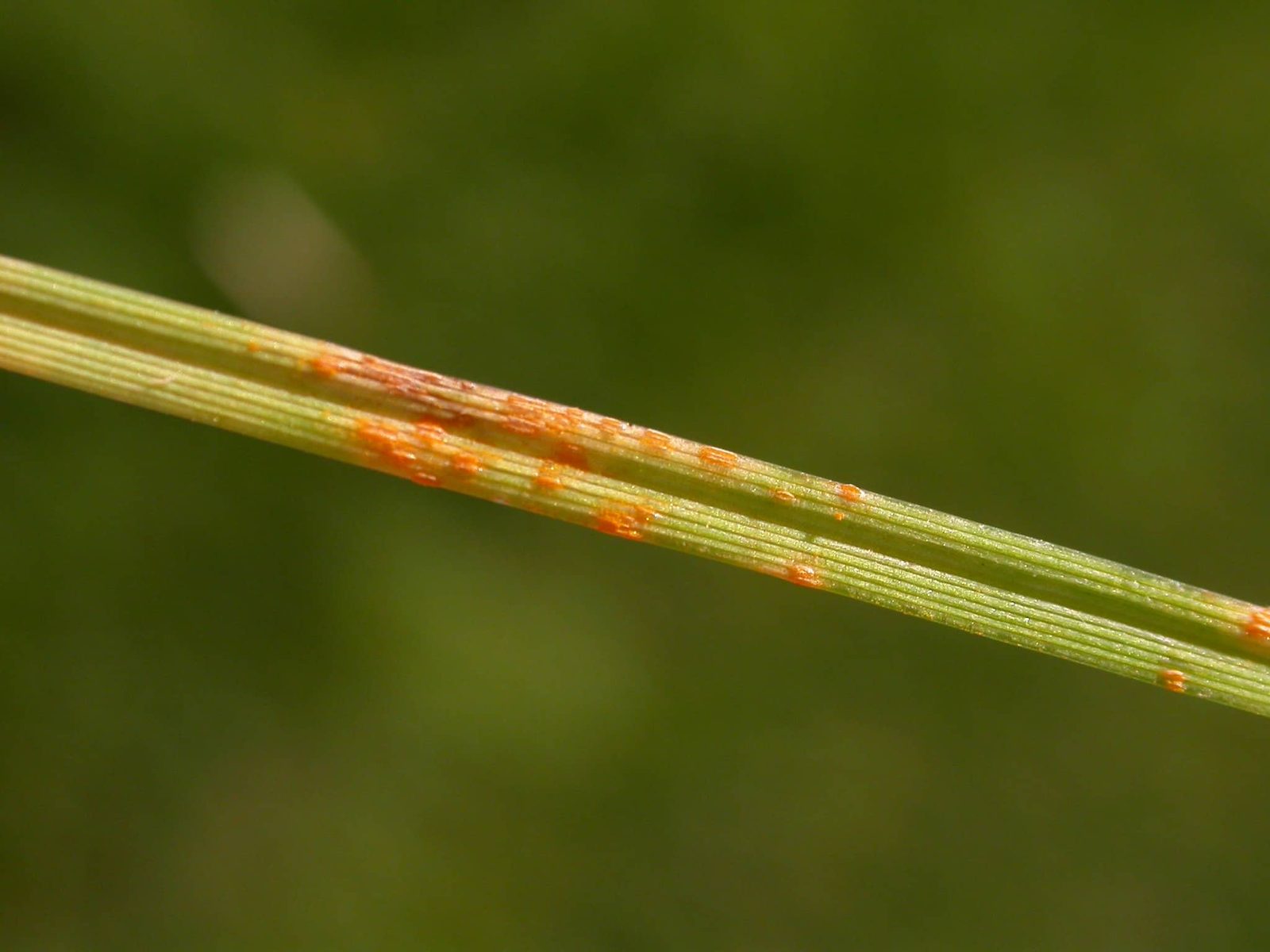
It favors Kentucky bluegrass and perennial ryegrass, which together make up most of the turf in this region, and it is most severe on lawns that are growing slowly for any reason: heat, drought stress, shade, or a shortage of nitrogen.
How to identify lawn rust
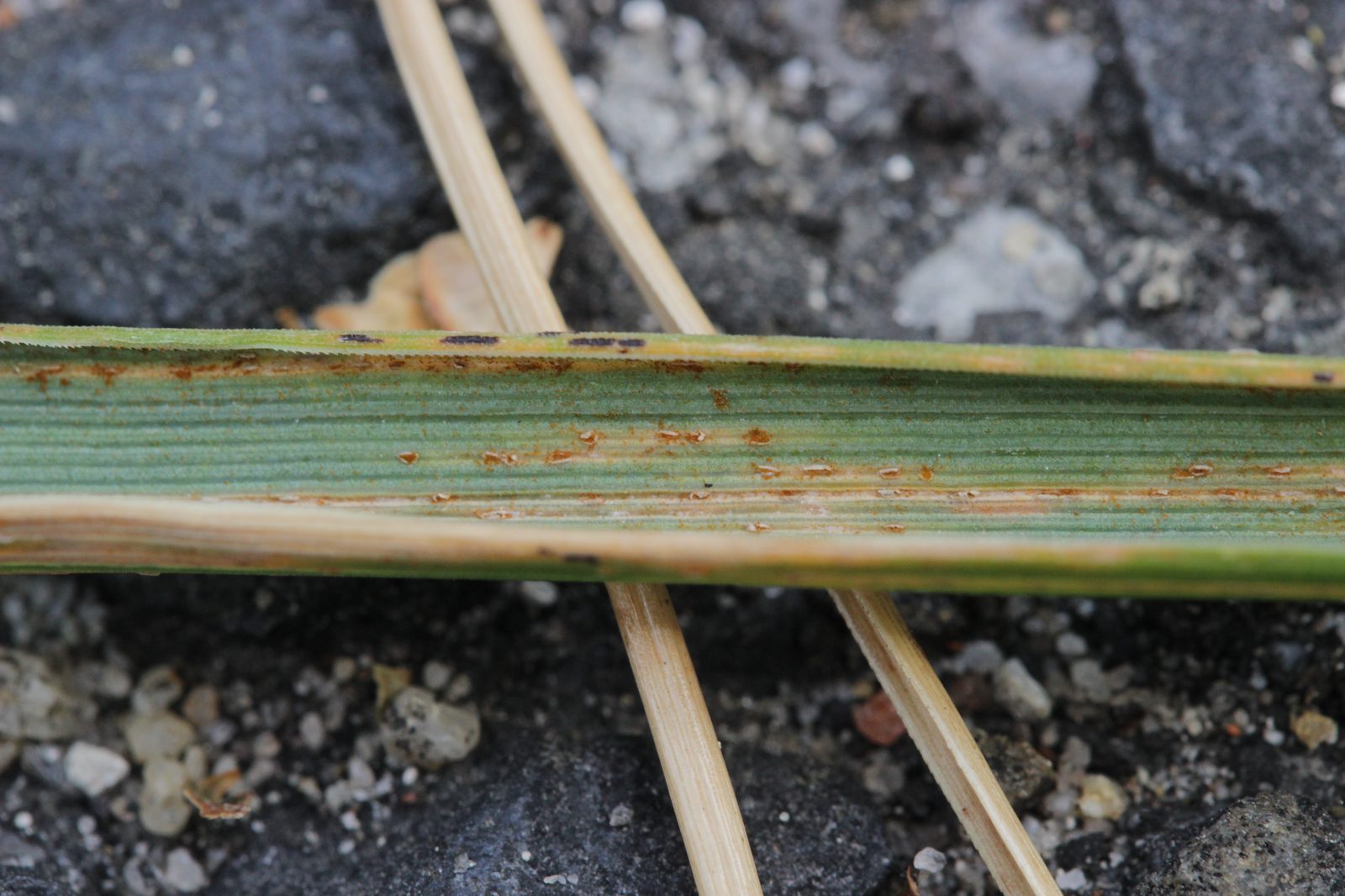
This is one of the easier diseases to diagnose. Rust appears as an orange to rust colored powder on the grass blades. On close inspection you can see small raised pustules on the leaf that break open and release orange spores. It can show up as scattered spots or cover a blade completely.
The early stage is less distinctive. The lawn may simply look pale or faintly yellow, which could be a dozen other things. What confirms it is the powder. Rust spores rub off onto anything that touches them: shoes, pant legs, the dog, mower wheels and deck. If you are tracking orange onto the patio, you have rust.
Does lawn rust spread?
Yes, readily. The spores that brush off so easily are moved from blade to blade by wind, foot traffic, pets, and mowing equipment. A mower that runs through an infected area and then across clean turf carries spores with it.
That is why cleanup matters as much as treatment. Bag and remove clippings from an infected area rather than leaving them on the lawn, and rinse the mower deck after mowing through rust.
Why lawn rust happens
Two conditions have to line up: extended leaf wetness and slow growth.
Leaf wetness comes from heavy dew, cool nights, light frequent rainfall, poor drainage, shade that keeps an area damp until midmorning, or a controller watering in the evening. Any of those keeps the leaf wet long enough for spores to infect.
Slow growth is the other half, and it is the part people miss. Rust needs the leaf to stay in place long enough to complete its cycle. A fast growing lawn is constantly producing new tissue and having the infected tissue mowed off. A lawn that has slowed down, whether from summer heat, drought, or low nitrogen, gives the disease the time it needs. That is why rust so often appears in late summer on a lawn that has not been fed since spring.
What kind of damage does it do?
Mostly cosmetic. Rust does not usually cause lasting damage and it will not kill a lawn. The infected leaf tissue is less efficient at photosynthesis, so severe, prolonged infection does weaken the plant and leaves it more vulnerable to other problems, but the grass itself is not in danger.
The real costs are appearance and mess. An orange lawn looks unhealthy, and the powder gets on everything.
How to treat lawn rust
Because rust shows up in late summer, the season often fixes it. Cooler fall temperatures and more consistent rainfall push the lawn back into active growth, and once the lawn is growing, each mowing removes infected tissue faster than the disease can replace it.
To speed that up:
- Get the lawn growing again. A fall nitrogen application stimulates growth and pushes the lawn out of the slow growth state rust depends on. This is the single most effective step, and it is also normal fall fertilization, so it is not an extra treatment.
- Mow regularly and remove the clippings. Mowing shears off infected blades. Bag and remove those clippings from an infected area so the spores leave with them.
- Rinse the mower. Wash the deck and wheels after mowing rust covered grass so you are not reseeding the disease on the next pass.
- Fix the moisture pattern. Move watering to early morning, finishing near sunrise, so the leaf is not wet overnight. If an area stays damp because of shade or drainage, that is the underlying problem to solve.
Fungicide is rarely necessary on a home lawn for rust. In most cases nitrogen, mowing, and cooler weather resolve it, and the grass recovers on its own once the fungus is gone.
Preventing rust and other lawn diseases
A healthy, actively growing lawn is the real defense. Every item below also happens to be ordinary good lawn care.
Fertilize on a schedule, including fall. Rust is a nitrogen deficiency disease as much as anything. A lawn fed properly through the season and again in fall rarely gets a serious case. The caution is the opposite extreme: a heavy flush of nitrogen going into summer heat feeds other diseases, so timing matters.
Aerate. Core aeration reduces compaction, helps the thatch layer decompose, and improves drainage so the surface dries faster after rain or irrigation.
Water deeply and infrequently. Target about one inch per week including rainfall, delivered in one or two longer cycles rather than a short daily run. That keeps the leaf dry more of the time and pushes roots deeper.
Water early. Finish close to sunrise. Evening watering leaves the canopy wet through the warm overnight hours, which is what nearly every fungal disease here needs.
Mow tall, and not when the lawn is wet. Keep the lawn between three and four inches. Mowing too short weakens the plant and opens the canopy. Mowing a wet lawn spreads spores and leaves a ragged cut.
Open up the problem areas. If rust comes back in the same shaded, slow drying spot every year, the fix is airflow, light, or drainage in that spot rather than another treatment.
Bottom line
- Lawn rust is a fungal disease that appears as orange powder on the blades and rubs off onto shoes, pets, and mowers.
- It needs two things: extended leaf wetness and slow growing turf, which is why it shows up in late summer on under fertilized lawns.
- It is mostly cosmetic and does not kill grass, though a severe case weakens the plant.
- The most effective treatment is getting the lawn growing again with fall nitrogen, then mowing regularly and removing the clippings.
- Fungicide is rarely needed. Prevent it with scheduled fertilization, aeration, early morning watering, and mowing at three to four inches.
Frequently asked questions
Will lawn rust kill my grass?
No. Rust is primarily a cosmetic problem. Severe, extended infection reduces the plant's ability to photosynthesize and leaves it more vulnerable to other issues, but the lawn recovers once it resumes active growth.
Do I need a fungicide for lawn rust?
Rarely on a home lawn. Fall nitrogen to restart growth plus regular mowing with the clippings removed usually clears it, and cooler fall weather works in your favor.
Why does the orange powder get on everything?
The spores sit in pustules on the leaf surface and rub off at the slightest contact. That is also how the disease spreads, so bag the clippings from infected areas and rinse the mower deck afterward.
What time of year does lawn rust appear in Wisconsin and Minnesota?
Mid summer through late fall, once growth has slowed. Heavy dew, cool nights, and light frequent rain in late August and September are typical conditions for it.
University of Wisconsin Division of Extension, Lawn Fertilization.
University of Minnesota Extension, Fertilizing Lawns.


