


8 Lawn Problems and Solutions: How to Identify and Fix Your Lawn Issues
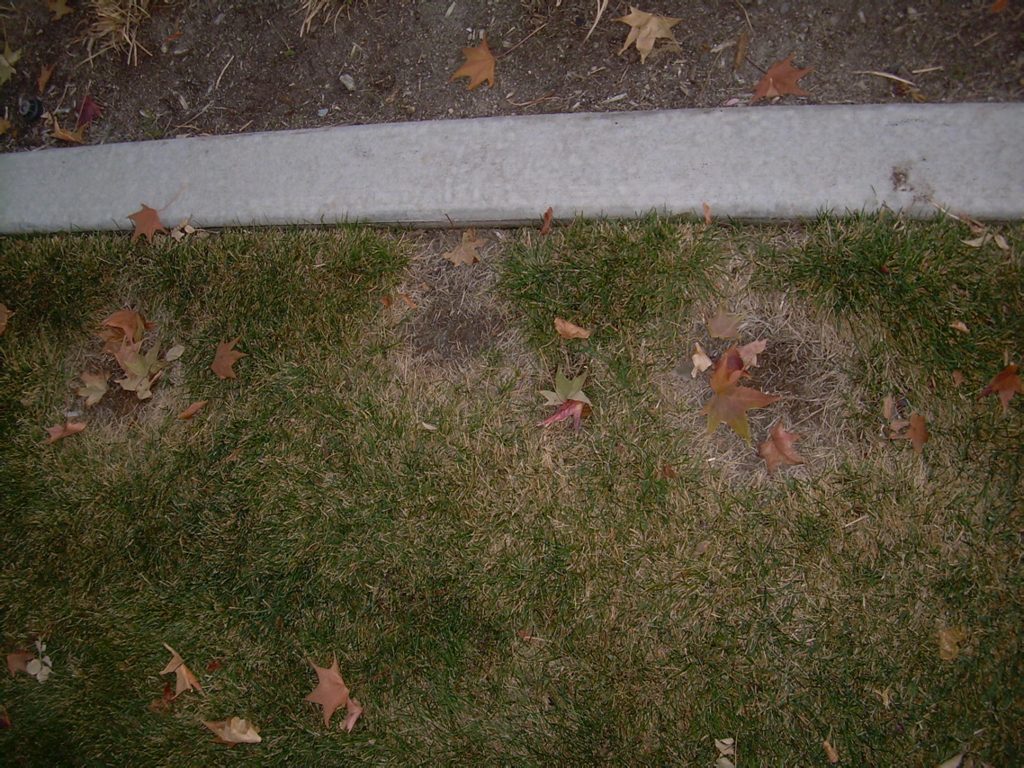
Most lawn problems can be narrowed down by what the damage looks like and where it shows up. Below are eight patterns we are called out to diagnose most often in Eau Claire and Minneapolis, what each one usually means, and what actually fixes it.
1. Patches of brown, dry, wilted grass
Likely cause: grubs. Brown wilted patches have several possible causes, but grubs are a common one from August into fall. Grubs are the white, C shaped larvae of beetles, soft bodied with legs near the head, living in the top few inches of soil and feeding on grass roots. They cut the lawn off from its root system, and the grass above wilts and dies without much warning.
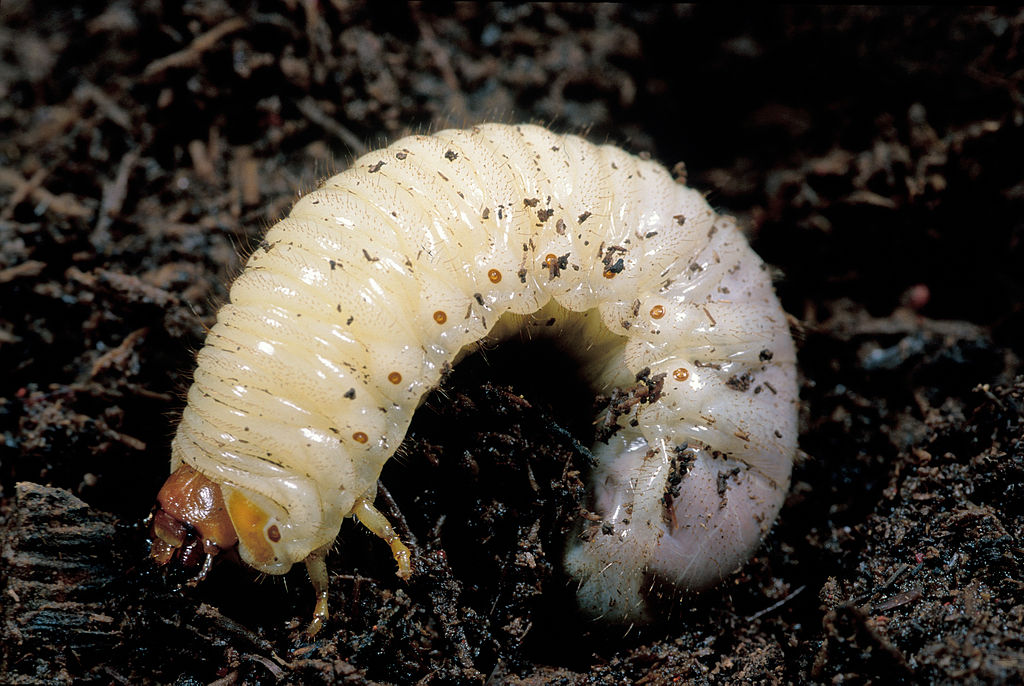

Three quick tests. Look for raccoons, skunks, and birds tearing up the yard, since they hunt grubs and usually find them first. Grab a handful of affected turf and pull: if it peels up like loose carpet, grubs ate the anchor. And walk the area, because infested turf feels spongy underfoot.
The fix: prevention. Common advice gets the biology wrong here. Preventive grub control does not kill eggs. Adult beetles lay eggs in early to mid summer, and a product applied ahead of that stays active in the root zone so newly hatched larvae pick up a lethal dose before they damage roots. The material has to be in place and still active at hatch.
We apply Grub Guard early in the season on the first visit, with a material chosen to stay active through the growing season and to be easier on pollinators. Once large grubs are feeding in late August, prevention has passed and the fix is a curative product plus seed.
2. Thin grass and large bare spots
Likely cause: compacted soil. Compacted soil has almost no air space. Water runs off instead of soaking in, and roots cannot push through to find moisture or nutrients. The lawn above thins, and weeds and disease move into the openings. Clay soil compacts naturally and foot traffic accelerates it.
The fix: core aeration. Aeration pulls plugs of soil out and leaves channels for air, water, and nutrients to reach the root zone. Roots grow into them and the lawn thickens. It also helps thatch decompose by mixing soil microbes into the thatch layer. While we are at it: grass clippings do not cause thatch. Clippings are mostly water and break down in days. Thatch is slowly decomposing stems, crowns, and roots. Seed right after aeration, since the open cores give seed the soil contact germination depends on.
3. Grass that simply will not grow
This one has several possible causes, which makes it a good illustration of why diagnosis matters.
Too much shade. Grass needs light. Thin tree canopies to let more through, raise the mowing height in shaded areas, or replace the worst areas with shade tolerant plantings or mulch rather than fighting it every year.
Too wet. Reduce watering frequency and look for a drainage problem. Saturated soil holds no air, and roots cannot function.
Soil pH out of range. If you have been fertilizing with nothing to show for it, this is a likely reason. Nutrients are only available within a certain pH range, and outside it fertilizer sits in the soil unavailable to the plant. Test, then amend.
Poor soil. Sometimes the growing medium is mostly sand or construction fill, which is a soil replacement or topdressing project rather than a treatment problem.
4. Tiny red or pink threads on the grass
Likely cause: red thread. Red thread produces fine reddish or pink threadlike strands binding the leaf blades together, usually in patches a few inches to a couple of feet across.
An important correction: red thread is a cool, wet weather disease, not a summer one. It is most active in spring and fall when temperatures sit roughly between 60 and 75 degrees and the leaf stays wet for long stretches, and it is associated with low nitrogen.
The fix: it does not attack roots, so the lawn recovers. Adequate nitrogen, including a fall application, is the main correction, along with watering early in the day so the leaf dries and avoiding extended leaf wetness. Fungicide is rarely warranted on a home lawn.
5. Bleached patches the size of a coin
Likely cause: dollar spot. Small bleached circular spots, roughly the diameter of a silver dollar, that can run together into larger blighted areas. It thrives in high humidity and heavy dew on lawns short on nitrogen.
The fix: do not keep the lawn constantly wet. Water deeply and infrequently, finishing early in the day. Adequate nitrogen helps the lawn grow through it, since dollar spot is strongly associated with nitrogen deficiency.
6. Straw colored rings with a green center
Likely cause: necrotic ring spot. Circular or crescent patches of straw colored turf, often with healthy green grass in the middle, which gives it the nickname frog eye. It develops under cool wet conditions and then shows up dramatically when heat and drought stress arrive, and it strongly favors compacted soil and heavy thatch.
The fix: aeration, to reduce compaction and improve drainage and rooting. Keep fertility consistent and avoid drought stress on affected areas, since the symptoms appear when stressed. This is a disease where cultural correction does far more than any spray.
7. Brownish yellow circular patches
Likely cause: brown patch. Large irregular to circular patches during hot humid weather, especially when nighttime temperatures stay warm and the canopy never dries. Lawns are more susceptible with excess water, excess nitrogen going into heat, poor drainage, compaction, or heavy thatch.
The fix: stop overwatering and stop overfertilizing in summer. Water early so the lawn dries before evening. Aerate to improve drainage, and address thatch only when it exceeds about half an inch rather than dethatching every year, since power raking healthy turf causes its own damage.
8. Green that is not grass
Likely cause: weeds, and the fix depends entirely on which one.
Crabgrass requires pre-emergent before germination, driven by soil temperature in April to early May here. Canada thistle needs targeted control in spring and fall, before it flowers and sets seed. Dandelions we treat with a specialty weed shield that reduces how many emerge, and escapes get a broadleaf herbicide later. Creeping Charlie is the most tenacious, and professional grade specialty herbicide applied in fall does most of the real damage to it.
Two things to understand about weeds generally. Control is a process rather than an event, because different weeds are active at different times and many of the worst spring weeds germinate the previous fall. And some products only work within a temperature range, so materials change as the season moves. A thick lawn is the best prevention there is, which brings every item on this list back to mowing height, watering, fertility, and soil.
Bottom line
- Grub damage peels up like loose carpet and shows up from August into fall. Preventive control works on newly hatched larvae, not eggs, so it must still be active at hatch.
- Thin turf with bare spots usually means compacted soil. Core aeration is the fix, and clippings are not the cause of thatch.
- Red thread is a cool, wet weather disease of spring and fall tied to low nitrogen, not a summer disease. It does not attack roots.
- Dollar spot and brown patch both respond to less water, correct nitrogen timing, and early morning watering rather than fungicide.
- Necrotic ring spot favors compaction and thatch, so aeration does more for it than any spray.
Frequently asked questions
How do I know if brown patches are grubs or a disease?
Pull on the turf. If it lifts like carpet with no roots, it is grubs. Disease patches stay anchored and usually show a distinct shape, ring, or lesion on the leaf, and they tend to appear in the wettest, shadiest parts of the lawn first.
Is red thread a summer lawn disease?
No, and that is a common error. Red thread is most active in cool, wet weather in spring and fall, roughly 60 to 75 degrees with extended leaf wetness. It is associated with low nitrogen and does not damage roots, so the lawn recovers.
Should I dethatch my lawn every year?
No. Measure the thatch layer first and address it when it exceeds about half an inch. Power raking healthy turf tears out live grass. Annual core aeration manages thatch in most lawns without the damage.
Why does fertilizing not fix my thin lawn?
Because fertilizer is probably not the limiting factor. Compacted soil blocks water and root growth, and a soil pH out of range leaves nutrients in the ground where the plant cannot take them up. Aerate and test pH before adding more product.
University of Wisconsin Division of Extension, Red Thread.
University of Wisconsin Division of Extension, Lawn Aeration and Topdressing.


