


Lawn Dethatching: What Is Thatch & How Does It Affect My Lawn?
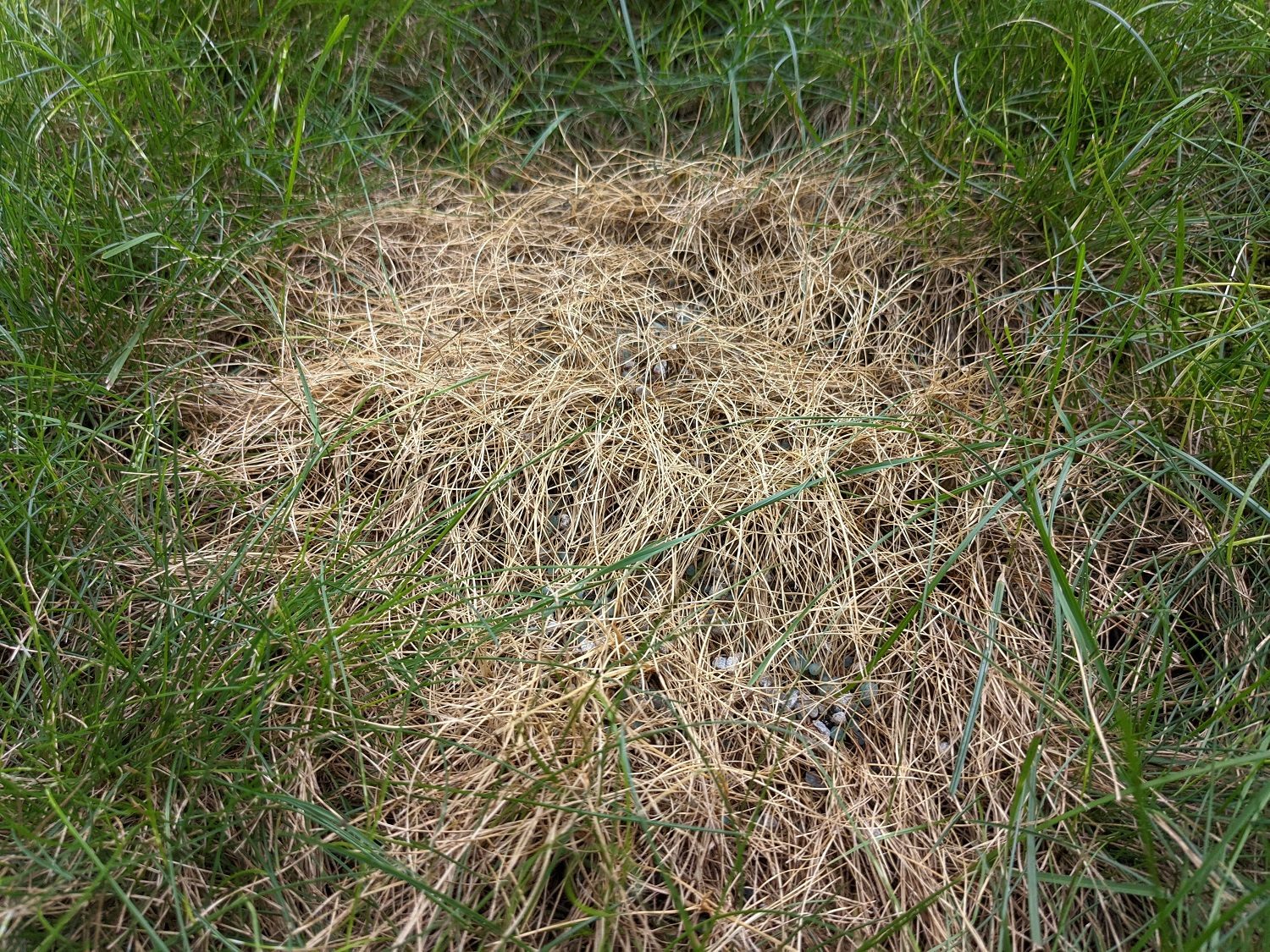
Thatch is the layer of partly decomposed stems, crowns, and shallow roots sitting between the green blades and the soil. A thin layer helps your lawn. Once it gets thick, it blocks water, air, and fertilizer from reaching the root zone, and the lawn starts to decline for reasons nothing on the surface explains.
What thatch is and when it becomes a problem
Thatch forms naturally as grass grows, as older plant tissue dies and accumulates faster than soil organisms can break it down. Under normal conditions it decomposes on its own and stays in balance.
Up to about half an inch, thatch is doing useful work. It shades and insulates the soil surface, holds moisture like a sponge, and cushions foot traffic.
Past that, the balance tips. A thick thatch layer intercepts water, oxygen, and fertilizer before they reach the roots, so the lawn is effectively being fed and watered above the soil rather than in it. The layer also holds a large volume of water, which keeps the canopy and crown zone wet and creates conditions fungal pathogens need. Thick thatch harbors insects as well, because it is dark, damp, and sits directly on the root zone they feed on.
To check it, cut a small wedge out of the lawn with a spade and look at the profile. You will see green blades, then a brown fibrous layer, then soil. Measure the brown layer.
What actually causes thatch to build up
This is the part most people get backward. Grass clippings do not cause thatch. Clippings are mostly water and soluble material and they decompose quickly, which is why returning them to the lawn is a benefit rather than a problem.
Thatch builds up when the production of tough, lignin-rich tissue outruns decomposition. The real drivers are:
- Overwatering. Constantly saturated soil suppresses the microbial activity that breaks thatch down, and it encourages shallow, dense root and stem growth at the surface.
- Excess nitrogen. Pushing a lawn hard produces more plant tissue than soil organisms can process.
- Compaction. Compacted soil holds less oxygen, and the organisms doing the decomposing need oxygen.
- Soil pH out of range. Microbial activity slows in soil that is too acidic or too alkaline.
- Vigorous spreading grasses. Kentucky bluegrass spreads by rhizomes and naturally produces more thatch than a bunch-type grass like perennial ryegrass.
Microbes do most of the work
The organisms that break thatch down are bacteria and fungi living in the soil. They decompose organic matter, including dead grass tissue and fallen leaves, and release the nutrients back in a form the grass can use.
A lawn with an active soil biology handles thatch on its own. When microbial activity is low, from compaction, poor drainage, off-balance pH, or very sandy soil with little organic matter, decomposition slows and thatch accumulates faster than it breaks down. That is the actual problem to fix, and it is why topdressing with compost after aeration works: it adds both organic matter and the organisms that process it.
How to remove thatch without wrecking the lawn
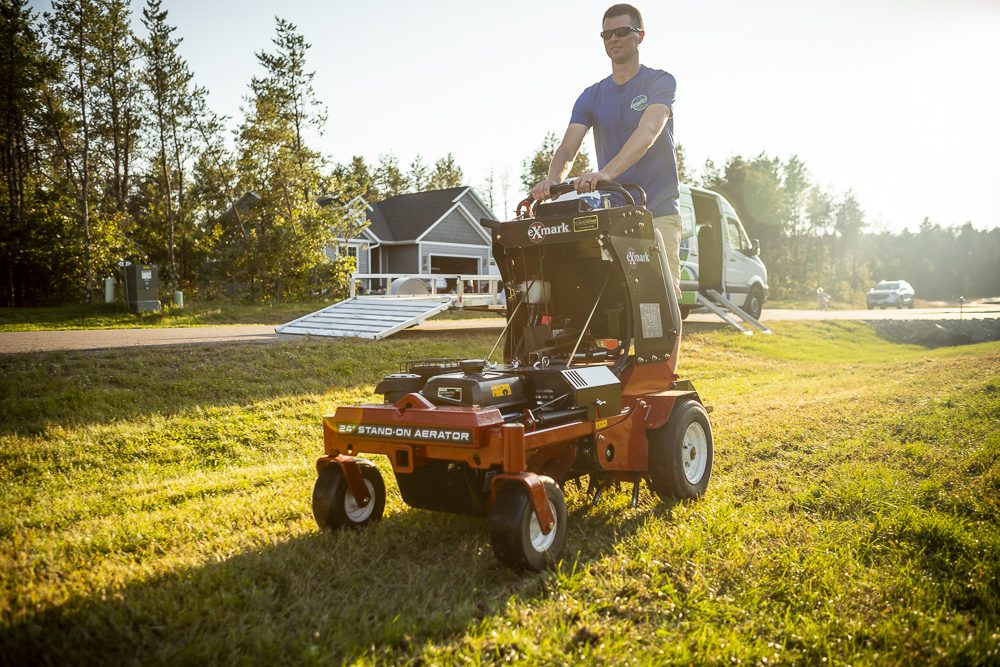
Core aeration is the better tool for most lawns. The machine pulls plugs of soil out through the thatch layer, which does three things at once: it opens channels so water, air, and nutrients reach the roots, it relieves the compaction that was suppressing decomposition, and it deposits soil and its microbes on top of the thatch, which speeds breakdown from the surface down.
The alternatives are more aggressive. A thatch rake has tines designed to lift and pull thatch out by hand, which is workable for a small area and hard work for anything larger. A power rake, or mechanical dethatcher, uses vertical blades to cut into the thatch so it can be raked off. Power raking removes thatch faster and tears up considerably more living turf in the process, and it does nothing about compaction. We use aeration as our standard approach for that reason.
Pair it with overseeding
When the lawn is full of open holes, that is the best seedbed you are going to get without tearing the lawn up. Aeration and overseeding go together because the holes give seed the close contact with soil it needs to germinate, which is why the two services are almost always sold as a pair.
When to do it here
Fall is the right window in Minneapolis and the Chippewa Valley, especially if seeding follows. Air has cooled while soil is still warm, which suits cool-season germination. Fall rain is more reliable, so less supplemental watering. Fewer weed seeds are moving around to settle into fresh holes. And there is less mowing and traffic over new seedlings. Late August through mid September is the core of it.
Should you rent an aerator
You can. Weigh it honestly first. Rental machines run in the neighborhood of $125 to $160 per day in this market, and professional aeration for an average yard is not far off that, so the savings are often small once you account for the trip and your Saturday.
These machines weigh around 300 pounds, do not maneuver easily, and beat you up over an hour of use. You need a truck or trailer to move one. And if your soil is genuinely compacted, which is the reason you are aerating, a rental drum aerator may not penetrate deeply enough, leaving you to make two passes for a mediocre result. Professional stand-on aerators use hydraulic down pressure to drive tines in and pull deeper cores.
How to keep thatch from building up again
- Mow frequently and remove no more than one third of the blade, so clippings are small enough to break down fast.
- Water deeply and infrequently, about an inch per week including rainfall, rather than a little every day.
- Do not overfertilize. First application by Memorial Day, then three or so more across the season at labeled rates.
- Core aerate annually, particularly on compacted or clay soils.
- Topdress with compost after aeration to add organic matter and microbes.
- Keep soil pH in range, since decomposition slows outside roughly 6.0 to 7.0.
Leave the clippings. They are a quarter of your lawn's nitrogen need over a season, and they are not what is causing the thatch. If you want help getting the aeration and feeding schedule right, that is what a lawn care program handles.
Bottom line
- Thatch under about half an inch is beneficial. Thicker than that, it blocks water, air, and fertilizer from the root zone.
- Grass clippings do not cause thatch. Overwatering, excess nitrogen, compaction, and off-range pH do.
- Core aeration is the better removal method, because it relieves compaction and speeds decomposition at the same time.
- Power raking removes thatch faster and damages far more living turf, with no effect on compaction.
- Late August through mid September is the right window here, and pairing aeration with overseeding makes the most of the open holes.
Frequently asked questions
Should I bag my grass clippings to reduce thatch?
No. Clippings are mostly water and break down quickly, and they return nitrogen and other nutrients to the soil. Thatch comes from tougher stem and root tissue, not from clippings.
How do I measure my thatch layer?
Cut a small wedge out of the lawn with a spade and look at the profile from the side. The brown fibrous layer between green growth and soil is the thatch. More than about half an inch is worth addressing.
Is dethatching or aeration better?
For most home lawns, core aeration. It removes some thatch, relieves the compaction that caused the buildup, and mixes soil organisms into the thatch layer to speed decomposition. Power raking is more aggressive and leaves compaction untouched.
How often should I aerate?
Once a year is a reasonable baseline on clay or compacted soil. Lawns on looser soil with good drainage can often go every other year. A technician looking at your soil profile can tell you which you have.
University of Wisconsin Division of Extension, Lawn aeration and topdressing.
University of Minnesota Extension, Fertilizing lawns.


