


3 Lawn Care Scams to Watch Out For in Minneapolis
Most lawn care companies are legitimate, and the ones that are not tend to run the same handful of plays. The Better Business Bureau regularly fields complaints about lawn care companies, and the pattern is consistent: the problem is rarely obvious at the start. Here are three to watch for and the questions that expose them.
1. Charging you for services you never ordered
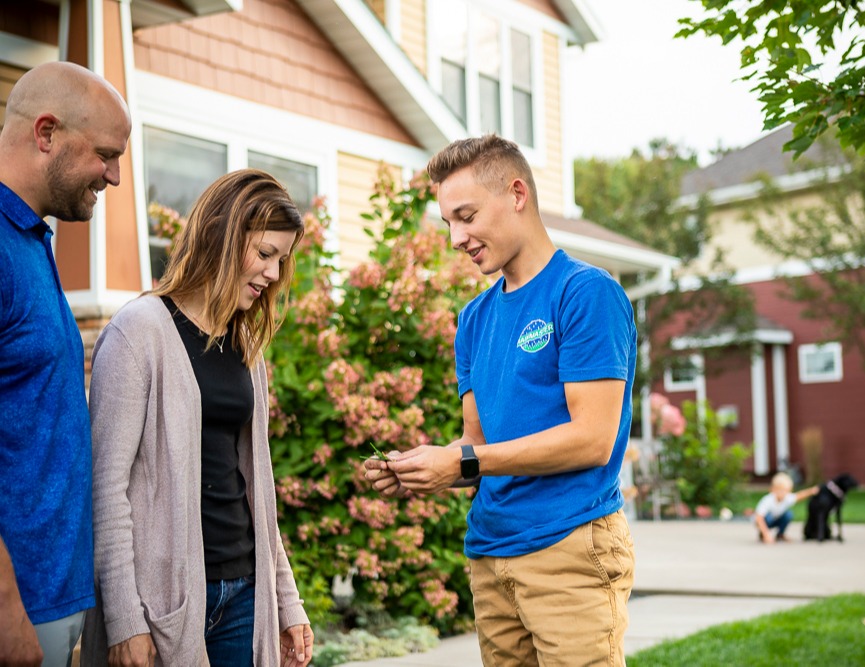
The setup: a company contacts you, says your lawn needs serious help, and offers a free inspection and quote. They set a date to come out. You get home from work to find a flag or a flier in the yard listing the services they completed that day, and then a bill arrives.

When you object, the answer is that you verbally agreed to the work.
How to avoid it: get everything in writing before anyone sets foot on the property. A legitimate company sends a written quote listing each application, what it is, when it happens, and what it costs, and they want your signature or written approval before they start. Never agree to anything verbally on a doorstep or a phone call, and never let anyone perform an inspection that turns into a treatment. If you receive a bill for work you did not authorize, you are not obligated to pay it, and both Minnesota and Wisconsin have consumer protection avenues for exactly this.
2. A low price that grows add-ons
Everyone likes a deal, but a price substantially below everyone else in the market is information, not luck.
The way this works: the headline program is priced low and genuinely does not include everything a lawn needs. Once you are a customer, the add-ons start appearing, the grub control that was never in the program, the aeration, the disease treatment, the extra weed visits. The total lands above what the honest quote would have been.
The other thing to think about with a very low price is where it comes from. The money has to come out of something: cheaper, lower-quality materials, lower wages and the turnover that follows, or skipping the training technicians need to correctly identify a problem. A technician who cannot tell leaf blight from grub damage will sell you the wrong treatment in good faith.
How to avoid it: ask for the full season of applications in writing, with dates or windows and prices, and ask directly what is not included. A legitimate company will tell you what your lawn needs beyond the base program and what that costs, up front, before you are a customer.
3. Free lawn care offers
Sign up now and get a free application. Free overseeding. A free aeration.
Pause on the arithmetic. Lawn care is not a high-margin business. If a company has quality products, trained staff, and real expertise, giving away a service means recovering the cost somewhere. Usually that is a higher price in year two, pressure to buy enhancements you do not need, or a lighter rate of product than the service is supposed to include, which you cannot see.
How to avoid it: ask what happens to the price next year and get the answer in writing. A legitimate introductory discount exists; a free service with no explanation of the economics does not.
A cheap deal is not a deal if the lawn does not improve
A complete lawn care program for $300 sounds great. The question is what $300 buys.
Quality materials and skilled, trained, experienced staff cost money. Spread $300 across a season of applications and there is not much left for either. The real cost of that program is not $300, it is $300 plus a lost year, because you will reach the following spring with a lawn that did not improve and start over.
Questions that separate real companies from the rest
Five minutes of asking gets you most of the way there.
- Are you licensed to apply pesticides, and what is your license number? Both Wisconsin and Minnesota license and certify commercial pesticide applicators. Any company treating your lawn should answer this immediately and without hesitation.
- Are you insured, and can I see proof? A real company produces a certificate without discussion.
- What exactly is in the program, in writing, with timing? Vague answers here are the single biggest tell.
- What is not included, and what will you likely recommend later? Honest answers to this question are rare and valuable.
- Who do I call, and will someone tell me what was done after each visit? A local company can usually say yes. Ours call you after the visit and tell you what they did and what they saw.
- What happens to my price next season? Get it in writing.
- Can you show me recent local work or references? Local references are easy for a local company to provide.
What honest lawn care looks like
A written program with every application, its timing, and its price. Clear communication about what the lawn needs and what it does not. A real diagnosis before a treatment is sold. A local number that a person answers. Technicians who are trained and certified, and products chosen for results and safety rather than for the lowest cost per acre.
RainMaster has been doing this in the Chippewa Valley and the Twin Cities since 1999. You can see what is in each lawn care program, and request a quote that spells out exactly what you are buying before you decide anything.
Bottom line
- Never agree to lawn care verbally. Get the full season of applications, timing, and prices in writing before work starts.
- A price well below the market is funded by something: cheaper product, lower wages, no training, or add-ons later.
- Ask what is not included and what will be recommended later. Vague answers are the clearest warning sign.
- Ask for the commercial pesticide applicator license number. Both Wisconsin and Minnesota license applicators.
- A cheap program that does not improve the lawn costs you the price plus a lost growing season.
Frequently asked questions
What should I do if a lawn care company bills me for work I never authorized?
Do not pay it. Put your dispute in writing, keep any flier or invoice they left, and contact the state consumer protection office. Authorization for lawn treatments should always exist in writing before work begins.
How do I check whether a lawn care company is licensed?
Ask for the company's commercial pesticide applicator license or certification number. Both Wisconsin and Minnesota license and certify commercial applicators, and a legitimate company provides that number without hesitation.
Are free lawn care offers always a scam?
No, but ask how the economics work and what happens to your price next season, in writing. Margins in lawn care are thin, so a free service is usually recovered through a year-two increase, upsells, or lighter application rates.
Is the cheapest lawn care program ever worth it?
Only if it actually includes what your lawn needs. Spread across a full season, a very low price leaves little for quality material or trained labor, so the usual outcome is a year with no improvement and a restart the following spring.
University of Minnesota Extension, Fertilizing lawns.
University of Wisconsin Extension, Horticulture and lawn care articles.


